The Sidecar is considered a classic cocktail – and yet, nowadays, it seems surprisingly difficult to make properly. In the search for the secret behind the historic recipes, the trail leads back to the Ritz of the 1920s, to a particular cognac and, ultimately, to a surprising ingredient: the lemon. For only by understanding how lemons tasted back then can one understand why the Sidecar was once a world-class cocktail.
Introduction
It all began with the Sidecar. I’ve often heard it described as a very tricky cocktail, as it’s difficult to get the proportions of the ingredients just right. There’s plenty of room for error, but when prepared correctly, it’s absolutely delicious.
The big question that therefore preoccupied Jenny and Andreas Berg from the Mirabeau Bar in Freiburg and me was: ‘How do you actually make a Sidecar properly? Why haven’t we managed to make it to our satisfaction so far?’
As always, in seeking the answer to our question, we followed our guiding principle: that one must understand the original recipe. With the Sidecar, it is striking that the earliest recipes were made with equal parts French brandy, Triple Sec and lemon juice. Anyone who has ever tried this mixture with ‘modern’ ingredients will agree with us that it tastes awful. Even if you double the amount of brandy, as Frank Meier did at the Ritz, it doesn’t get any better.
However, it is not the case that the old masters did not understand their craft. Rather, it is we who lack insight. So what are we doing wrong these days?
Frank Meier: The Artistry of Mixing Drinks. 1936, page 40.[4-40]
We took Frank Meier’s recipe from the Ritz as our guide, with the aim of transforming it into a gem: “In shaker: one-fourth each of Lemon juice and Curaçao Triple-Sec, half Brandy; shake well and serve.”[4-40]
Robert Vermeire: Cocktails. How to Mix Them. 1922, page 44. [1-44]
The sidecar must have been a good design back then. It was very popular in France in the 1920s, according to Robert Vermeire. [1-44]
Albert Stevens Crockett: The Old Waldorf-Astoria Bar Book. 1935, page 120-121. [2-120]
It was therefore also served at the Ritz in Paris and was much appreciated by Americans. Albert Stevens Crockett even goes so far as to say: “So far as I have been able to ascertain, Europe, during the Dark Interim, produced just one new cocktail that Americans took to and adopted.”[2-120] By that he meant the sidecar.
Lucius Beebe: The Stork Club Bar Book. 1946, page 74. [3-74]
The Ritz bar was run by Frank Meier, who was recognised as the ‘King of Bartenders’. [3-74] Lucius Bebe reports: “The Sidecar … was always built by Frank for favored customers with the Ritz’s own bottling of a Vintage 1865 Cognac and set one back, in this redaction, the then equivalent of five American dollars.”[3-74]
If we take the year 1936 – when Frank Meier’s book was published – as our reference point, the five dollars of that time would be equivalent to $115 in 2025. [5]
Jenny and Andreas Berg had already realised in the past that a modern, young cognac does not work, as – for whatever reason – it makes the Sidecar taste bitter. That is why the reference to the cognac used by Frank Meier is key to understanding which brandy to use. Building on our experience with 19th-century recipes, we came to the same conclusion as Frank Meier: that a Sidecar made with a brandy that matches the style of a 19th-century brandy yields the best results. Today, such a brandy is most comparable to a classic Armagnac, and as the one used by Frank Meier had presumably spent a long time in the cask and consequently developed intense notes of wood and rancio, we chose a twenty-five-year-old Armagnac. [6]
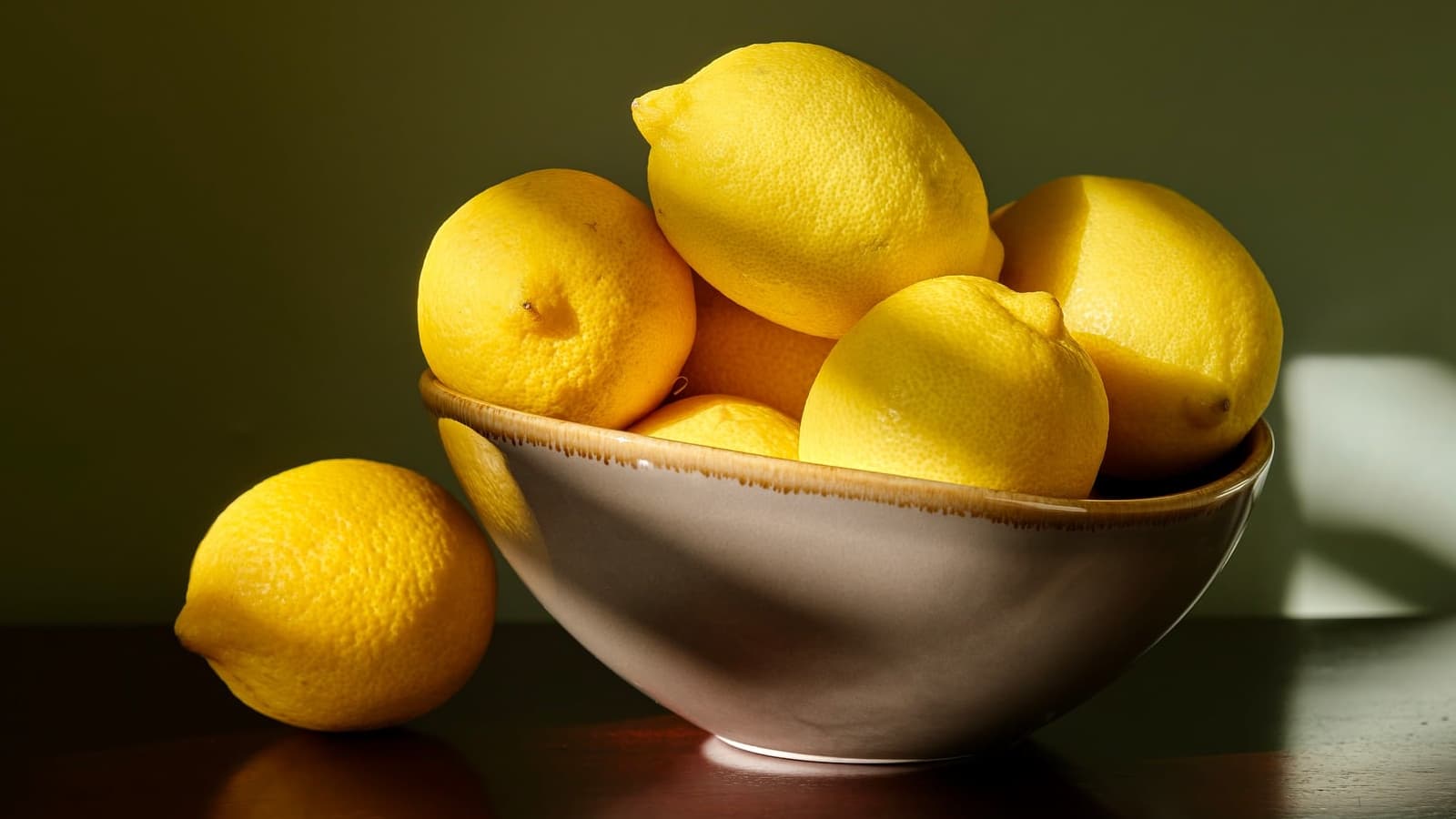
However, as it turned out, despite the excellent brandy, the recipe still wasn’t quite right; it lacked sweetness. This led us to suspect that the lemons used back then must have been of a different quality to those commonly available today. Consequently, an understanding of the lemons used at that time is crucial to making a successful Sidecar. And indeed: once you’ve understood which lemons were used and found a modern equivalent, the Sidecar is no longer a difficult cocktail to mix, and it unfolds its full potential, worthy of a grand hotel. Moreover, this insight also allows us to elevate the Sour to Michelin-star level, as the recipes by Jerry Thomas and Harry Johnson can finally be interpreted correctly. But more on that at the end of this series of posts.The linchpin is the lemon, and we must first take a closer look at its history.
It all started to become clearer when I wondered whether the Ritz might have used fully ripe lemons from the south of France, and whether these might have been sweeter and tasted quite differently from those available to us today? That explained why it wasn’t just Frank Meier who used so much lemon juice. So I set out to find out more. I’ll tell you all about it in the next part of this series.
Sources
Robert Vermeire: Cocktails. How to Mix Them. 1922.
Albert Stevens Crockett: The Old Waldorf-Astoria Bar Book. With Amendments due to Repeal of the XVIIIth. Giving the Correct Recipes for Five Hundred Cocktails and Mixed Drinks known and served at the Wolrd’s Most Famous Brass Rail before Prohibition, together with More than One Hundred Established Formulas for Cocktails and Other Beverages, Originated while Prohibition was in Effect. The Whole Flavored with Dashes of History Mixed in a Shaker of Anecdote and Served with a Chaser of Illuminative Information. New York, Eigenverlag, 1935.
Lucius Beebe: The Stork Club Bar Book. New York & Toronto, Rinehard & Company inc., 1946.
Frank Meier: The Artistry of Mixing Drinks. Paris, Fryam Press, 1936.


Introduction
It all began with the Sidecar. I’ve often heard it described as a very tricky cocktail, as it’s difficult to get the proportions of the ingredients just right. There’s plenty of room for error, but when prepared correctly, it’s absolutely delicious.
The big question that therefore preoccupied Jenny and Andreas Berg from the Mirabeau Bar in Freiburg and me was: ‘How do you actually make a Sidecar properly? Why haven’t we managed to make it to our satisfaction so far?’
As always, in seeking the answer to our question, we followed our guiding principle: that one must understand the original recipe. With the Sidecar, it is striking that the earliest recipes were made with equal parts French brandy, Triple Sec and lemon juice. Anyone who has ever tried this mixture with ‘modern’ ingredients will agree with us that it tastes awful. Even if you double the amount of brandy, as Frank Meier did at the Ritz, it doesn’t get any better.
However, it is not the case that the old masters did not understand their craft. Rather, it is we who lack insight. So what are we doing wrong these days?
We took Frank Meier’s recipe from the Ritz as our guide, with the aim of transforming it into a gem: “In shaker: one-fourth each of Lemon juice and Curaçao Triple-Sec, half Brandy; shake well and serve.” [4-40]
The sidecar must have been a good design back then. It was very popular in France in the 1920s, according to Robert Vermeire. [1-44]
It was therefore also served at the Ritz in Paris and was much appreciated by Americans. Albert Stevens Crockett even goes so far as to say: “So far as I have been able to ascertain, Europe, during the Dark Interim, produced just one new cocktail that Americans took to and adopted.” [2-120] By that he meant the sidecar.
The Ritz bar was run by Frank Meier, who was recognised as the ‘King of Bartenders’. [3-74] Lucius Bebe reports: “The Sidecar … was always built by Frank for favored customers with the Ritz’s own bottling of a Vintage 1865 Cognac and set one back, in this redaction, the then equivalent of five American dollars.” [3-74]
If we take the year 1936 – when Frank Meier’s book was published – as our reference point, the five dollars of that time would be equivalent to $115 in 2025. [5]
Jenny and Andreas Berg had already realised in the past that a modern, young cognac does not work, as – for whatever reason – it makes the Sidecar taste bitter. That is why the reference to the cognac used by Frank Meier is key to understanding which brandy to use. Building on our experience with 19th-century recipes, we came to the same conclusion as Frank Meier: that a Sidecar made with a brandy that matches the style of a 19th-century brandy yields the best results. Today, such a brandy is most comparable to a classic Armagnac, and as the one used by Frank Meier had presumably spent a long time in the cask and consequently developed intense notes of wood and rancio, we chose a twenty-five-year-old Armagnac. [6]
However, as it turned out, despite the excellent brandy, the recipe still wasn’t quite right; it lacked sweetness. This led us to suspect that the lemons used back then must have been of a different quality to those commonly available today. Consequently, an understanding of the lemons used at that time is crucial to making a successful Sidecar. And indeed: once you’ve understood which lemons were used and found a modern equivalent, the Sidecar is no longer a difficult cocktail to mix, and it unfolds its full potential, worthy of a grand hotel. Moreover, this insight also allows us to elevate the Sour to Michelin-star level, as the recipes by Jerry Thomas and Harry Johnson can finally be interpreted correctly. But more on that at the end of this series of posts.The linchpin is the lemon, and we must first take a closer look at its history.
It all started to become clearer when I wondered whether the Ritz might have used fully ripe lemons from the south of France, and whether these might have been sweeter and tasted quite differently from those available to us today? That explained why it wasn’t just Frank Meier who used so much lemon juice. So I set out to find out more. I’ll tell you all about it in the next part of this series.
Sources
explicit capitulum
*