To properly understand the recipes in the old bar books, we need to know what sort of lemons were used in Europe right up until the early 20th century. Where did they come from? What were their characteristics? Were they any different from those available today?
›Citron de Menton‹
My theory that the Ritz in Paris probably used fully ripe lemons from the south of France when preparing the Sidecar – and that these were perhaps sweeter and tasted quite differently from those available to us today – proved to be on the right track. I found references to lemons from Menton, a place I had not heard of until then.
I read that the Menton lemon was the foundation of the prosperity of the Monegasque princely house, to whose realm Menton belonged at the time and which levied exorbitant taxes on the lemon trade. The Menton lemon was said to be the finest in Europe and to differ from other varieties. They contain five times as much sugar, have only a moderate acidity, an excellent shelf life, and the peel is extremely aromatic, sweet and not bitter. The reason for this special aroma is said to be Menton’s unique geographical location; to withstand the cold, the lemons contain more sugar and essential oils than those grown elsewhere. [3][4][13]
Wouldn’t it stand to reason that this variety of lemon was also supplied to Paris from the French Mediterranean coast? Why would anyone resort to imported goods unnecessarily? The high sugar content could well be the reason why the original Sidecar recipe worked. This, then, was a lead worth following up on and verifying. So what is the story behind these lemons from Menton?
The application for protection
The ‘Citron de Menton’ is a protected designation, and so we can find out more about it in the relevant application for protection. [11]
Today, the ‘Citron de Menton’ may only be grown in the Alpes-Maritimes department, in the municipalities of Castellar, Gorbio, Roquebrune-Cap-Martin, Sainte-Agnès and Menton. [11]
In the past, a local variety was mainly grown in Menton. However, it was particularly susceptible to infection by a fungus and was severely decimated in the region from 1956 onwards. Consequently, efforts were focused on more resistant varieties and rootstocks. Today, the more resistant varieties Adamo, Cerza, Eureka and Santa Teresa are cultivated, as these – according to the application – most closely resemble the characteristics of the old Menton variety. Apart from the historic Menton variety, only these four are authorised as ‘Citron de Menton’; however, further varieties may be added. [11]
Allow me to make a brief comment here, in anticipation of my research findings: the situation is not quite as set out in the application for protection. The ‘Eureka’ variety, to give one example, bears no resemblance whatsoever to the old varieties.
The diameter of the ‘Citron de Menton’ ranges from 53 mm to 90 mm. It is harvested by hand and is not subsequently treated with chemicals or coated with wax. The proportion of filtered juice is at least 25 per cent of the fruit’s total weight. The juice is intensely fragrant, highly aromatic and has a slightly sour, non-bitter flavour. [11]
Historical context in the application for protection
The application for protection also provides a brief historical overview of the significance of the lemon. According to this, the first lemon trees in Menton are mentioned in a notarial deed dating from 1471. However, citrus fruits were not cultivated on a large scale until the 17th and 18th centuries, and the heyday of cultivation and trade was between the mid-18th and mid-19th centuries. At that time, citrus cultivation was the most important economic sector in Menton. Around 1860, some 35 million lemons were exported annually, mainly to England, Germany, Russia and even North America. From the second half of the 19th century onwards, lemon cultivation declined. The reasons for this were the small size of the individual farms, tree diseases and severe weather, including two exceptional frosts which severely damaged lemon production. Furthermore, only relatively small quantities could be exported via the small harbour in Menton. At the same time, Italian and Spanish lemons benefited from low customs duties, which were introduced in 1861 and 1866. Lemon production in Menton continued to decline in the 20th century. In 1956 in particular, a fungal disease caused extensive damage to the orchards, and rural depopulation also contributed to the decline. [11]
Lemons in 1785 – An Overview
Let’s stay in the Old World for a little while longer. Are there any historical sources that provide us with further interesting details, helping us to understand what sort of lemons were used in the past and where they came from?
1785 The European lemon trade
Johann Georg Krünitzen’s ‘Oekonomische Encyklopädie’ (Economic Encyclopaedia) from 1785 provides information on the lemon trade in Goethe’s time: “Every year, there is a vast trade in lemons throughout Europe, both by sea and by land, and whole wooden crates full of them are sent from Spain and Italy to all manner of places. Most lemons come from St Remo, Nice, Menton or Monton, a small town in Savoy, where they are sold only at certain times – about two or three times a year, in May and September – once they have grown well, with the permission of the local council, and are then dispatched by sea and land via Marseille and Lyon to other countries. However, only those that do not fit through an iron ring—the thickness of which is determined by official decree—are sold here. The rest, being too small, are set aside and serve merely to have their juice squeezed out, which is then transported in small barrels to Avignon and Lyon for use by dyers. See ‘Lemon juice’. A great deal of this juice also comes from Sicily, which is sent to France for the same purpose. However, little benefit is derived from these lemons, as they do not keep well. The aforementioned lemon crates are oblong and are often packed in batches of 600 to 800 pieces, wrapped in paper. If they arrive frequently, one can buy a crate for a few thalers. In Germany, they are sold by Italians and general merchants, whilst in coastal towns they are sold by so-called lemon sellers. If lemons are to be of good quality, they must have plenty of juice and little white pith. However, there are also those in which the opposite is true, and these are then called ‘thick-skinned’. Since lemons are used primarily for their juice, such thick-skinned fruits – which generally look the most attractive on the outside and are larger, and thus more tempting – are held in lower regard. There are lemons which also have a slightly bitter taste and are therefore disliked.” [6-153][6-154]
Johann Georg Krünitz: Oekonomische Encyklopädie. Achter Theil, Zweyte Auflage. 1785, page 153-154. [6-153][6-154]
– “Es wird mit den Citronen jährlich zu Wasser und zu Lande durch ganz Europa ein allgemeiner großer Handel getrieben, und man schickt ganze hölzerne Kisten voll aus Spanien und Italien aller Orten hin. Die meisten Citronen kommen von St. Remo, Nizza, Menton oder Monton, einer kleinen Stadt in Savoyen, wo sie nur in gewissen Zeiten, etwa des Jahres zwey oder drey Mahl, im May und September, nachdem sie wohl gerathen, mit Bewilligung des dortigen Rathes, verkauft, und alsdann zu Wasser und Lande über Marseille und Lyon in andere Länder versendet werden. Man verkaufet aber hier nur diejenigen, die nicht durch einen eisernen Ring gehen, dessen Dicke durch obrigkeitlichen Befehl bestimmet ist. Die übrigen werden, als zu kleine, beyseit geleget, und dienen bloß den Saft daraus zu drücken, welchen man in Fäßchen nach Avignon und Lyon, zum Gebrauch der Schönfärber, verführet. Siehe Citronen-Saft. Es kommt auch dieses Saftes viel aus Sicilien, den man zu gleichem Gebrauche nach Frankreich schickt. Man zieht dessen aber wenig aus den Citronen, weil sie sich nicht gut aufheben lassen. Obgedachte Citronen-Kisten sind länglich, und öfters in einer 6 bis 800 Stücke mit Papier eingepackt. Man kann, wenn sie häufig ankommen, die Kiste für wenige Thaler kaufen. In Deutschland werden sie von den Italienern und Materialisten, in Seestädten aber von so genannten Limonienverkäufern geführet. Die Citronen müssen, wenn sie gut seyn sollen, vielen Saft und wenig weißes Fleisch haben. Man hat aber auch solche, bey denen es sich umgekehrt verhält, und die man sodann dickschalig nennt. Da die Citronen vornehmlich des Saftes wegen genutzt werden, so sind dergleichen dickschaligen Früchte, welche gemeiniglich von aussen das schönste Ansehen haben, und größer, also verführerischer sind, weniger geachtet. Es gibt Citronen, welche auch etwas Bitteres an sich haben, und daher verhaßt sind.”[6-153][6-154]
This text raises questions and provides clues as to which topics are of interest for our research:
The main growing region for lemons is the Mediterranean coast, stretching from Nice in France via Menton to Sanremo. It is therefore worthwhile to look not only at Menton, but at the Riviera as a whole.
We learn that there were strict quality controls in Menton. Were there similar controls in other growing regions? And what was the minimum diameter required for fruit from Menton?
Lemons from Menton that did not meet the requirements were processed into juice and then used in the dye works. What was the juice needed for there? And does the reference to Sicily exporting only juice to France imply that inferior lemons were produced there, which were unsuitable for export as whole fruits? After all, only juice was sent from there to France, not whole fruits.
Only Spain and Italy are mentioned as exporters of lemons – did Sicily, as part of Italy, count among them, even though it is mentioned further down solely as a supplier of juice?
We also learn that consumers preferred fruit that contained plenty of juice and was not bitter. Were these preferences specific to Germany? And what quantity was meant by ‘plenty of juice’ back then?
So let us embark on a journey into the past of lemon cultivation and trade. There is much to discover.
The Riviera and Lake Garda
Goethe in Italy in 1782
Let us take a journey back in time to the year 1782. Johann Wolfgang von Goethe published one of the most famous German poems, in which he extols the longing for Italy that was widespread amongst Germans. [33] The first stanza reads:
“Do you know the land where the lemon trees blossom, Where golden oranges glow amongst the dark foliage, Where a gentle breeze blows from the blue sky, Where the myrtle stands still and the laurel towers high, Do you know it well? Thither! Thither I long to go with you, O my beloved!“
Johann Wolfgang von Goethe: Wilhelm Meisters Lehrjahre. Zweyter Band. 1795, page 7. [17-7]
– »Kennst du das Land, wo die Zitronen blühn, Im dunkeln Laub die Goldorangen glühn, Ein sanfter Wind vom blauen Himmel weht, Die Myrte still und hoch der Lorbeer steht, Kennst du es wohl? Dahin! Dahin Möcht’ ich mit dir, o mein Geliebter, ziehn!« [17-7][33]
The fascination with Italy stems from the fact that, during the Renaissance, Italy became the centre of cultural renewal and therefore remained the preferred destination for visual artists right up until the 19th century, as they wished to see the classical antiquities. Many poets, painters, sculptors and architects therefore travelled to Italy and settled in Rome as ‘German Romans’. [34]
I am firmly convinced that Goethe’s poem does not refer to the blossoming lemon trees of the Amalfi Coast. Nor does it refer to the lemons of Sicily, as is suggested in otherwise reliable books. [42-61] The centre of lemon cultivation and export was not only Menton, but also northern Italy. We should therefore situate these blossoming landscapes there. Goethe saw it this way too, for in his *Wanderjahre* (Years of Pilgrimage), Wilhelm Meister makes his first pilgrimage to Mignon’s homeland, where he had heard this poem – namely Lake Maggiore. [33] Northern Italy was home to the northernmost lemon-growing region. [16-147]
However, lemons were grown not only on Lake Garda but along the entire coastline of the Italian Riviera, as Johann Georg Krünitz wrote in his encyclopaedia in 1785: “Most lemons come from San Remo, Nice, Menton or Monton“. So let us set out in search of clues.
1889 Lemons in California – Section: Northern Italy
Third biennial report of the state board of horticulture of the state Califonia. 1888, page 222. [28-222]
In 1889, a report on lemons was published in California, which also described their distribution in the Old World, initially, it would appear, along the northern coast of the Mediterranean: “In Italy the best results in lemon culture are secured near the seashore, so near that in many instances the trees are planted in the sands which have been washed up by the waves. They are, however, in such cases protected from cold sea breezes by hedges. From the seashore to an altitude of one thousand five hundred or two thousand feet is this industry successfully prosecuted, and in some instances to higher elevations. In the island of Sicily the conditions are somewhat changed, and although the trees are planted close to the shore, as in Italy, yet the results are unsatisfactory, the trees being more liable to the attacks of pernicious insects, as well as of disease, the best orchards being at a considerable distance from the sea, planted in rich soil, with plenty of water for irrigation: and yet, where the best possible conditions are secured, a tree in full bearing is expected to yield only about six hundred fruits in a year. In Venitia the lemon is cultivated with perfect success, in soil heavily charged with potash and lime, which makes it of a loose and friable character, and not inclined to bake or shrink, and into which the heat of the sun can easily penetrate. In Turkey the lemon is planted in rich clay soils, the product being large, and the quality excellent. The difficulties surrounding the cultivation of the lemon in the vicinity of Venice are greatly aggravated by liability to frost; and so great is this danger that in all orchards provision is made to ward it off by fires, built in and around them, when the temperature approaches the freezing point.”[28-222]
Lake Garda
The western shore of Lake Garda offers favourable environmental conditions for growing Mediterranean plants. From the 15th century onwards, the cultivation of citrus fruits was promoted through extensive construction projects, as the citrus trade was lucrative. Huge brick greenhouses were built for the citrus plants, which were covered and sealed with wooden panels in winter. [55]
In his ‘Nürnbergische Hesperides’, published in 1708, Johann Christoph Volkamer writes about Lake Garda:
“… and the whole region around Lake Gard is a veritable earthly paradise, where citron, lemon and bitter orange trees, along with other delicate fruits, grow in great abundance and are very frequently distributed far and wide throughout Germany.” [46-84]
Johann Christoph Volkamer: Nürnbergische Hesperides. 1708, page 84,1. [46-84]
– “… und die gantze Gegend dieses Gard-Sees ein recht irdisches Paradeiß ist / woselbst die Citronat- Citronen- und Pomerantzen-Bäume / samt andern delicaten Früchten / in grosser Menge wachsen / und in Teutschland sehr häuffig weit und breit verführet werden.”[46-84]
“The main town of Salò lies along the shore of this lake, and throughout this entire region – as far as Riva – one finds a great many orange groves, which are therefore commonly referred to as the Solodian or Rivian groves.” [46-84]
Johann Christoph Volkamer: Nürnbergische Hesperides. 1708, page 84,2.[46-84]
– “Seitwärts am Ufer dieses Sees liegt die Haupt-Stadt Salò, und in selbiger gantzen Gegend / biß gegen Riva hin / findet man die Pomerantzen-Gärten in grosser Anzahl / welche man daher Solodianische oder Rivianische Gärten zu nennen pfleget.”[46-84]
“In this Salodian region lie Maderno, Toscolano and several other towns, where, thanks to the good soil and water, as well as the temperate and very healthy air, the most magnificent and delicious fruit is grown, and where there are many orange groves cultivated with great diligence and skill; there, alongside which grow citron and lemon trees of many varieties in extraordinary abundance; they are exceedingly famous and blessed. Moreover, these orchards are exceedingly beautiful, for they remain green throughout the year and are never without fruit, which is exported to Germany with great profit.” [46-85]
Johann Christoph Volkamer: Nürnbergische Hesperides. 1708, page 85. [46-85]
– “Auf diese Salodianische Gegend kommen Maderno, Toscolano, und mehr andere Oerter / welche wegen des guten Erdreichs und Wassers / auch gemässigter sehr gesunder Lufft / die herrlichst- und köstlichste Früchte / und der vielen durch grossen Fleiß und Kunst angebauten Pomerantzen-Gärten / allwo / nebenst dennenselben / der Citronat- und Citronen-Bäume vielerley Sorten in ungemeiner Menge wachsen / überaus berühmt und gesegnet sind / auch stehen diese Gärten überaus schön / weil sie das gantze Jahr durch grünen / und niemal ohne Früchte sind / welche man mit grossem Nutzen in Teutschland versendet.” [46-85]
He also describes the buildings he refers to as ‘Pomeranzenhäuser’ (bitter orange houses) and includes an illustration: [46-20]
Johann Christoph Volkamer: Nürnbergische Hesperides. 1708, page 20.[46-20]
“For the benefit of the reader, I have therefore included here a brief description of the Salodan orange groves, as the inhabitants there usually cultivate them along the riverbank: these are partly single, and partly arranged in rows of two or three; however, the rear ones are always higher than the front ones, as they stand at the foot of the same mountain so close to the lake’s shore; and this not only presents a beautiful sight, but also affords the trees a greater benefit, as they can be better bathed in the warmth of the sun. They build these orange houses of varying lengths – some a hundred feet long, others even longer – depending on the space and circumstances. As for the width, they generally ensure that two large trees can stand comfortably apart. Those who have two or three orange houses in this way, one behind the other, keep the first or foremost one completely open, without covering it with boards or closing it off during the winter; in it they keep the smaller and commoner varieties, as well as the common bitter orange trees, which can tolerate the cool air somewhat better than the more delicate species of such fruit trees: In the following ones, however, they keep the more delicate and rarer trees of the same kind, both planted in the ground and in pots; and generally the front row is planted with citron trees — or rather, a trellis of such — whilst the other row is planted with lemon and rare bitter orange trees; and these have, at the very front, a stone base at chest height, upon which stone pillars are erected, as marked in the sketch with the letter C, , which thus remain standing throughout summer and winter: when it begins to turn cold, and the Italians wish to close up such houses, they fasten thick planks or floorboards securely to both sides of the pillars — as wide as the pillars themselves — on which there are iron hooks, as can be seen at letter D, so that the wooden doors or shutters can be hung upon them, such that so that two of them fit between each pillar; and when the weather turns rough or mild, mixed with sunshine, they are in the habit of opening them; on the other hand, they make no use of windows, as we do in colder climes; yet they take the greatest care to seal all the gaps between the boards and the doors. When it freezes right up to the top – though this rarely happens – they dig long trenches and various passages, fill them with coal, and set them alight. In the middle of their orange houses, they dig in various poles or wooden pillars, the length of which varies according to the size of the house, as shown in fig. E, upon which the beams they need to cover the roof rest; and then they cover these with the boards, as shown in fig. BB, which they open and close with the utmost care, depending on the weather, whenever the sun shines and it is not freezing, they immediately open the shutters on the sides and uncover some of the boards on the roofs so that the sun may warm the trees; at the very top, however, on both sides, there are special chambers in which they store the timber during the summer, as indicated in fig. G.” [46-18][46-19]
Johann Christoph Volkamer: Nürnbergische Hesperides. 1708, page 18-19. [46-18][46-19]
– “Dem günstigen Leser zu lieb hab ich hie nechst einen Abriß der Salodanischen Pomerantzen-Gärten beyfügen wollen / wie sie die Einwohner akkda am gard-Gee zu haben pflegen: nun sind selbige zum theil einfach / theils zwey- biß dreyfach hinter einander angeleget; jedoch die hintere allezeit höher als die vordere / weil sie am Fuß des daselbigsten Berges so nahe am Ufer des Sees stehen / und gibt solches nicht nur ein schönes Ansehen / sondern auch denen Bäumen einen mehrern Nutzen / weil sie von der alles erwärmenden Sonne desto besser bescheinet werden können. Der Länge nach machen sie diese ihre Pomerantzen-Häuser unterschiedlich / theils auf hundert Schuh / theils auch länger / nach dem der Platz und die Gelegenheit es leiden. Mit der Breite halten sie es gemeiniglich so / dass zwo Ueilen Bäume raumig stehen können. Diejenige / welche zwey oder drey Pomerantzen-Häuser also hinter einander haben / halten das erste oder vorderste gantz offen / ohne dass sie es Winters-Zeit mit Bretten bedecken und zuschliessen / darinn halten sie die geringe und gemeine Gewächse / auch was gemeine Pomerantzen-Bäume sind / welche den kühlen Lufft etwas besser ertragen können / als die zartere Arten solcher Frucht-Bäu,e: In denen folgenden aber / halten sie die zartere und rarere Bäume derselben / so wol im Erdboden als in Gefässen stehend / und gemeiniglich die vordere Zeil mit Citronat- oder vielmehr ein Spalier von solchen / die andere Zeil mit Citronen- und raren Pomerantzen-Bäumen besetzet / und haben selbige zuvorderst eine steinene Brusthöhe / worauf steinene Pfeiler aufgerichtet / wie im Abriß mit lit. C. bemercket / welche also Sommer und Winter stehend bleiben: wann es dann beginnet kalt zu werden / und die Welsche solche Häuser zumachen wollen / so machen sie auf beeden Seiten der Pfeiler dicke Bretter oder Dielen vest daran / so breit die Pfeiler seyn / an welchen eiserne Hacken befindlich / wie bey lit. D. zu sehen ( dass man die höltzerne Thüren oder Laden daran hangen kan / also / dass zwey derselben zwischen jeden Pfeiler kömmen / und nach dem ein rauhes oder liebliches mit Sonnenschein vermischtes Wetter einfället / solche so dann zu eröffnen pflegen / hingegen gebrauchen sie sich keiner Fenster / wie bei uns in den kältern Landen / doch gleichwol vermachen sie alle Klüffte zwischen denen Brettern und denen Thüren auf das allerfleissigste: Wann es oben gleichwol hinen gefrieret / wie wol es selten geschiehet / machen sie lange Gräben und mancherley Gänge / füllen sie mit Kohlen / und feuren diese an. Mitten in ihren Pomerantzen-Häusern graben sie nach der Länge derselben unterschiedliche Stöcke oder hölzerne Pfeiler ein / wie bey lit. E. worauf die Balcken / die sie zum Dach zu belegen brauchen / ruhen / und dann bedecken sie diese mit denen Brettern / wie bey lit. BB angezeiget / welche sie / nach dem die Witterung ist / auf das sorgfältigste auf- und zumachen / dann wann die Sonne scheinet / und es dabey nicht gefrieret / eröffnen sie gleich so bald die Laden an denen Seiten / und decken etliche Bretter an den Dächern auf / dass die Sonne die Bäume erwärme / zu oberst aber / an beeden Seiten seyn besondere Gemächer / worinnen sie Sommers-Zeit das Holtzwerck aufheben / wie bey lit. G angedeutet worden.”[46-18][46-19]
By the end of the 19th century, many people found work in citrus cultivation, and the trade in citrus fruits ensured a thriving economy, underpinned by the uniqueness and outstanding quality of the fruit. Citrus cultivation reached its peak in the mid-19th century, with an average annual harvest of 15–20 million lemons for export. [55]
To promote the lemon trade, the Società Lago di Garda was founded in Gargnano in 1840. This led to citrus fruits from Lake Garda being exported not only to the Austrian and German states, but as far afield as Hungary, Bulgaria and Russia. After 1860, lemon cultivation declined. Reasons for this included, for example, a disease affecting the citrus trees, competition from southern produce following the unification of the Kingdom of Italy, the chemical production of citric acid, and the high costs of materials and labour. All of this led to citrus cultivation being abandoned. [55]
The Italian Riviera
Citrus cultivation was certainly even more important in Liguria than it was on Lake Garda. It seems to have been forgotten by many, and as early as 1972, when Massimo Quaini was researching the agricultural history of Liguria, he noted: “The cultivation of citrus fruits in Liguria has so far been completely neglected by modern research, even though it has at times been the dominant feature of the agricultural landscape in certain coastal areas.” [51-300]
– “La cultura degli agrumi in Liguria, pur avendo caratterizzato talvolta in modo predominante il paesaggio agrario di alcuni tratti del litorale ligure, è stata finora del tutto trascurata dagli studiosi moderni.”[51-300]
Liguria, however, was the Italian region where citrus cultivation was most advanced in the Middle Ages. [51-302] There, citrus cultivation was particularly important and shaped the landscape in the areas of Sanremo in the west and Rapallo in the east. [51-303]
Whilst Giacomo Bracelli describes Sanremo in 1418 simply as “citri ferax”, “abundant in lemons”, [51-303] schreibt er über den Golf von Rapollo: “From here, wine, oil, chestnuts and lemons – as they are commonly known – are exported in large quantities.” [51-303]
– »hinc vinum, oleum, castane ac citroni, sic vulgariter nominati, in magna copia transferuntur« [51-303]
Giacomo Giustiniani, on the other hand, provided more detailed information about Sanremo in 1537: “The Sanremo region is rich in lemons, citron and oranges, which are not only a delight to the eye and a treat to the palate, but are also of great utility, as these fruits are transported to many places by sea and overland; … The Jews from Germany and other places also come to Sanremo to buy citron to use for the Feast of Tabernacles.” [47][51-303][51-304]
Castigatissimi annali con la loro copiosa tauola della eccelsa & illustrissima republi. di Genoa, 1537, pages IIII. [47]
– “Il territorio di San Remo è tutto pieno di Citroni Limoni, Cedri e Aranzi non solamente dilettevoli al vedere e buoni al gusto ma di grande utilità, come che questi frutti si portin o per mare e per terra in più luoghi; … . Gli Hebrei etiandio di Alamagna e di altri luoghi mandano a comprar dei cedri, per la solennità dei Tabernaculi, a S. Remo.” [47][51-303][51-304]
Although Sanremo and Rapallo held undisputed supremacy in lemon cultivation on the Italian Riviera during the 17th and 18th centuries, there were other production centres alongside them. The 17th-century land registry records from the Riviera di Levante, [59] situated east of Genoa, [53] show that citrus orchards were quite widespread there as part of the traditional system of mixed cultivation. However, there was no trade organised on the same scale as in Sanremo, for example. [59]
In the 18th century, the border region between Sanremo and Nice was a vast citrus orchard. Citrus fruits were cultivated there over a stretch of 50 kilometres from the Middle Ages until the mid-19th century. [52]
But lemons also thrived magnificently around Genoa. For example, a travel guide from 1887 confirms: “Behind Voltri, lemons thrive splendidly.” [15-59] Voltri borders Genoa.
– “Hinter Voltri gedeiht die Zitrone vortrefflich.” [15-59]
Statuten
From the 11th to the 19th century, Sanremo was undoubtedly the most important market for citrus fruits. The statutes of 1582 show that the municipality monopolised the harvest and sale of these fruits in order to raise the funds required for the expansion of the harbour. The statutes also state: “It is well known and evident that the whole town of San Remo lives off the fruit that grows there, and that this is the largest and most important trade carried out there, particularly in citron and lemons, and that without these the town would be destroyed and ruined.” [51-306][52]
– “È noto, e manifesto, che tutto il luogo di S Remo si mantiene delli frutti, quali ivi nascono, e che è il maggiore, e principal negotio, che ivi si faccia massime di cetroni, e limoni, e senza quello luogo se n’anderia distrutto e rovinato.”[51-306][52]
Under the terms of the statutes, harvesting, sorting and sales in Sanremo were organised and controlled by the state. Landowners were not even allowed to harvest the crops themselves – they were only required to water and fertilise the land, and then simply collect the profits. [59]
As the municipality was the sole seller of the fruit, there were no competitors. This guaranteed higher selling prices, higher incomes for the farmers and higher tax revenues. For centuries, this approach ensured Sanremo’s prosperity. [59]
As such regulations were beneficial to all concerned, statutes of this kind were not confined to Sanremo. Virtually every municipality had its own set of regulations, under which magistrates appointed by the mayor oversaw the harvesting and trade of citrus fruits. [52]
Bordighera, for example, also enacted regulations in 1776 modelled on those of Sanremo. [59]
These have been preserved in the Departmental Archives of Nice. According to them, four lemon magistrates were elected every April to oversee the industry. [52]
A municipal statute of Borghetto dating from 1772 has been preserved in the Departmental Archives of Nice. [49][58] It regulates the cultivation, harvesting and sale of lemons under the supervision of a lemon magistrate, similar to the regulations in Bordighera and Sanremo. [58] Unfortunately, the authors do not specify which Borghetto is meant – I suspect it might be Borghetto d’Arroscia.
Menton, too, had such statutes, [59] as Johann Georg Krünitz had already suggested. There, however, according to R. Sartore, unlike in Liguria, significant lemon cultivation did not begin until the 16th century, and commercialisation did not take place until the 17th century. [59]
Thus, from the 15th to the 19th century, citrus fruits were an important source of income for Sanremo, the main market, and for other towns in the region such as Ospedaletti, Bordighera, Borghetto S. Nicolò, Ventimiglia, Porto Maurizio, Dolceacqua, Nice, Roccabruna, Menton and Monaco. [58]
The Sanremo citrus monopoly
Where there are profits to be made, monopolies are never far away. That is why we should take a moment here to recount a story from Sanremo. In 1662, the Venetian merchant Bernardo Portelli sought to obtain a monopoly in Sanremo on the marketing of citrus fruits in certain Italian and foreign markets. [59]
His request was approved by the town council and notarised on 14 June. It was contractually agreed that he would purchase 25 million lemons annually at a price of 6 lire per thousand, 500,000 sweet oranges and 30,000 sour oranges at a price of 3 lire per thousand, and any substandard lemons at 1.4 lire per thousand. He also bears all costs for harvesting, loading, transport and the associated taxes. Furthermore, there are additional arrangements. [59]
This was a very advantageous contract for Bernardo Portelli, as he was granted a monopoly on the export of citrus fruits to major markets: England, France and the Netherlands for German-style lemons (‘limoni alla tedesca’), the Grand Duchy of Tuscany from Livorno, and the whole of northern Italy from Sestri Levante for caravan lemons (‘limoni alla caravana’) and oranges. [59]
His attempt to establish a monopoly did not go unnoticed and posed a threat to many local traders. The authorities in Genoa also took notice and imposed additional, particularly onerous contractual clauses on Bernardo Portelli. [59]
It would appear that the monopoly was no longer considered lucrative enough, for on 4 September Bernardo Portelli transferred the contract to the Genoese nobleman Giuseppe Monteverde, who on the same day formed a partnership with the notary and Sanremo town councillor, Giovanni Battista Bottino. This led to significant conflicts of interest within the town council. An opposition quickly formed amongst the most influential councillors, who saw the monopoly as a serious hindrance to their own activities. Under the pretext of procedural and substantive flaws, they ultimately succeeded in persuading the council and the mayor to reject the monopoly. [59]
Harvest volumes
We can see from this contract that a considerable number of lemons were harvested in Sanremo in 1662: 25 million were to be purchased annually.
If we bear in mind that citrus cultivation reached its peak in the mid-19th century, [59] we can imagine the quantities of lemons that were harvested. There are estimates that, at the height of citrus cultivation, the annual harvest may have been between 70 and 80 million, or perhaps even 100 million. [52] I consider this estimate to be far too low, as in Menton alone, 30–40 million were harvested annually around 1892. [8]
Ring2
In 1785, Johann Georg Krünitz told us the following about lemons from Menton: “However, only those that do not fit through an iron ring—the thickness of which is determined by official decree—are sold here.” [6-153]
– »Man verkaufet aber hier nur diejenigen, die nicht durch einen eisernen Ring gehen, dessen Dicke durch obrigkeitlichen Befehl bestimmet ist.« [6-153]
This measurement was not invented in Menton. It, too, was something that had been adopted from Sanremo. The ring was introduced in Sanremo in 1584, initially just a single one. Its purpose was to distinguish the lemons into two categories. Lemons intended for trade were of outstanding quality and had to be large enough not to fit through the ring. Later, it seems, the number of rings increased to four or more, with different diameters to meet varying requirements. [57]
The statutes of Bordighera, drawn up in 1776, specified which iron rings were to be used there for measuring lemons. These are: the ‘anelu minuto’ with a diameter of 35 mm; the ‘anelu spezin’ with a diameter of 47 mm; the ‘anelu de Mentun’ with a diameter of 51 mm; and the ‘anelu grossu’ with a diameter of 54 mm.[52]
In Borghetto, too, iron rings were used to determine which lemons were of marketable quality. [58]
In his book on the history of Sanremo, E. Bernardini lists the various ring sizes and has considered the approximate average lemon weight corresponding to each. He concludes: [57]
‘anelu spezin’, the ‘ring of La Spezia’ = 48 mm = 55 g [57]
‘anelu de mentun’, the ‘ring of Menton’ = 51 mm = 80 g [57]
‘anelu grossu’, the ‘large ring‹ = 54 mm = 100 g [57]
›Limoni alla tedesca‹ and ›agru‹
The citrus fruits were classified according to their quality: those intended for trade were called ‘limoni alla tedesca’ or ‘todesca’, meaning ‘German-style lemons’. These were picked unripe and without their stalks, wrapped in special paper and then carefully packed into crates. They ‘ripened further’ before reaching the market. [52][58]
There were also the ‘caravan lemons’, known as ‘limoni alla caravana’, ‘alla baca’ or ‘bianchi’, which were intended for the local market or for consumption solely within Liguria; these were picked when ripe and with their stalks still attached, and were unsuitable for export. [52][58]
As early as 1714, Christoph Volkamer reported on ‘limoni alla tedesca’ and ‘limoni alla caravana’, although he did not refer to them by those names. He tells us that the Italians made a very profitable trade in lemons. Fruit for the local market was harvested when ripe, whilst fruit for export was harvested when half-ripe. [45-33]
“Most of the world delights in the delicious fruits that come from the ever-praised bitter orange and lemon trees, and the Italians—among whom such trees are found in great abundance and bear fruit with remarkable fertility—know how to derive a considerable profit from them by sending the fruits to foreign countries for sale. The inhabitants of Lake Garda undertake the harvesting of these fruits in the months of September and October, and take great care to sort the fully ripe and the half-ripe fruits from one another; they keep the former for themselves and sell them either at the borders or in the nearby towns within Italy; the semi-ripe ones, however, are sent overland to foreign destinations for sale.” [45-33]
Johann Christoph Volkamer: Continvation der Nürnbergische Hesperides. 1714, page 33,1. [45-33]
– “Die mehrste Welt delectirt sich / mit schmackhafften Früchten / so von den niemals genug belobten Pomeranzen- und Citronen-Stämmen zu haben sind / und die Italiener / bei welchen dergleichen Bäume in grosser Menge / und in vortrefflicher Fruchtbarkeit anzutreffen / wissen einen ansehnlichen Profit darauszuziehen / wann sie die Früchte in Fremde Länder zum Kauff versenden. Die Einwohner am Gard-See / nehmen die Abbrechung derselbigen im Monat Septembr. und Octob. vor die Hand / und suchen gar fleissig die ganz-zeitige und die halb-zeitige aus / sondern sie von einander ab / behalten jene bei sich / und verkauffen sie entweder an den Gränzen / oder in den nahegelegenen Orten / innerhalb Italiens; die halbzeitige aber werden / über Land / nach den fremden Orten / zum verkauff abgeschicket.”[45-33]
In 1785, Johann Georg Krünitz made the following observation regarding these crates: “The aforementioned lemon crates are oblong in shape and are often packed in batches of 6[00] to 800 pieces, wrapped in paper.”
– “Obgedachte Citronen-Kisten sind länglich, und öfters in einer 6 bis 800 Stücke mit Papier eingepackt.”
However, as we learn from a publication dating from 1813, there were also crates containing fewer lemons. It was written at the time: “Lemons are picked almost every month of the year. When they are to be dispatched, they are placed on some straw in the shops, the best ones – which must have a circumference of at least 55 mm – are selected, wrapped and placed in crates just like oranges. These crates are known in the trade as ‘Flemish crates’ if they contain 400 fruits; as ‘Lyon crates’ if they contain 500 fruits; and as ‘small crates’ if three of them contain 1,000 fruits, each 5 cm thick.” [37-73]
J.-A. Risso: Essai dur l’histoire naturelle des orangers … dans le departement des Alpes Maritimes. 1813, page 73. [37-73]
– “On cueille les citrons presque à chaque mois de année. Lorsqu’on veut en faire des expéditions, on les dépose dans des magasins sur un peu de paille, on choisit les meilleurs, qui doivent avoir 55 millimètres au moins de circonférence, on les enveloppe et on les place dans des caisses comme les oranges. Ces caisses portent dans le commerce le nom de caisses flandrines, si elles renferment quatre cents fruits; de caisses lyonnaïses, si elles en contiennent cinq cents; enfin, on appelle petites caisses celles dont trois renferment mille fruits de cinq centimètres d’épaisseur.”[37-73]
›Agru‹
Giovanni Malara: Vocabolario dialettale, calabro-reggino-italiano. 1909, page 14. [50-14]
The smaller fruits that passed through the rings were pressed to produce ‘agro’ or ‘agru’. [52][57][58] A 1909 encyclopaedia of Italian dialects defines ‘agru’ as “lemon or bergamot juice extracted using a press“. [50-14] This ‘agru’ was used in dyeing to fix the dye to wool and fabrics. [52][57][59]
Johann Georg Krünitz also reported on this: “The rest, being too small, are set aside and serve merely to extract the juice, which is transported in small barrels to Avignon and Lyon for use by dyers.” [6-153][6-154]
– “Die übrigen werden, als zu kleine, beyseit geleget, und dienen bloß den Saft daraus zu drücken, welchen man in Fäßchen nach Avignon und Lyon, zum Gebrauch der Schönfärber, verführet.”[6-153][6-154]
However, the juice was also used in beverages and in medicine as a haemostatic and diuretic. [52]
Christoph Volkamer also reports on ‘agru’ in 1714. He writes that surplus or unsaleable lemons are squeezed to sell the juice for silk dyeing. However, fraud is often committed and this juice is adulterated with bitter orange juice to increase profits. Nevertheless, this adulterated juice is less suitable for dyeing than pure lemon juice.[45-33]
“Where lemons grow in abundance, or where they are unable to trade in them for some other reason, they are pressed by them, the juice extracted, and this juice is used for dyeing silk and sold. It often happens, however, that in order to obtain more juice, they mix in sour bitter oranges – which do not grow in such abundance as lemons – amongst them; though this ought not to be the case by right, since pure lemon juice is far more effective and suitable for dyeing silk and other goods. Nevertheless, this mixture is very common and, in Italy—where the juice is indispensable for dyeing—it finds a market in certain places and brings the sellers no small profit.” [45-33]
Johann Christoph Volkamer: Continvation der Nürnbergische Hesperides. 1714, page 33,2. [45-33]
– “Wo die Citronen allzuhäufig gewachsen / oder wo sie dieselbigen um einer andern Ursach willen / nicht verhandeln können / so werden sie von ihnen gepresset / der Safft daraus gezwungen / und solcher zur Seiden-Färberei angewendet und verkaufft. Wobei es zum öfftern geschieht / dass sie / um desto mehr Safft zu überkommen / die saure Pomeranzen / welche nicht in so häuffiger Quantität / als die Citronen / wachsen / darunter mengen; so aber von Rechts wegen nicht seyn solte / indem der pure Citronen-Safft zum Färben der Seiden / und andrer Waaren / viel tüchtiger und dienlicher ist. Allein diese Vermischung ist gar gebräuchlich / und findet in Italien / wo man den Safft zur Färberei unumgänglich haben muß / an gewissen Orten seinen Abgang / und bringt den Verkäuffern nicht geringen Nutzen.”[45-33]
In the first volume of his ‘Hesperides’ from 1708, Christoph Volkamer put it this way: sour fruits are pressed and the juice sold by the barrel. Juice from Sicily or Messina is regarded as better than that from Lake Garda, as it is used in silk dyeing. It does happen that lemon juice is adulterated with bitter orange juice – though one can taste the difference: if it tastes bitter, it contains bitter orange juice. In the dyeing process, one must use considerably more of such adulterated juice than of proper, sour lemon juice. [46-130]
“They know how to make use of the sour pulp in a different way – by pressing it out of those sour fruits – and filling whole large barrels with it, just as they are in the habit of sending us oil and selling it to us; indeed, in Italy itself they have it brought to Venice from Sicily or Messina under the name ‘Candiote’, which is considered superior to that from Lake Garda: They use it, however, to dye silk, particularly when they wish to dye it the colour of Spanish crimson. Yet it also happens that the juice of these lemons is occasionally adulterated with the sour juice of bitter oranges, by pressing them together at the same time; but this is very quickly detected, for if one takes a little of this ‘Candiotto’ into the mouth to test it and examines the taste to see whether it is bitter, then when one checks this, it would be a sign that the juice is not genuine but adulterated; and, if the result is to be satisfactory, the quantity of this juice used for dyeing the silk would have to be increased considerably, because such a mixture is not as sharp and sour as genuine lemon juice tends to be.” [46-130]
Johann Christoph Volkamer: Nürnbergische Hesperides. 1708, page 130. [46-130]
– “Das saure Mark wissen sie auf andere Art zu nutzen / indem sie selbiges von denen sauren Früchten auspressen / und ganze grosse Fässer voll / wie das Oel uns zuzusenden und zu verkaufen pflegen / ja in Italien selbst unter dem Namen der Candiote aus Sicilien oder Messina nach Venedig bringen lassen / welcher vor besser gehalten wird / als der von dem Gard-See: Sie bedienen sich aber dessen zur Färbung der Seiden / zumal wann sie selbige Spannisch-Leib-farb tingieren wollen. Doch geschiehet es auch / dass der Safft dieser Citronen mit dem sauren Safft der Pomerantzen jezuweiln verfälschet wird / indeme sie diesen mit jenen zugleich durchpressen / welches man aber gar bald mercket / indeme / so man zur Probe von dieser Candiotto ein wenig in den Mund nimmt / und durch den Geschmack erforschet / ob sie nicht bitter seye / dann wann man dieses prüfet / wäre es ein Kennzeichen / dass der Saft nicht aufrichtig / sondern verfälscht seye / und müste mit dergleichen die Quantität dieses Safftes zur Färbung der Seiden / wann sie anders wol geraten soll / um ein merckliches vermehret werden / weil solcher darneben nicht so scharff und sauer / als der gerechte Citronen-Safft zu seyn pfleget.”[46-130]
This is an important point: in the dyeing process, it is essential that the lemon juice is as sour as possible. The observation that juice from Sicily or Messina was considered better than that from Lake Garda can only mean one thing: the lemons from southern Italy were more sour than those from northern Italy.
And so Johann Georg Krünitzen’s statement takes on a different meaning when he writes: “A great deal of this juice also comes from Sicily, which is sent to France for the same purpose.” [6-154]
– “Es kommt auch dieses Saftes viel aus Sicilien, den man zu gleichem Gebrauche nach Frankreich schickt.”[6-154]
Shelf life and terroir
Lemons from Sanremo were highly sought after, as those of the ‘bignetta’ quality grade had one distinctive feature: although they shrivelled, they did not rot and had a longer shelf life than other lemons. [52][59] According to R. Sartore, the reason for this lies in the local climate. [59] Lemons from Menton also exhibited this characteristic. [1-212][2] It therefore appears to be a characteristic of the terroir. I would like to add that the variety grown may also have an influence.
B. M. Lelong: Culture of the citrus in California. 1900, page 205. [48-205]
The fundamental importance of the terroir and the grape varieties suited to it is also confirmed by a Californian text dating from 1907: “The St. Michael orange, the Jaffa orange, or the Sicilian lemon, even when grown from trees raised in other places and taken to other parts of. the world, generally, for the time at least, possess the outward form and general characteristics, but lack the fine quality of the luscious fruit which has secured a world-wide reputation. There is a close relationship, not at all understood, between local conditions and the product of the plants.” [48-205]
To ensure that lemons kept for a long time, they had to be dispatched properly. In 1714, Christoph Volkamer described the various options available. One could either place the lemons in sand, bran or ‘Hiersch’ (whatever that might be). The second method would have been more important for shipping: each lemon was to be wrapped individually in paper, then separated from one another with flax tow so that they did not touch, placed in a small box, sealed airtight with a lid, and stored in a cool place. The semi-ripe fruits packed in this way continued to ripen. [45-33]
“Tanara has discovered the best method for picking and packing the fruit, and reports that one should take only those fruits which are free from blemishes and not overripe, and then place them in clean sand, or in bran, or even in ‘Hiersch’; in this way, they can be kept in good condition for a long time. Palladius offers a further tip, advising that one should pick the fruit together with the tender twigs on which they hang; this way, they will remain in good condition for even longer during transport. It is also advisable to wrap each fruit separately in paper and place them in a box or small chest lined with flax, but in such a way that none of them bump against or touch one another; the lid must be sealed tightly so that air cannot reach the fruit; and the boxes or small chests must then be stored in a vault or in a cellar that is not too damp; in this way, the fruit will remain in good condition for a reasonable length of time, as required, and those that are not yet ripe will, by this method, reach their desired ripeness.” [45-33]
Johann Christoph Volkamer: Continvation der Nürnbergische Hesperides. 1714, page 33,3. [45-33]
– “Tanara entdecket die beste Manier / wie die Abbrechung und Einpackung anzustellen seye / und meldet: man solle lediglich die jenigen Früchte nehmen / die ohne Flecken und nicht überzeitig sich befinden / und solle sie so dann in klarem Sand / oder in Kleien / oder auch in Hiersch legen / so würden sie lange Zeit gut erhalten werden können. Palladius gibt noch einen Vortheil an die Hand / und will / man solle die Früchte / zusamt denen zarten Aestlein / woran sie hangen / abbrechen / so würden sie noch länger in ihrer Versendung gut bleiben und dauren. Es ist auch ferner rathsam / dass man eine jedwede Frucht absonderlich in Papier einwickle / und sie in eine Schachtel oder Kistlein in Werk vom Flachs lege / jedoch so / dass keine an die andere stosse / noch sie berühre; den Deckel muß man weiter genau zumachen / damit die Lufft nicht zu den Früchten zu kommen vermag / und so dann muß man die Schachteln oder Kistlein / in einem Gewölb / oder auch in einem nicht allzufeuchten Keller / verwahret aufbehalten / so werden die Früchte nach Verlangen / auf eine zimliche Zeit / in ihrer Hüte unanstössig bleiben / und die halbzeitige werden / durch solches Mittel / ihre gewünschte Zeitigung überkommen.” [45-33]
Decline
Frosts and diseases were the great enemies of citrus cultivation. The first recorded mention of a frost dates from 1470. The next followed in 1609. In 1709, the frost was so severe that, at least in Sanremo, many lemon groves were converted into olive groves. [52]
However, the high production figures of the mid-19th century could not be sustained. In the last three decades of the 19th century, a drought caused problems. As lemons require a great deal of water, the number of citrus trees had to be drastically reduced. Farmers switched to floriculture. [59]
There were repeated outbreaks of disease, and reports from 1904 refer to lemon diseases, noting that a fungal disease had spread first to Sicily and then to Liguria. [14-112]
Changes in transport options also had an impact on citrus cultivation in Liguria. According to a text from 1904, the “improved means of transport of the modern age” greatly expanded the market for citrus fruits. It also points out that other growing regions with different climatic conditions have since become important: “Oranges, lemons and mandarins are the main fruits. By far the largest quantities come from Sicily (exported from Palermo) …, followed by southern Italy, particularly on the west coast, … . The further north one goes …, the lower the production becomes, although considerable quantities are still harvested in Liguria, Umbria, the Marche, Lazio and Sardinia.” [18-161]
Ernst Friedrich: Allgemeine und spezielle Wirtschaftsgeographie. 1904, page 161. [18-161]
– “Orangen, Zitronen, Mandarinen sind die Hauptfrüchte. Bei weitem am meisten bringt Sizilien (Ausfuhr von Palermo) hervor … , nächstdem Süditalien, besonders an der Westküste, … . Je mehr gegen Norden … , desto geringer wird die Produktion, obwohl in Ligurien, Umbrien, den Marken, in Latium und Sardinien noch ziemlich viel geerntet wird.”[18-161]
Another text from 1904 confirms this, even though it refers to nearby Menton: “The Menton lemon has a characteristic that is less valued today than it used to be, but is still appreciated by some consumers: if picked at the right time, it can be stored for up to a year.” [1-212]
Bulletin mensuel de la Société d’économie politique nationale, 23. June 1904, page 212. [1-212]
– »Le citron de Menton a une qualité, moins précieuse aujourd’hui qu’autrefois mais encore recherchée par certains consommateurs: quand il est cueilli à point il peut se conserver un an.« [1-212]
Italian Lemon Varieties – or: The Hesperides by Christoph Volkamer and Giovanni Baptista Ferrarii
To conclude, I would like to return once more to the nature of the lemon varieties found in northern and southern Italy – I thought long and hard about whether I should address this first, after having examined the lemons from Menton and Sicily in more detail, but it seems more appropriate to do so here, as on the Riviera we came across the ‘German-style lemons’, the ‘limoni alla tedesca’, and we have also already heard of ‘agru’.
Germany seems to have been the main buyer of Ligurian lemons – why else would the lemons intended for export have been called ‘limoni alla tedesca’, ‘German-style lemons’?
This raises the question of whether we can deduce anything about the flavour of these lemons from this. What sort of lemons were available in Germany?
To answer this and other questions, it is helpful to consult the ‘Nürnbergische Hesperides’, written by Johann Christoph Volkamer. He was a man of means, travelled regularly to Italy and Constantinople, and planted his garden with numerous valuable citrus trees. In 1708, he published his knowledge on citrus cultivation, including extensive descriptions of the varieties. This book was so successful that a follow-up volume was published in 1714. [44] In his book, he refers to Giovanni Baptista Ferrari’s ‘Hesperides’, which had already been published in Rome in 1646. Ferrari was one of the first to engage scientifically with the taxonomy of citrus fruits; he was a Jesuit and professor of Hebrew at the Collegio Romano, the Jesuit seminary in Rome. He collected data by designing a questionnaire on citrus fruits, which was distributed throughout the Italian peninsula. [38][42-36] I would therefore also like to quote from this work.
Whilst it is certainly of interest to the keen reader to examine in detail all the lemon varieties he describes – even though he describes only a small fraction of the varieties grown in Italy and elsewhere – such detail is out of place here, as it may obscure the essential points.
Without having verified this statistically, I had the impression that lemon varieties from Lake Garda and northern Italy – and there, apparently, particularly from the Riviera di Ponente, situated west of Genoa, [54] – were predominantly described by Christoph Volkamer as sweet, whilst those originating from southern regions were predominantly sour and bitter. Of course, there were also sweet lemons in southern Italy and sour ones in northern Italy, but nevertheless there appear to have been regional differences. Does that not lead us to the question of whether there might be a reason for this?
We also wish to try to understand what sort of ‘German-style lemons’ the aforementioned were. Which lemons were sent to Germany? Fortunately, Christoph Volkamer writes about the lemons available in Germany. For those who are not interested in the exact wording of his statements, I shall first summarise them so that the quotation itself can be skipped. When describing their characteristics, I shall confine myself to their flavour.
We are faced with one problem here: the taxonomy is complex, and often insufficient distinction is made between citron, lemons, limes, lumies and other citrus groups. The term ‘Zitrone’ in particular is often ambiguous in German.
Limon da Portugal dolce
Johann Christoph Volkamer: Nürnbergische Hesperides. 1708, page 132b. [46-132b]
Christoph Volkamer writes: The ‘Limon da Portugal dolce’ is a sweet lemon which can be obtained from all Italians in Germany who trade in lemons and bitter oranges, particularly in the spring. It grows mainly in Spain and Portugal. From there it made its way to Italy, where, however, it does not grow to the same standard. The peel has a pleasant flavour and is somewhat ‘spicy’. It contains plenty of lovely, sweet and juicy pulp, which is why the fruit is used in Germany to provide special nourishment and refreshment for the sick. [46-131]
“Concerning the Limon da Portugal dolce. This is a variety of sweet lemon, which can be obtained from all Italians in Germany—who sell lemons, oranges and other such fruits, particularly in spring—and is therefore very well known there; they grow chiefly in Spain and Portugal, from where they were subsequently brought to Italy and cultivated there, though they do not grow there to the same degree of perfection as in the two aforementioned kingdoms. As for their shape, these fruits are still fairly large and taper slightly at the top; the peel is somewhat thick and brightly coloured; the flavour is pleasant and somewhat spicy: They contain a great deal of pulp, which is somewhat reddish, like that of a bitter orange, and is at the same time sweet, succulent and juicy; hence they also serve, amongst us, as a special source of nourishment, hydration and refreshment for the sick.” [46-131]
Johann Christoph Volkamer: Nürnbergische Hesperides. 1708, page 131. [46-131]
– “Von den Limon da Portugal dolce. Ist eine Art süsser Citronen / welche bey allen Italiänern in Teutschland / welche Citronen / Pomerantzen und andere dergleichen Früchte sonderlich im Frühling verkauffen / zu bekommen und dahero sehr wohl bekannt; sie wachsen hauptsächlich in Spanien und Portugal / davon sie hernach in Italien kommen und nachgezogen worden / allwo sie doch nicht in solcher Vollkommenheit / wie in beeden vorbesagten Königreichen wachsen. Was die Gestalt belanget / so sind diese Früchte annoch zimlich groß / und gehen oben etwas spitzig zu / die Schelffe ist etwas dick und hochfärbig / am Geschmack angenehm und etwas würzhafftig : Sie haben viel Marck an sich / welches etwas röthlicht / nach der Art des Pomerantzen-Marckes / anbey lieblich / süß und safftig / dahero sie auch bey uns denen Krancken / zu einer besondern Labung / Anfeuchtung und Erfrischung dienen.”[46-131]
It is interesting to note that he states this variety of lemon originally came to Italy from Portugal and Spain, and it is even more interesting that he emphasises the importance of terroir: in their region of origin on the Iberian Peninsula, they are, in fact, even more perfect.
Limon da Genua
Johann Christoph Volkamer: Continvation der Nürnbergische Hesperides. 1714, page 71. [45-71]
The ‘Limon da Genua’, as Christoph Volkamer writes, originated in Genoa, [45-66] though he leaves it open as to whether he means the city or the republic. He explains: Genoa is famous for its fruit and is therefore the envy of both its neighbours and those abroad. For this reason, lemons from Genoa fetch a particularly high price when offered for sale by Italian merchants in Nuremberg. The peel of the lemon has a sweet scent and tastes slightly bitter. Its flesh exhibits the same bitterness. Its pulp is juicy and tastes ‘properly sour’. [45-70]
“On the lemons of Genoa. It is open to question whether the world-famous city of Genoa has made itself renowned in all quarters—and the envy of both domestic and foreign nations—through its wise governance, or through its enterprising endeavours, or through the fertility and excellence of its soil, together with the most beautiful fruits that grow there. Undeniably, it possesses something special in each of the aforementioned aspects; and when the Italian merchants who trade in our Nuremberg have a quantity of lemons delivered, the Genoese command a higher price than others, if only for the sake of the scent. … The peel is tender, a pale lemon colour, sweet-smelling, but slightly bitter to the taste. The flesh is similarly bitter, whilst at the same time being quite thick. The pith is whitish, contains plenty of juice, but tastes decidedly sour.” [45-70]
Johann Christoph Volkamer: Continvation der Nürnbergische Hesperides. 1714, page 70. [45-70]
– »Von der Limon da Genua. Es ist zu zweiffeln / ob das Weltbekannte Genua / sich durch ihr kluges Regiment / oder durch ihre austrägliche Handlungen / oder durch die Gütig- und Fürtrefflichkeit ihres Bodens / zu samt denen daher wachsenden allerschönsten Früchten / aller Orten berühmt / und bei Ein- und Aus-Ländern beneidlich mache. Unläugbar hat es / an einem jedweden der bemeldten Stücke / etwas besonders / und wann die Italianischen Kauff-Leute / die in unserm Nürnberg negotiiren / eine Quantität von Citronen überbringen lassen / so behalten die Genueser / auch nur um des Geruchs willen / den Preis vor andern. … Die Schelfe ist zart / licht Citronenfarb / am Geruch lieblich / am Geschmack aber in etwas bitter. Eben so ist es / was die Bitterkeit anbetrifft / mit dem Fleisch beschaffen / welches zugleich wol dick ist. Das Marck fällt weißlich / hat viel Saffts / schmecket aber rechtschaffen sauer.« [45-70]
Limon di St. Remo
Johann Christoph Volkamer: Continvation der Nürnbergische Hesperides. 1714, page 79. [45-79]
Christoph Volkamer writes: In Sanremo, a town in the Republic of Genoa, there is a whole forest of citron, lemon, bitter orange and almond trees. There, citrus fruits are more abundant than anywhere else; they are exported to Italy and Germany at a great profit. The ‘Limon di St. Remo’ was named after this town because it was first cultivated there and then spread from there to other places [– though he does not state whether these were, in fact, the fruits that were exported –]. P. Ferrari has also described this fruit; however, my specimen and his resemble one another only in terms of the leaves; otherwise, there is little similarity. The peel tastes bitter and somewhat aromatic. The flesh also tastes bitter. The very juicy pulp is sour. [45-78]
“The Limon di St. Remo. Sanct Remo – a modest town in Italy, where the country begins to border France, situated not far from Oneglia and belonging to the Republic of Genoa – has given its name to this fruit; for it was first cultivated there and from there sent to other places for propagation and cultivation. In his travelogue, Mr Furtenbach remarks that the region there rightly deserves to be called another ‘Promised Land’, given that a veritable forest of citron, lemon, bitter orange and almond trees is to be found there, amongst which many palm trees are intermingled, some of which grow to a height or length of more than 100 shoes, though these bear no fruit, but are kept solely for amusement and ornament. It is certainly the case that citrus fruits are exported from St. Remo more frequently than from any other place in Italy and Germany, and that great profit is derived from this. Among these, the fruit depicted in the sketch has been found particularly pleasing; consequently, young saplings were taken from there and sent throughout Italy, where they were occasionally planted and bore the desired fruit. The often-celebrated and curious P. Ferrarius has included an illustration of those trees which were to be found in Rome in his time in his ‘Hesperides’ fol. 197, and has added a sufficient description of them. I have been sent this fruit from Padua—which has been engraved on copper—and labelled ‘Limon di St. Remo’; though I must reluctantly admit that, apart from the leaves, there is little resemblance between this lemon and the one depicted by Ferrarius. The blossom is reddish on the outside, and even when the fruit itself has reached a considerable size, it is a deep lemon colour or verging on gold. The peel, which has a bitter taste, also possesses a certain aromatic quality; the flesh tastes bitter as well and is no thicker than two strong knife-backs; the pith is whitish in colour, contains a great deal of juice, and is sour.” [45-78]
Johann Christoph Volkamer: Continvation der Nürnbergische Hesperides. 1714, page 78. [45-78]
– “Von den Limon di St. Remo. Sanct Remo / eine mässige Stadt in Italien / wo es an Franckreich zu stossen anfängt / unfern Oneglia gelegen / und unter der Republic Genua gehörig / hat gegenwärtiger Frucht von sich den Namen zugeleget; weil sie daselbsten am ersten cultivirt / und von dar aus an andere Oerter / zur Vermehrung und Fortpflanzung / ist überlassen worden. Der Herr Furtenbach gedenket in seiner Reis-Beschreibung / dass dasige Gegend ein ander gelobtes Land zu werden mit Recht verdiene / angesehen ein ganzer Wald / von Citronat- Citronen- Pomeranzen- und Mandel-Bäumen / allda anzutreffen seye / unter denen sich viele Palmen einmischen / so wol mehr als 100. Schuh in die Länge oder Höhe aufschiessen / welche aber keine Früchte tragen / sondern nur zur Belustigung und Zierde gehalten werden. Gewiß ist es / dass man von St. Remo / die Früchte der Agrumi so häuffig / als von einem andern Ort immermehr / in Italien und Teutschland führet / und grossen Profit daraus ziehet. Unter denselbigen hat man die im Abriß vorkommende Frucht / besonders annehmlich gefunden / und dannenhero von selbiger junge Stämme abgezogen / und weiter in Italien herumgesandt / da sie dann hin und wieder angeschlagen / und ihre verlangte Früchte abgeworffen haben. / Der öffters berühmte curieuse P. Ferrarius, hat eine Abzeichnung von denen / so in Rom / zu seiner Zeit / sich befunden / in seine Hesperides fol. 197 gebracht / und eine zulängliche Beschreibung von ihnen hinzugefüget. Mir hat man aus Padua diese Frucht / so sich in Kupfer bringen lassen / zugesendet / und mit dem Titul Limon di St. Remo bezeichnet; wiewol ich gar nicht gerne gestehe / dass / ausser den Blättern / eine schlechte Gleichheit / zwischen diesem Limon, und dem / welchen Ferrarius vorstellig macht / herauskomme. Die Blüthe ist an ihr von aussenher röthlicht / und erreichet die Frucht selbsten noch eine zimliche Grösse / ist hoch Citronen- oder nahe gold-färbigt. Die Schelfe / so von einem bittern Geschmack ist / führet zugleich etwas aromatisches mit sich / das Fleisch schmecket ebenfalls bitter / und ist nicht über zwei starke Messer-Rucken dick / das Mark ist an der Farb weißlicht / von vielem Safft / und dabei sauer.”[45-78]
Giovanni Baptista Ferrari writes: In Liguria, there grows a lemon commonly known by the name of its place of origin, Sanremo. The peel has a slightly aromatic flavour. The flesh is almost fibrous and becomes hard as it matures. It contains a great deal of juicy pulp, which has an unpleasantly sour taste. It differs in no way from the common lemon in terms of its seeds and leaves; “it is distinguished by the fame of its homeland, which is exceedingly fertile in the finest fruits, but lacks any commendable qualities of its own.” [43-195]
“Ligurian lemon. Chapter 3. Liguria produces a variety of lemon which is commonly known by the name of its place of origin, Sanremo, and is thus distinguished from other varieties. It grows larger than the common lemon, whilst remaining similar in shape. The peel covering it is uneven, with wrinkles and bumps, of an intense, warm yellow colour and a slightly aromatic flavour. The flesh becomes almost fibrous and hardens as it ages, particularly when overripe. The pulp is juicy and voluminous; however, rather than delighting the palate with a pleasant tang of acidity, it tastes unpleasantly sour from the very first taste. Finally, it differs in neither seeds nor leaves from the common lemon; it is distinguished by the fame of its homeland, which is exceedingly fertile in the finest fruits, but lacks any commendable qualities of its own.”[43-195]
Giovanni Baptista Ferrari: Hesperides.1646, page 195. [43-195]
– “Limon ligusticus. Cap. III. LIMONEM parit Liguria, quem patrio ab oppido deducta Sancti Remi vernacula appellatione discriminat. Hic supra vulgarem figura non absimili grandescit. Corio tegitur rugis ac tubercualis inaequali: coloris lutei, alté peruadentis: & saporis leuiter aromatici. Carne propemodum stupea durescit, vbi nimia praesertim maturitate consenuit. Medulla humet laxiore: quae tamen non saporis acumine, palatum blandè compungad, sed quae primo gustatu ingratè aceat. Denique seminibus folijsque à vulgari limone non distat, vna patriae, pomorum caeteroqui optimorum feraciffimae, commendatione insignis: nulla priuatim dote commendabilis.”[43-195]
These remarks by Giovanni Baptista Ferrari, I believe, suggest that whilst the ‘Limon di San Remo’ was indeed produced in Sanremo, it was probably not exported. ‘It tastes unpleasantly sour’ says it all. It may well have been the ‘Ceriescos’, described below, which were also grown in the Sanremo area.
Lima agra and Lima di Spagna acida
Johann Christoph Volkamer: Continvation der Nürnbergische Hesperides. 1714, page 165. [45-165]
Christoph Volkamer provides us with further important information regarding the use of these sour fruits: the ‘Lima agra’ is nothing other than a sour ‘limon’. In Italy, they are pickled in salt water and exported to Germany and other countries to make dishes ‘more palatable’. There are several larger varieties in Italy which are preserved and shipped in the same way. The peel tastes partly sweet and partly ‘sharp’. The flesh is tough and bitter. The juicy pulp resembles that of a sour lemon and has a ‘sharp acidity’. [45-163]
“Of the ‘Lima agra’ and the ‘Lima di Spagna acida’. The variety commonly known as ‘Lima agra’ is nothing other than the sour lemon, which is preserved in brine in Italy and from there sent to Germany and other countries, where it is used to enhance the flavour of dishes. As for the sweet lemons, reference may be made to the Nürnberische Hesperides, fol. 165 ff., where I have mentioned them and described them at length.” [45-163] He then describes the ‘Lima agra ordinaria’: “This variety, which I am now presenting, was sent to me from Hamburg by a good friend and my very diligent correspondent, Johann David Schwerin, a highly experienced gardener and connoisseur of citrus fruits; it is very similar in shape to the sweet lemons. In Italy, they have several similar and larger varieties, which they preserve in the same manner and dispatch further afield. Although it may be a different fruit—and, in particular, one distinguished from the sweet lemon in taste—both this present sour variety and that sweet one are nevertheless quite similar and identical in shape and external appearance. … On the outside, the peel is of a true lemon colour; inside, the flavour is partly sweetish and partly sharp. There is little flesh to be found, and what there is is, moreover, tough and bitter. The pulp, which fills six small segments, is like that of an ordinary sour lemon: juicy and of a sharp acidity.” [45-163]
Johann Christoph Volkamer: Continvation der Nürnbergische Hesperides. 1714, page 163. [45-163]
– “Von der Lima agra, und von der Lima di Spagna acida. Es ist die jenige Art / welche man Lima agra zu nennen pfleget / nichts anders als der saure Limon, so in Italien in Salz-Wasser eingemacht / und von daraus in Teutschland / und andere Länder mehr / hingesendet / und zu den Speisen / sie annehmlich zu machen / gebraucht wird. Von denen süssen Limonien / können die Nürnberische Hesperides fol. 165 seq. nachgeschlagen werden / allda ich ihrer Erwehnung gethan / und sie zulänglich beschrieben habe.”[45-163] “Diese Sorte / die ich gegenwärtig vorstelle hat mir ein guter Freund / und mein sehr fleissiger Corespondent, Johann David Schwerin / ein wolerfahrner Gärtner und Kennde der Agrumi, aus Hamburg zugesendet / welche an der Form / den süssen Limonien ganz ähnlich ist. In Italien habe sie dergleichen mehrere und grössere Arten / welche sie auf gleiche Weis einzumachen / und weiter zu verschicken pflegen. Ob es nun schon eine andere / und insbesonderheit / nach dem Geschmack / von dem süssen Limon unterschiedene Frucht ist; so sind sie doch beede / diese gegenwärtige saure / und jene süsse / an der Form und äusserlichen Beschaffenheit / einander ganz ähnlich und gleich. … Von aussen ist die Schelfe eigentlicher und rechter Citronen-Farb / dinn / und am Geschmack zum theil süßlicht / zum theil scharf. Wenig Fleisch ist daran zu finden / und dieses ist noch darzu zähe und bitter. Das Mark / welches sechs gleiche Bälglein angefüllet / ist dem ordentlichen sauren Citronen-Mark gleich / safftig und von strenger Säure” [45-163]
Johann Christoph Volkamer: Continvation der Nürnbergische Hesperides. 1714, page 165. [45-165]
Christoph Volkamer continues: The ‘Lima di Spagna acida’ is also known as ‘Limon Polpino’, but in some respects corresponds to the ‘Lima agra’. It would not be wrong to call it the ‘Spanish sour lime’, especially as it, too, is preserved and used in cooking. Its peel has little but a ‘very delicate sharpness’. The flesh tastes aromatic and slightly bitter. The juicy pulp has a pleasant acidity and is almost ‘tart like wine’. [45-163][45-164]
“As for the ‘Lima di Spagna acida’, I remain, once again, indebted to the world-famous Padua for sending it to me. Here it is known by the name ‘Limon Polpino’, yet in many respects it corresponds to the fruit mentioned above; and it would not be amiss to call it the Spanish sour lemon, especially as it, like the former, is preserved and used in cooking. … The smooth and thin peel has a slight but very pleasant tartness. The sparse and thin flesh imparts an aromatic flavour, mingled with a slight bitterness. The pulp consists of nine parts; it is pale yellow in colour, quite juicy in itself, and has a pleasant acidity that is almost reminiscent of tart wine.” [45-163][45-164]
Johann Christoph Volkamer: Continvation der Nürnbergische Hesperides. 1714, page 163-164. [45-163][45-164]
– “Was die Lima di Spagna acida belangt / so bleibe ich / von wegen ihrer Ubersendung / abermal dem Weltberühmten Padua verbunden. Hieselbst ist sie unter dem Namen / Limon Polpino bekandt / kommet jedoch / in manchem Stück / mit der obigen Frucht überein; und würde nicht unrecht gethan seyn / so man sie die Spanische saure Limon nennete / zu mal sie auch / gleich der obigen / eingemacht und zum Kochen verbraucht wird. … Die glatte und dinne Schelfe / hat eine wenige aber sehr anmuthige Schärfe. Das wenige und dinne Fleisch / gibt einen aromatischen Geschmack / mit einer kleinen Bitterkeit vermischt. Das Mark besteht in 9. Theilen / ist an der Farb gelblicht / an sich selbst wol safftig / und hat eine angenehme Säure / so fast Weinsäuerlicht heraus kommt.” [45-163][45-164]
Johann Christoph Volkamer: Nürnbergische Hesperides. 1708, page 166. [46-166]
In the second volume, when discussing the ‘Lima agra’, he points out that there are also sweet limons, and that he had described them in his first volume. There it is written: The Lima dolce is a sweet ‘limonia’. The peel has a pleasant, aromatic flavour. The juicy pulp is ‘very sweet’. The sour variety of these ‘limonies’ is preserved in salted water in Italy and shipped in large quantities. Here [in Germany], they are used in cooking. [46-165]
“Of the ‘Lima dolce’. This is actually the sweet limonia …; the peel of these fruits is very thin – scarcely as thick as the back of a knife – yet pleasant and aromatic in flavour; the flesh is very juicy and quite sweet; in colour, however, it is a pale sulphur-yellow. … There is, however, another common variety of these lemons, the fruits of which are sour; in Italy they are preserved in salted water and shipped in large quantities, and here they are commonly used in various dishes.” [46-165]
Johann Christoph Volkamer: Nürnbergische Hesperides. 1708, page 165. [46-165]
– “Von der Lima dolce. Dieses ist eigentlich die süsse Limonie … ; die Schelffen dieser Früchte sind gar dünn / und kaum eines Messer-rucken dick / jedoch angenehm / und aromatisch am Geschmack; das Marck ist sehr safftig / und wol süß; an der Farb aber liecht Schwefel-gelb. … Es gibt aber auch eine andere gemeine Art dieser Limonien / davon die Früchte sauer sind / in Italien in Salz-Wasser eingemacht und in grosser Menge versendet werden / welche man hie zu verschiedenen Speisen zu gebrauchen pfleget.”[46-165]
Limon ordinario di scorza geintile
Johann Christoph Volkamer: Continvation der Nürnbergische Hesperides. 1714, page 69. [45-69]
Christoph Volkamer writes about a fruit he grew himself in Nuremberg: The fruit of the ‘Limon ordinario di scorza geintile’ resembles ordinary lemons. It is just as good as those brought to us from Italy. The flesh tastes bitter and has a ‘pleasant’ smell. The ‘rich, juicy’ pulp is sour.[45-67][45-68]
“On the ‘Limon ordinario di scorza geintile’. I have grown this fruit in my garden; and although it is merely of the common variety of lemons, it has nevertheless been included here because it has an exceptionally thin peel and is very juicy. In our region, lemons are rarely brought to their full perfection; rather, when the season is well advanced and they reach maturity, they develop thick skins and plenty of flesh. The present fruit, however, is—as mentioned—thin-skinned and rich in juice, not to mention having perfectly formed seeds, and is thus just as good as those increasingly brought to us from Italy. This therefore clearly demonstrates what a glasshouse is capable of achieving. For the tree that bore this fruit for me was kept in a greenhouse, where it blossomed for me, along with others, as early as the month of April; and the fruits ripened too early towards winter; one of which is depicted here. … Incidentally, the fruit in question is quite similar in shape to ordinary lemons; the peel is a true lemon colour, is tender and thin, and, together with the flesh, is barely a knife’s width thick. Its taste is slightly bitter, but its scent is very pleasant; the fairly abundant, juicy pulp is neatly divided into eight segments, is whitish in colour and sour in taste, but contains fine, large seeds.” [45-67][45-68]
Johann Christoph Volkamer: Continvation der Nürnbergische Hesperides. 1714, page 67-68. [45-67][45-68]
– “Von dem Limon ordinario di scorza geintile. In meinem Garten / habe ich diese Frucht gezogen/ und ist zwar nur von der gemeinen Art der Citronen / sie hat aber deßwegen allhier sollen beigefügt werden / weil sie von überaus dinnen Schelfen / und von vielem Safft ist. Selten bringt man / in unserer Gegend / die Citronen zu ihrer vollkommenen Perfection, sondern / wann es weit kommt / und sie ihre Zeitigung erlangen / so werden sie dicke Schelfen und vieles Fleisch haben. Gegenwärtige Frucht aber ist / wie gedacht / von dinnen Schelfen und reich von Safft / nicht weniger von vollkommenen Kernen / und also so vollständig gut / als man sie immermehr / aus Italien / zu uns bringt. Zeiget sich demnach hierdurch augenscheinlich / was ein Glas-Haus zu wegen bringen vermöge. Dann den Baum / der mir diese Frucht gelieffert / habe ich in einem Trieb-Haus gehalten / worinnen er mir / nebst andern / schon im Monat April geblühet hat / und die Früchte sind gegen den Winter zu zeitig geworden; von welchen eine diese abgezeichnet ist. … Die mehrbesagte Frucht / ist im übrigen den ordentlichen Citronen an der Form durchaus gleich / die Schelfen haben eine eigentliche Citronen Farb / sind zart und dinn / und machen mit samt dem Fleisch kaum einen Messerrucken in der Dicken aus. Der Geschmack desselben ist bitterlich / der Geruch aber sehr annehmlich; das zimlich reiche safftige Mark liegt in 8. Fächern richtig eingetheilet / ist in der Farb weißlich / und im Geschmack sauer / hölt aber schöne grosse Kerne in sich.” [45-67][45-68]
Ferrari: Hesperides 1646 – Ceriescos
Giovanni Baptista Ferrari: Hesperides.1646, page 199. [43-199]
Christoph Volkamer does not describe the ‘ceriescos’, but Giovanni Baptista Ferrari does: in addition to the lime named after Sanremo, the Sanremo coast produces limes that are significantly ‘milder’ and more digestible. These are commonly known as ‘ceriescos’. Their leaves resemble those of the lumia. They flower and bear fruit four times a year: in May, July, August and September. The spring fruits and the early fruits do not produce seeds due to the severity of the winter. The fruit looks like that of a lumia. The thick skin has a faint scent and tastes ‘sharp’ yet pleasant. The flesh, as thick as a finger, is juicy and very sweet. The pith tastes ‘sharp’. These lemons are exported in large quantities to various regions, but above all to Germany and Cisalpine Gaul, where they are eaten like apples and pears. The patricians of Genoa, on the other hand, rarely serve them at their tables, as they are not very juicy (in the pith), are difficult to squeeze and are hard on the stomach. [43-195]
“Furthermore, the same coastline at Sanremo produces significantly milder, more wholesome lemons: they are commonly known as ‘ceriescos’ due to their external and internal resemblance to lemons [– Giovanni Baptista Ferrari appears to use the term ‘citrus’ to refer to lemons –]. The tree grows to a height of up to twenty hand-spans and a girth of up to four hand-spans. Its leaves do not differ greatly from those of the lumia. It flowers four times a year and bears fruit four times: namely in the months of May, July, August and September. The fruits of spring and those that ripen early do not produce seeds, as the harsh cold of winter deprives them of sufficient warmth. The shape of all the fruits lies between oblong and round, tapering slightly: & they often resemble the lumia in appearance. The weight varies up to seven pounds. The peel is thick & fairly even, moderately yellowish, has a faint odour, and tastes tangy and pleasant. The flesh is as thick as a finger and juicy, with a rich sweetness: it usually has twelve segments, and the pale yellow pith has a sharp, tart flavour. This variety of lemon is exported in large quantities to various regions, but chiefly to Germany and Cisalpine Gaul, where they are eaten whole, just like apples and pears. The patricians of Genoa, however, rarely serve them at their tables, as they are not very juicy, are difficult to squeeze, and can upset those with a weak stomach.”[43-195]
Giovanni Baptista Ferrari: Hesperides.1646, page 195,2. [43-195]
– “Alios praeterea multò teneriores, magisque vescos limones eadem Sancti Remi ora progenerat: appelatque vulgariter ab extrema intimaque citreorum similitudine ceriescos. Horum arbor proceritate ad palmos vicenos, crassitudine proficit ad quaternos. Folio à lumia, non admodum abhorret. Quater anno florem, quater fructum, inducit: mense videlicet Maio, Quintili, Sextili, atque Septembri. Vernae ac praecoquae maturitatis poma, quippe ob hiemis frigidam inclementiam iusto calore defecta, semen haud ferunt. Omnium forma inter oblongam rotundamque media modicè fastigiatur: & lumiae frequenter aspectu fallit. Pondus variat ad septenas vsque libras. Cutis crassa & satis aequabilis temperatè flauet, obtusè olet, acutè iucundéque sapit. Caro digitalis amplitudinis & humecta pinguem dulcitudinem: duodecim ferè spicarum, & sufflaui coloris medulla mordacem acrimoniam resipit. Id genus limones varias in oras magno numero exportantur, praesertim veró in Germaniam Galliamque Cisalpinam: vbi malorum instar ac pyrorum toti manduntur. Eos tamen suis Genua patritijs mensis rarò adhibet, vtpote parum succosos & contumaces exprimenti, mandentis autem imbecillo stomacho graues.”[43-195]
This text requires further clarification.
First of all: Cisalpine Gaul is bounded to the north by the Alps and to the east by the Rhône. [39]
Another source confirms that the whole fruits were eaten. Jean-Baptiste La Bruyère-Champier, personal physician to Francis I, reported that in Provence, alongside fresh and dried figs, grapes and raisins, whilst in central and northern France they were regarded merely as a spice, used to season meat or flavour wine. [21-82][22-272]
At this point, I would also like to quote Melchior Sebisch. In his herb book, which was probably published in 1630, he writes: “Pregnant women who are troubled by unnatural desires should eat lemons.” [20-814]
– “Schwanger Weiber / so mit unnatürlichem gelust bekümmert seind / die sollen Citronen essen.” [20-814]
His work is based on The Herbal by Hieronymus Boch. This note is missing in the edition published in 1546. [19]
But let us return to Giovanni Baptista Ferrari’s text. There, the question remains as to what the term ‘ceriescos’ actually means. A French work from 1850 sheds light on this: “The name given to this variety is probably derived from the colour of the fruit, which is very waxy and closely resembles the colour of cedar trees.” [40-120]
Duhamel du Monceau: Nouveau traité des arbres fruitiers. Tome deuxieme. 1850, page 120. [40-120]
– “Le nom que l’on a donné à cette variété est dû, sans doute, à la couleur de son fruit, très-ressemblante à de la cire et très-voisine de celle des Cédratiers.” [40-120]
Accordingly, if the Latin description were referring to cedars, it would have to read ‘cedrorum’, not ‘citreorum’. Perhaps this is a spelling mistake or a misunderstanding on the part of the author or one of his informants – after all, ‘cedrus’ and ‘citrus’ sound similar.
In his book ‘The Natural History of Orange, Bitter Orange, Lime, Citron and Lemon Trees Cultivated in the Maritime Alps Department’, published in 1813, J.-A. Risso writes: “Citrus limonum ceriescum. … Of all the varieties of the lemon tree, this one is most commonly cultivated after the ‘Bignette’, owing to the abundance of fruit it produces each year. … The rind is thicker than that of the ‘Bignette’. The juice is sour and plentiful. In all our gardens.” [37-39][37-40]
J.-A. Risso: Essai dur l’histoire naturelle des orangers … dans le departement des Alpes Maritimes. 1813, page 39-40. [37-39][37-40]
– “Citrus limonum ceriescum. … De toutes les variétés de limonier, celui-ci est le plus généralement culivé après la bignette, à cause de l’abondance de fruits qu’il produit chaque année. … L’écorce est plus épaisse que celle de la bignette. Son suc est acide et abondant. Dans ious nos jardins.”[37-39][37-40]
At that time, Nice was the capital of the ‘Département des Alpes-Maritimes’, which also included Monaco and Sanremo. [32]
From this, we can see just how successful and important this variety was.
Citrus Limonum Bignetta
Neither Christoph Volkamer nor Giovanni Baptista Ferrari are familiar with the ‘common bignette’. I suspect that it did not yet exist in their time. J.-A. Risso described it in 1813 in the following words: “Of all the lemon trees cultivated on the Mediterranean coasts of the Maritime Alps, the common bignette is one of the most productive, and its fruits contain the most juice. The peel is thin. The flesh is full of a pleasantly tart juice. In our gardens.” [37-38]
J.-A. Risso: Essai dur l’histoire naturelle des orangers … dans le departement des Alpes Maritimes. 1813, page 38. [37-38]
– “Limonier Bignette. Limone bignetta. Bignetta comuna. De tous les limoniers cultivés sur les bords méditerranéens des Alpes maritimes , cette variété est une des plus productives, et dont les fruits contiennent le plus de suc. … l’écorce est peu épaisse. La pulpe est pleine du suc acide agréable, Les semences sont presque rondes.”[37-38]
A sales page today states: “A cultivar from Monsieur Bignette’s garden. It is the sweetest and juiciest of the three genuine Menton lemons. Excellent flavour. Subtle sweet notes in its juice and its highly aromatic peel. Its albedo is the sweetest of our ‘Four Seasons’ lemon trees. The Menton or Bignette lemon is highly prized in the catering trade. A vigorous and productive tree. Hardy down to -8°C.” [36]
– »Cultivar issu du jardin de Monsieur Bignette, c’est le plus sucré et le plus juteux parmi les 3 citrons vrais de Menton. Excellentes qualités gustatives. Légères notes sucrées dans son jus et son zeste très parfumé. Son albedo est le plus doux de nos citronniers 4 saisons. Le citron de Menton ou Bignette est très apprécié en gastronomie. Arbre vigoureux et productif. Résistance jusqu’à -8°C(*).« [36]
Unfortunately, we don’t find out any more about Monsieur Bignette.
Another website states: “The Bignette is one of the ‘IGP de Menton’ (Protected Geographical Indication) lemon trees specific to the Côte d’Azur. Sweeter than a classic lemon, with subtle aromas also in the zest, Bignette is the sweetest and juiciest of Menton’s lemons. It is ripe as early as October, but the fruit can remain on the tree for a long time for a gradual harvest.”[35]
Given these positive characteristics, it is easy to understand why the Bignette was already the most widely grown lemon variety by the early 19th century.
I have been unable to find any document proving that the list of lemon varieties authorised for cultivation as ‘Citron de Menton’ has been expanded. The application mentions: Adamo, Cerza, Eureka, Santa Teresa and the “historic Menton variety”. [11] Could the ‘historic variety’ therefore be the Bignette?
The emergence of new varieties
It is not only the Hesperides that demonstrate the vast array of historical varieties. If one understands how new varieties come into being, one also understands why it is so difficult to bring order to the chaos.
In the 17th century, citrus collections and gardens were an important means of prestige. In summer, the plants were kept in tubs outdoors; in winter, they were moved into specially built greenhouses for protection. Standing so close together, they were able to exchange pollen with one another, and new varieties were thus easily created. [42-8]
However, new varieties also arise in other ways: at that time, it was not yet realised that sudden changes in temperature, periods of drought, unusually heavy rain or even wind can cause buds on citrus plants to undergo genetic changes. These bud mutations occur frequently in citrus fruits and are a significant source of breeding innovation. They often occur on just one or two branches of a tree and result in visible changes to flowering, ripening time or fruit characteristics. Improvements in citrus fruits are largely the result of the selection of naturally occurring bud mutants: breeders usually discover such mutants directly on tree branches exhibiting conspicuous traits. Most varieties of clementines, satsumas and sweet oranges have originated from bud mutations. Despite their central role in breeding, the molecular causes of these mutations have so far been little studied. [41-801][41-802][42-9]
Pests can also cause changes, much like in tulips, where aphids transmit the tulip mosaic virus, resulting in patterned petals that can be passed on via infected daughter bulbs. These were highly sought-after during the Tulip Mania of the 17th century. In citrus fruits, such ‘bizarre’ varieties arise from infestation by the citrus bud mite, Aceria sheldoni. This causes deformities in the leaves, flowers and fruit. These so-called ‘bizarre’ varieties were popular. [25][26][42-9]
Pietro Nati: Florentina phytologica observatio. Citrus Bizzarria. 1674. [12]
However, bizzarrias could also arise in other ways. For example, the ‘bizzarria’ in the Medici collection was the most famous, most valuable and utterly extraordinary specimen. It originated around 1644 and was first described in detail by Pietro Nati in 1674. According to him, the specimen arose from the grafting of a citron onto a bitter orange. This grafting attempt failed and was initially neglected, until a shoot with the characteristics of the ‘bizzarria’ later developed from the grafting site. It produces leaves, flowers and fruit that resemble partly bitter oranges and partly bizarre hybrid forms of both species. A ‘bizzarria’ is a chimera that arises when the morphological and genetic characteristics of different citrus species manifest themselves in a single individual. [24][42-26]
Summary
Sour lemons, such as ‘Limon agra’, are preserved in salt water and exported to Germany and other countries to make dishes ‘palatable’. The peel of the ‘Limon agra’ is described as partly sweet and partly sharp, the flesh as tough and bitter, and the juicy pulp as having a ‘sharp’ acidity. Incidentally, I wonder whether the toughness of the flesh was removed during the preserving process. Furthermore, there are other, even larger varieties in Italy that are preserved, used and shipped in the same way, including, for example, the ‘Lima di Spagna acida’. Its peel possesses a ‘very delicate sharpness’, the flesh is aromatic and slightly bitter, and the juicy pith has a pleasant acidity and is almost ‘tart like wine’.
However, fresh produce is also exported. Sweet Italian lemons, such as the ‘Limon da Portugal dolce’, are available from Italian citrus fruit traders in Germany, particularly in the spring. Their peel has a pleasant, slightly spicy flavour.
Lemons originating from (the Republic of?) Genoa, such as the ‘Limon da Genua’, fetch top prices in Germany. The peel tastes slightly bitter and the juicy pulp is ‘properly sour’.
Christoph Volkamer reports that the ‘Limon ordinario di scorza gientile’, which he has grown in his own garden, is ‘just as good’ as the lemons imported from Italy to Germany. He describes the flavour of the flesh as ‘slightly bitter’ and that of the pulp as sour.
The fruit from Sanremo is also exported to Germany at a considerable profit. Whether, however, the ‘Lima di San Remo’ is included amongst these is open to doubt, for, as Giovanni Baptista Ferrari points out, it has no commendable qualities, tastes unpleasantly sour, and its flesh becomes fibrous and hardens as it ages. That does not sound like a sought-after fruit. However, there are other fruits on the Sanremo coast with great potential, such as the ‘ceriescos’. Their name is probably derived from the colour of the fruit, which is very waxy and closely resembles the colour of cedar trees. Christoph Volkamer is unfamiliar with them, but Giovanni Baptista Ferrari is not. The thick peel has a faint scent, tastes ‘sharp’ and is pleasant. The flesh is juicy and ‘abundantly sweet’. The pith tastes ‘sharp’. These lemons are exported in large quantities to various regions, but above all to Germany and Cisalpine Gaul – that is, to areas east of the Rhône – where they are eaten like apples and pears. The patricians of Genoa, on the other hand, rarely serve them at their tables. The reason given for this is that they are (in the pulp) not very juicy, difficult to squeeze and hard on the stomach. This raises questions, as J.-A. Risso wrote about the ‘ceriescos’ in 1813, referring to them as ‘Citrus limonum ceriescum’, that of all the varieties of lemon tree in the ‘Département des Alpes-Maritimes’ – whose capital was Nice and which also included Monaco and Sanremo – this variety was the most commonly cultivated after the ‘Bignette’; that its peel was thicker than that of the Bignette and its juice was sour and plentiful; and that this variety was to be found everywhere in gardens. Perhaps Giovanni Baptista Ferrari was given incorrect information? Are the two varieties similar in name but actually different? Have cultivation methods changed? In any case, I am inclined to place more trust in the statement that the ‘ceriescos’ contain abundant juice. The ‘Citrus limonum bignetta’, described by J.-A. Risso, does not appear in the works of either Christoph Volkamer or Giovanni Baptista Ferrari. However, in 1813, it was the most widely cultivated lemon in the ‘Département des Alpes-Maritimes’ and also one of the highest-yielding varieties. Its fruits contain the most juice, the peel is thin, the flesh is ‘full of a pleasant sour juice’ and it grows everywhere in gardens.
Websites today that offer the tree for sale state that the variety originates from Monsieur Bignette’s garden and is now one of the recognised Menton lemons. I would like to add that it is not listed in the original application for protection, and I have not found any sources that indicate when it was added. Perhaps, therefore, this claim should be treated with some scepticism. This variety is praised with the words: “Excellent flavour. Subtle sweet notes in its juice and its highly aromatic peel. Its albedo is the sweetest of our ‘Four Seasons’ lemon trees. The Menton or Bignette lemon is highly prized in the catering trade.” Another website notes: “Sweeter than a classic lemon, with subtle aromas also in the zest, Bignette is the sweetest and juiciest of Menton’s lemons. It is ripe as early as October, but the fruit can remain on the tree for a long time for a gradual harvest.” Given these positive characteristics, it is easy to understand why the Bignette was already the most widely cultivated lemon by the early 19th century.
Southern France and Menton (again)
Having discussed the importance of citrus cultivation in Liguria, and having recognised that Sanremo was probably the most significant and oldest centre – whose regulations also served as a model for Menton – I would like to return once more to Menton and the stretch of coastline as far as Nice, as it merges almost seamlessly with the Ligurian coast. After all, the vast citrus grove stretching along the coast did not end at the border, but continued all the way to Nice. [52]
It is therefore not surprising that travel guides describe this. For example, in 1816 it was noted that, apart from the entire coast of Nice, “there is no region better suited to the growth … of the bitter orange tree. The terrain in Menton is more suitable for lemon trees, which is why one sees twenty times as many lemon trees as bitter orange trees there; they also yield a far greater harvest.” [5-237]
Christian Friedrich Mylius: Malerische Flußreise durch das Südliche Frankreich. Vierter Band. 1819, page 237. [5-237]
– “… keinen Erdstrich giebt, der zu dem Fortkommen … hauptsächlich des Pomeranzenbaumes sich besser eigne. Das Terrain von Menton ist für den Citronenbaum tauglicher, deßwegen sieht man auch daselbst zwanzigmal mehr Citronen- als Pomeranzenbäume; sie sind auch noch von weit größerem Ertrage.” [5-237]
The following is also written about Menton: “The lemon tree … grows nowhere along the coast of Provence in such great numbers as here; … The lemon tree has undoubtedly spread from Italy to all those parts of the Provençal coast that are sheltered from the north winds and whose soil is suitable for it. After Nice, Cannes and Fréjus are the places where it thrives best. … The lemons are shipped to France, England, Holland, and as far as Hamburg. … They are harvested in winter and spring.” [5-339][5-340]
Christian Friedrich Mylius: Malerische Flußreise durch das Südliche Frankreich. Vierter Band. 1819, page 339-340. [5-339][5-340]
– “Der Citronenbaum … wächst nirgends an der Küste der Provence in so großer Menge, als hier; … Aus Italien hat sich ohne Zweifel der Citronenbaum auf allen Plätzen der Küste der Provence verbreitet, welche gegen die Nordwinde geschützt sind, und deren Boden ihm angemessen ist. Cannes und Frejus sind nach Nizza die Orte, wo er am besten gedeiht. … Man bringt die Citronen nach Frankreich, England, Holland, und bis nach Hamburg. … Sie werden im Winter und Frühlinge eingesammelt.”[5-339][5-340]
We thus learn that lemons came to France from Italy, were particularly abundant in the Menton area, and that their cultivation began already in Fréjus, not just in Nice.
Johann Georg Krünitz had already informed us of Menton’s importance: “Most lemons come from St. Remo, Nice, Menton, or Monton.” – “Die meisten Citronen kommen von St. Remo, Nizza, Menton oder Monton.”[6-153]
Although Menton, like Sanremo, had statutes regulating cultivation, harvesting, and trade, significant lemon cultivation did not begin in Menton until the 16th century, and its commercialization did not take place until the 17th century, [59] for it was not until the second half of the 17th century and throughout the 18th century that Menton had a “lemon magistrate,” or “Magistrat des Citrons,” composed of 27 members and entrusted with the task of overseeing the harvest and sale of the substantial lemon crop from the surrounding district. [10-199]
A considerable amount of citrus fruit was also grown between Nice and Menton. Thanks to the terroir, these fruits were of high quality and enjoyed an excellent reputation. As evidence of this, I would like to cite an article published in ‘La Liberté’ in 1865: “LEMONS AND ORANGES FROM FRANCE. … In the privileged region known as the Alpes-Maritimes since its annexation, there are, fortunately, three cities on the shores of the Mediterranean — three winter sports resorts — which, in order of geographical location, are Cannes, Nice, and Menton. The latter two, Nice and Menton, are of particular importance — especially with regard to the cultivation we are discussing here — and we would like to emphasize this point. They produce more than California and, despite the relative smallness of their territories, yield a quantity of lemons and oranges that surpasses fruits of the same variety from all latitudes. … The highly prized Menton lemon owes its reputation not only to the quality of the fruit itself, but also to the unique gift that nature has bestowed upon it: it can withstand a long sea voyage and remains fresh and unblemished for weeks after being picked. Lemons from Menton and Nice are shipped to America, Russia, and the far north of Europe, and everywhere they arrive as fresh and juicy as they were on the day they were loaded onto the ship. Millions of lemons and thousands of crates are traded in this export business, which is the most important and reliable source of income for this delightful region. It is remarkable that the lemon tree of Nice and Menton — this delicate tree, which reacts sensitively to even the slightest atmospheric fluctuations — is not cultivated in specific locations, in certain sheltered zones, or in a few favorably situated valleys, but rather in the open countryside, especially in Menton — on the hills, in the gorges, by the sea, on the slopes of the beautiful Alps — it grows everywhere, and this marvelous tree, with its abundant, productive, and lush sap, yields several harvests a year.” [2]
– “— LES CITRONS ET LES ORANGES DE FRANCE. — … Sur ce territoire privilégié, connu depuis l’annexion sous la dénomination des Alpes-Maritimes, sont heureusement placées, sur les rives de la Méditerranée, trois villes, trois stations hivernales, qui sont, par rang géographique, Cannes, Nice et Menton. Les deux dernières, Nice et Menton, sont, surtout au point de vue de la culture dont il est question, d’une importance que nous tenons à bien établir et qui, plus que la Californie, produisent et produiront, malgré l’exiguïté relative de leurs territoires, une quantité de citrons et d’oranges supérieurs aux fruits de la même espéce provenait de toutes les latitudes. Le citron de Menton, particulièrement estimé, doit sa réputation autant à la valeur intrinsèque du fruit qu’au privilège exclusif dont la nature l’a doté, celui de supporter une longue traversée et de se conserver sain et intact plusieurs semaines après qu’il a été cueilli. On expédie les citrons de Menton et de Nice en Amérique, en Russie, dans le Nord extrême de l’Europe, et partout il arrive aussi frais et succulent qu’il était le jour de son embarquement. C’est par millions de citrons et par milliers de caisses que s’effectue ce commerce d’exportation, qui est la plus sérieuse et la plus sure ressource de ce délicieux pays. Et il faut remarquer que le citronnier de Nice et de Menton, cet arbre délicat, sensible aux plus fégères variations atmosphériques, est cultivé non pas dans certains endroits, dans certaines zones abritées, dans quelques vallées heureusement situées; c’est en pleins champs, à Menton surtout, sur les coteaux, dane les ravins, au bord de la mer, sur le versant de ces belles Alpes, partout enfin que croît, se développe et produit cet arbre miraculeux dont la sève riche, abondante, exubérante, fournit plusieurs récoltes par an.” [2]
The Danziger Zeitung also confirmed the importance of terroir in 1892. Although the article refers only to Menton, as I have explained, the Ligurian lemons grown just a few kilometers away had comparable characteristics; therefore, we may apply the text to them as well when the author writes about the lemons of Menton: “The cultivation of lemons is highly developed. Nowhere — not in Corsica, Naples, or Palermo — does this fruit, which requires not only a warm but also a consistent climate, match the aroma and shelf life of the Menton lemon. On the slopes that encircle the eastern bay, the dark foliage of the graceful trees shines out everywhere; the mountain slopes of the side valleys are teeming with groves of this fruit. In total, the region yields 30–40 million fruits annually. While Palermo harvests from September through March, here the trees bear fruit year-round. … Women carry the filled baskets on their heads to the harbor warehouses; there, after the fruit has been stored for days, a careful selection is made, and the fruit suitable for transport is wrapped in paper and packed for shipment to France, Northern Europe, and America.” [8]
Danziger Zeitung, Beilage zu Nr. 19302. 10. Januar 1892, page 1. [8]
– “Hoch entwickelt ist die Cultur der Citrone. Nirgends, nicht in Corsica, Neapel noch Palermo erreicht diese Frucht, die ein nicht nur warmes, sondern auch gleichmäßiges Klima zum Beding hat, das Aroma und die Haltbarkeit der Mentoneser Frucht. An den Abhängen, welche die Ostbucht kränzt, glänzt das dunkle Laub der schmucken Bäume überall hervor, die Berghänge der Seitenthäler strotzen von Hainen dieser Fruchtart. Im ganzen erträgt sie 30–40 Mill. Stück jährlich. Während Palermo die Ernte von September bis März ausführt, trägt hier der Baum das Jahr hindurch. … Auf den Kopf tragen die Frauen die gefüllten Körbe in die Hafenmagazine, dort, nachdem die Früchte Tage lang gelagert haben, wird sorgfältige Auswahl getroffen und die transportfähigen, in Papier gewickelt, für Frankreich, den Norden Europas und Amerika verpackt.”[8]
Diseases in Menton
As the Danziger Zeitung also noted: “Given the importance of this crop, the diseases that can affect the tree and the fruit are greatly feared.” [8]
– “Bei der Wichtigkeit dieser Cultur sind die Krankheiten, welche den Baum und die Frucht betreffen können, sehr gefürchtet.” [8]
In the application for protection of the ‘Citron de Menton,’ the shift toward modern varieties was justified on the grounds that they are less susceptible to disease.
In fact, the local variety was severely decimated in 1956 by a fungus to which it was particularly susceptible, and as a result, more resistant varieties and rootstocks were planted. [11]
However, such outbreaks had occurred before. For example, as early as 1819, it was reported: “The easy spread of these insects and their rapid reproduction cause enormous damage and often lead to the ruin of the infested trees. For several years now, several gardens in Menton have been so severely infested that the lemon trees—the region’s main source of income—now yield only mediocre harvests.” [7-138]
J. L. A. Loiseleur Deslongchamps:Nouveau duhamel ou traité des arbres et arbustes. Tome septième. 1819, page 138. [7-138]
– “La propagation facile de ces insectes et leur grande multiplication causent d’énormes dégâts et occasionnent souvent la ruine des arbres qui en sont atteints. Depuis un certain nombre d’années , plusieurs jardins du terroir de Menton en sont tellement infectés, que les Limoniers, principale ressource du pays, ne produîsent plus que des récoltes fort médiocres.”[7-138]
Decline
We would certainly be mistaken to assume that the decline of lemon cultivation along the French coast—and in Menton as well—was due to the same reasons as in Liguria. As successful and profitable as cultivation in Menton may have been, by 1900 it was apparently nothing more than a memory, for in the following lines from 1904 we see the decline of lemon cultivation in Menton and the efforts to counter it: “As recently as 25 to 30 years ago, 15, 20, or 30 sailing ships—mostly American—would arrive at harvest time to transport the crop to long-distance vessels, whaling ships, and the like. Nowadays, lemons are grown everywhere, but Menton’s lemons would still find a special market if they were cultivated with care. The people of Menton have just founded a cooperative to reintroduce collective cultivation under very strict regulations. I don’t know what effect it will have, but the development of cooperative ideas in this country gives reason to hope for success.” [1-213]
Bulletin mensuel de la Société d’économie politique nationale, 23. June 1904, page 213. [1-213]
– “Il y a 25 ou 30 ans à peine, au moment de la cueillette on voyait arriver 15, 20, 30 navires à voiles, la plupart américains; ils emportaient la récolle pour les longs-courriers, les chasseurs de baleines, etc. Aujourd’hui le citron se cultive partout, mais la qualité de Menton trouverait encore un marché spécial, si sa culture était soignée. Les Mentonnais viennent de créer une coopérative pour rétablir la culture en commun avec des règlements très sévères. Je ne sais pas ce qu’elle donnera; mais le développement des idées coopératives dans ce pays permet d’espérer une réussite.” [1-213]
Fête du Citron
Against the backdrop of these efforts, it is easy to understand why the ‘Lemon Festival’ — the ‘Fête du Citron’ — was created in Menton in the 1930s. [4] R. Sartore describes it as follows: “The Lemon Festival traces its origins to the legend that Adam and Eve took a golden fruit with them before leaving the Garden of Eden. Fearing God’s wrath, Adam persuaded Eve to bury this fruit to hide it. After a long journey, the two discovered Garavan Bay, a place so beautiful, peaceful, and fertile that it resembled the Garden of Eden. Eve fell in love with this special place and decided to bury the fruit there. From then on, lemons grew in this corner of ‘Paradise,’ and thus arose the myth of the famous Menton lemon, to which the city dedicates the annual Lemon Festival.” [59]
– “La Festa dei Limoni di Mentone trae origine dalla leggenda secondo la quale, prima di abbandonare l`Eden, Adamo ed Eva presero con se un frutto d`oro, temendo l`ira di Dio, Adamo convinse Eva a sotterrare questo frutto per nasconderlo. Dopo un lungo girovagare i due scorsero la Baia di Garavan, un luogo così splendido, quieto e fertile da somigliare all`Eden. Quello era il posto speciale che andavano cercando, Eva se ne innamorò e decise di seppellire là il frutto. Da allora i limoni cominciarono a crescere in questo angolo di `paradiso` e nacque così il mito del famoso limone di Menton, a cui la città dedica annualmente la Festa dei Limoni.”[59]
However, there probably wasn’t much left of the lemon groves, because Sanremo sent the lemons needed to celebrate the festival in Menton. [59]
Sicily
In previous texts, we’ve already come across lemons from southern Italy—specifically from Sicily and Messina, a city in Sicily. We had noted that lemons from northern Italy were particularly long-lasting and well-suited for transport, whereas those from Sicily were less so. While reviewing Christoph Volkamer’s Hesperides from 1708 and 1714, I got the impression that northern Italian lemons tended to be sweeter, while southern Italian lemons tended to be more sour. This impression is corroborated by Christoph Volkamer himself, as he writes that Sicilian lemon juice was preferred in dyeing to set the colors due to its higher acidity. Johann Georg Krünitz confirmed this in 1785. The juice was sent specifically from Sicily to France for this purpose, rather than using locally available lemon juice.
Johann Christoph Volkamer: Nürnbergische Hesperides. 1708, page 155. [46-155]
Given these limitations, it is not surprising that, at first, few fruits were exported from Sicily—only the juice. Nevertheless, Sicily also has a long tradition of citrus cultivation, and Christoph Volkamer notes that Salerno is home to the most beautiful “bitter orange and lemon groves,” where the most beautiful “Pomerantzen- und Citronen-Gärten stehen”.[46-155]
Anselm Josti: Die Bereitung warmer und kalter Bowlen. 1885, page 10. [9-10]
More recently, however, Sicily has also become a supplier of lemons. A book published in London in 1858 states that Messina was the main supplier of lemons to England. [27-141] A German book from 1885 appears to contradict this statement, as “the Spanish and Portuguese harvests are largely shipped to England” – “die spanische und portugiesische Ernte wird größtenteils nach England verschifft;” [9-10] A book published in London in 1811 also states that the lemons available in England came mainly from Spain and Portugal, with the Spanish ones being the most highly prized. [23-116]
A German book from 1885 shows that, in those years, most of Germany’s lemons came from Italy—not only from northern Italy, but also from Sicily. [9-10]
As we will see in the following chapter on lemons in the New World, Sicily was also a major supplier to the United States of America.
One reason Sicily increasingly flooded the world market with lemons was improved transportation: according to a text from 1904, the “improved means of transportation of modern times” greatly expanded the market for citrus fruits and shifted the main growing regions from northern Italy to southern Italy: “Oranges, lemons, and mandarins are the main fruits. By far the largest quantities come from Sicily (exported from Palermo), with its distinctly Mediterranean climate (winter rains, summer droughts), followed by southern Italy, especially along the west coast; indeed, island and coastal locations with minimal temperature fluctuations are generally favorable. The high lime content of the soil is no less conducive to cultivation. The further north one goes, where spring and early summer rains increase, the lower the production becomes, although fairly large harvests are still obtained in Liguria, Umbria, the Marche, Lazio, and Sardinia. The easy cultivation of citrus fruits has led to overproduction, but could become far more profitable through the production of preserves (jellies and marmalades).“[18-161]
Ernst Friedrich: Allgemeine und spezielle Wirtschaftsgeographie. 1904, page 161. [18-161]
– “verbesserten Transportmittel der Neuzeit … Orangen, Zitronen, Mandarinen sind die Hauptfrüchte. Bei weitem am meisten bringt Sizilien (Ausfuhr von Palermo) hervor mit seinem scharf ausgeprägten Mittelmeerklima (Winterregen, Sommerdürre), nächstdem Süditalien, besonders an der Westküste, wie denn überhaupt Insel- und Küstenlage mit geringen Temperaturschwankungen günstig sind. Der Kalkreichtum des Bodens befördert nicht minder die Kultur. Je mehr gegen Norden die Frühjahrs- und Frühsommerregen zunehmen, desto geringer wird die Produktion, obwohl in Ligurien, Umbrien, den Marken, in Latium und Sardinien noch ziemlich viel geerntet wird. Die bequeme Agrumenkultur ist bis zur Überproduktion gesteigert, könnte aber durch Fabrikation von Konserven (Gelees und Marmeladen) weit nutzbringender werden.” [18-161]
S. Tolkowsky: Hesperides. 1938, page 314. [10-314]
A book published in 1938 elaborates on the significance of improved transportation routes and notes that the speed and availability of modern modes of transportation had a considerable impact on the development of lemon cultivation. Donkey carts and sailing ships had become obsolete, and modern steamship transportation was on the rise. Refrigeration technology advanced, and in 1880, the ‘Strathleven’ transported frozen meat from Australia to London for the first time. As early as 1869, the first transcontinental railroad in the United States had begun operations, and the number of railroad lines was also growing in Europe. [10-313][10-314] The author then concludes: “One of the effects of these developments in the technique of transport was to provide a powerful stimulus to the culture of citrus fruits in Spain and Italy, in California and Florida, in Palestine and in South Africa. In the absence of statistics referring to those early times, it may be estimated that towards the middle of the nineteenth century, the total commercial production of oranges throughout the world cannot have exceeded a few million, and that of lemons a few hundred thousand, cases ; grapefruit was not cultivated at all for commercial ends.”[10-314]
That doesn’t sound like much, but let’s remember that the application for protected designation of origin for the Menton lemon shows that, in that area alone, around 35 million Menton lemons were exported annually around 1860. [11]
The Role of the Royal Navy
While the acceleration of transportation routes explains why Sicilian lemons became significant, it does not explain why Sicily was able to enter the global lemon trade in the first place. The reason for this lies with the British Royal Navy.
In 1794, Admiral Waldegrave had lemon juice loaded aboard several Royal Navy ships to prevent and treat scurvy. In August 1795, the Admiralty ordered lemon juice for the fleet in Portsmouth. [31-324]
In May 1796, the Commission for the Sick and Wounded decided to supply lemon juice not only to individual fleets but to all Royal Navy ships serving overseas. In 1799, this directive was extended to all ships along the British coast. The demand for lemon juice was so great that it could not be fully met, so apples were purchased as a substitute: between 1795 and 1814, the Admiralty distributed 1.6 million gallons — approximately 7.28 million liters — of lemon juice. [31-324] If we assume, as stated by Anselm Josti in 1885, that a lemon contained an average of 24 g of juice, [9-10] this would amount to approximately 303 million lemons, or over 15 million lemons annually.
To meet this demand, lemons were imported primarily from the Mediterranean region. [31-324]
Before 1796, the lemons needed came mainly from Spain. However, since Spain became an ally of France during the Wars of the Coalition, lemons were imported from Portugal instead. After Admiral Nelson captured Malta in 1798, the lemons needed by the British Navy were imported from there and from Sicily beginning in 1803. [31-325] Admiral Nelson, it is said, “turned Sicily into a vast lemon juice factory.” Thanks to the distribution of lemon juice, scurvy largely disappeared from the Royal Navy. [31-324]
In the merchant marine, however, scurvy was still widespread. For this reason, a law passed in 1844 required ships to distribute half an ounce of lemon or lime juice per person each day. [31-326]
In 1845, the governor of Bermuda proposed that the Navy switch to lime juice from the West Indies. As early as 1846, ships stationed there were being supplied locally, even though the costs were higher. Huge lime plantations sprang up, and in 1860, the Admiralty finally decreed that the entire Navy should no longer be supplied with European lemon juice, but rather with lime juice from the West Indies. [31-326]
People felt encouraged to do so partly because limes from the West Indies were more acidic than lemons from the Mediterranean, and at that time, acidity was the only available measure for quality control. Since scurvy was not yet fully understood, it was concluded that a more acidic juice would be more effective against scurvy. [31-326] This was a fallacy, and scurvy returned on board. [31-315]
The role of vitamin C, also known as ascorbic acid, in preventing scurvy was not recognized until the 1920s, [30] and it was then understood why lemon juice was more effective against scurvy than lime juice.
Sicily as an Exporting Region
In 1860, Sicily faced a problem: the Navy was no longer a customer. So new customers had to be found. Fortunately, demand from the United States continued to rise. Whether the establishment of the American Bar played an important role in this remains to be investigated. In any case, the statistics show that Sicily became the primary supplier to the United States. We’ll go into more detail on this when we discuss the New World.
To summarize briefly: the first exports to the U.S. took place in 1807. By 1830, monthly shipments had become established at the Port of New York. In 1832, the U.S. reduced the excise tax on Italian citrus fruits. Almost immediately, import volumes doubled, rising from 3,000 to 5,000 metric tons to over 10,500 metric tons. By 1857, they had reached over 19,000 metric tons.[42-68]
I had already explained that Sicilian lemons did not keep as well or travel as well as those from the northern Mediterranean coast. Improved transportation options were therefore also a key factor in the success of Sicilian lemons.
The introduction of steamships in 1862 marked a turning point. As a result, the fruit reached its destination much faster than before, when a clipper would take about 45 days to reach New York from Messina or Palermo in good weather; if weather conditions were poor, the entire cargo could spoil. [42-68][42-69]
Sicily became the world’s leading exporter of lemons. Lemon production began to boom in the 1840s and 1850s, and by 1880, Sicily had become the world’s largest supplier of lemons and lemon byproducts. Seventy-eight percent of all lemon imports into the United States — then the world’s largest importer — came from Sicily. [56-8] The United States was the most important market for Sicilian lemons: in 1893, an estimated 68% of lemons were exported to the United States. [56-9]
Mafia
Not only did the Royal Navy cease to be a buyer of lemons, but political unrest also broke out.
The unification of Italy began with Garibaldi’s ‘March of the Thousand’ in Sicily. As a result, Sicily became part of the new Kingdom of Italy in 1861. Discontent soon spread, as the laws enacted by the central government were deeply unpopular, leading to frequent major uprisings in Sicily during the early years of the kingdom. Martial law was declared, and the military was deployed to crush the rebellion. Although attempts were made to curb the pervasive crime, the murder rate in Sicily was still ten times higher than in northern Italy. [29]
During these times of upheaval, it was easy for the Mafia to establish itself, and it was certainly helped by the fact that citrus cultivation in Sicily was unregulated, in stark contrast to Liguria, where every aspect was strictly controlled by law. [42-122]
The Mafia emerged because citrus fruits were a highly lucrative business: [56-1] in 1860, Sicilian citrus cultivation generated more revenue than any other agricultural product in Europe. [42-69]
The citrus market can be identified as a sector with very high international demand, combined with significant fixed costs, which in many places acted as a barrier to entry and ensured high profits. The Mafia emerged out of the need to protect citrus production from thieves, which is why the Mafia’s presence is strongly linked to the production of oranges and lemons. [56-1][56-2]
From which social class did the Mafia emerge? Many of the mafiosi were aristocrats and powerful landowners in the Conca d’oro, where citrus fruits were grown. [42-69] They were the wealthiest landowners in the area. They offered their neighbors protection by providing their own guards and workers, or willingly supplied them with water to irrigate their fields if they did not have their own water pumps. [42-70] The Mafiosi also acted as citrus merchants, buying the fruit while it was still on the trees. [42-71] “As soon as the sale was agreed, a single fruit was nailed to the outside of the door in the wall of the citrus garden and a shotgun cartridge was often attached alongside it as a warning to potential intruders.”[42-71]
The Mafia also controlled the freight forwarders who transported the fruit to the docks and the dockworkers who loaded it onto the ships. By simultaneously creating risks and offering protection against them, they achieved full control over every aspect of citrus cultivation and trade from the mid-19th to the mid-20th century. Anyone who failed to pay protection money would find themselves at the mercy of Mafia gangs, who would cut down trees at night, destroy irrigation systems, intimidate employees, and murder anyone who stood in their way.[42-71]
Anselm Josti
I have presented many sources and we have learnt a great deal. I began with Johann Georg Krünitzen’s account of the lemon, as I consider this to be an important overview. I would like to conclude the chapter on the Old World with another key description. These are the words of Anselm Josti, who, in his book ‘Die Bereitung warmer und kalter Bowlen’ (The Preparation of Hot and Cold Bowls), provides us with a good description of the characteristics of the lemon. The 1885 edition states: “Lemons (“Zitronen”), also known as limons (“Limonien”), are the well-known, pleasant and healthy fruits of the lemon or limon tree (Citrus medica, L.), which is native to Asia – specifically to Media – but is now also cultivated in Barbary, Italy, Sicily, Portugal, Spain, the south of France, America, etc. To be considered good, they must have a clean, thin skin, be juicy, not too fleshy, feel doughy to the touch and have a sweet, non-bitter tartness. They are to be regarded as poor if they have thick skins, are fleshy, excessively mottled, mouldy, rotten right down to the pith, frozen, or else unripe, hard, pale yellow and speckled with green. The majority of the produce reaching us comes from Italy; in particular, those exported via Genoa and Messina are in high demand; the Spanish and Portuguese harvest is largely shipped to England; the fruit grown on the Greek islands is less commonly found on the market, but is instead processed into lemon juice and essential oil. On average, a lemon yields 24 g of juice. As lemon trees, like all their relatives, always bear both flowers and fruit, harvests are carried out several times a year. The first harvest, which extends from October to the end of December and beyond, yields the best fruit; this is followed by the second harvest in March, April and May, and the third from June to the end of September, which produces the least prized autumn lemons. All fruit intended for dispatch is picked before it is ripe to ensure a longer shelf life, and the further it is to be sent, the less ripe it should be. For dispatch, they are usually wrapped individually in paper and arranged in neat layers in crates; these crates hold between 400 and 700 pieces, depending on the destination countries, with the crates containing the smallest numbers being sent to the furthest destinations.” [9-9][9-10]
Anselm Josti: Die Bereitung warmer und kalter Bowlen. 1885, page 9-10. [9-9][9-10]
– “Citronen, auch Limonien genannt, sind die bekannten angenehmen und gesunden Früchte des ursprünglich aus Asien, und zwar aus Medien stammenden, gegenwärtig aber auch in der Berberei, in Italien, Sizilien, Portugal, Spanien, dem südlichen Frankreich, in Amerika u. s. w. gezogen werdenden Citronen- oder Limonienbaumes (Citrus medica, L.). Wenn sie für gut gelten sollen, so müssen sie rein- und dünnschalig, saftig, wenig fleischig sein, sich teigig anfühlen und eine liebliche, nicht bittere Säure enthalten. Für schlecht hat man sie zu halten, wenn sie dickschalig, fleischig, zu sehr gefleckt, moderig, bis aufs Mark durchgefault, gefroren, oder auch unreif, hart, blaßgelb und grünfleckig sind. Der größte Teil der zu uns kommenden Ware stammt aus Italien, namentlich sind die über Genua und Messina ausgeführten gesucht; die spanische und portugiesische Ernte wird größtenteils nach England verschifft; die auf den griechischen Inseln gebauten Früchte kommen seltener in den Handel, sondern werden auf Citronensaft und ätherisches Oel verarbeitet. Eine Citrone liefert im Durchschnitt 24 g Saft. Da die Citronenbäume wie alle ihre Verwandten immer Blüten und Früchte haben, so werden auch mehrmals im Jahre Ernten gemacht. Die erste Ernte, welche über die Monate Oktober bis Ende Dezember und noch weiter sich ausdehnt, gibt die besten Früchte; dann folgt die zweite Ernte, März, April, Mai, und die dritte vom Juni bis Ende September, welche die am wenigsten geschätzten Herbstcitronen liefert. Alle zum versenden bestimmten Früchte werden der bessern Haltbarkeit halber vor der Reife abgenommen und um so unreifer, je weiter sie verschickt werden sollen. Zur Versendung werden sie, meistens einzeln in Papier gewickelt, in Kisten regelmäßig eingeschichtet, und zwar halten die Kisten 400 bis 700 Stück, je nach den Bestimmungsländern und so, dass an die weitesten Bestimmungsorte die Kisten mit den geringsten Anzahlen gehen.« [9-9][9-10]
In my view, this is a valuable source. We learn that the lemons available in Germany at the time came from Italy, and that those shipped via Genoa (in northern Italy) and Messina (in Sicily) were particularly sought after.
Of particular importance is his statement that a lemon yielded an average of 24 g of juice.
We must be cautious when interpreting historical texts and not allow ourselves to be guided by our own views, which we regard as ‘self-evident’ and which are shaped by our present-day experiences: on the one hand, Anselm Josti writes that lemons are good if they are juicy – that is, if they contain a lot of juice – whilst on the other hand, he states that a lemon contains an average of 24 g of juice. It must therefore be the case that, back then, ‘plenty of juice’ was understood to mean a considerably smaller quantity than we do today. We must also be careful when interpreting ‘thin-skinned’, for I am certain that, back then, this was understood to mean something different from what we mean by it today. I shall return to this later.
In 1890, Meyers Konversationslexikon confirmed Anselm Jost’s statement regarding the origin of the lemons traded in Germany: “Most of the lemons we receive come from Italy – from Nice, Genoa, Menton, Messina and Lake Garda – usually, like oranges, wrapped in paper and packed in crates holding 400–700 pieces.” [16-147]
– “Zu uns kommen die meisten Zitronen aus Italien, von Nizza, Genua, Mentone, Messina und vom Gardasee, gewöhnlich, wie die Apfelsinen, in Papier gewickelt und in Kisten verpackt, die 400–700 Stück fassen.” [16-147]
In relation to Californian lemons, we will be able to estimate the weight of a single fruit.
In the next post of this series, I will look at the lemons that were available in the USA. They differed from those used in Germany and France.
https://archive.org/details/b28115417/ Robert Hogg: The vegetable kingdom and its products; serving as an introduction to the natural system of botany, and as a textbook of all the vegetable substances used in the arts, manufactures, medicine, and domestic economy: arranged according to the system of De Candolle. London, 1858.
https://archive.org/details/gri_33125012606410/page/n37/mode/2up Johann Christoph Volkamer: Nürnbergische Hesperides, Oder Gründliche Beschreibung der edlen Citronat / Citronen / und Pomerantzen-Früchte / Wie solche / in selbiger und benachbarten Gegend / recht mögen eingesetzt / gewartet / erhalten und fortgebracht werden / Samt einer ausführlichen Erzehlung der meisten Sorten / welche theils zu Nürnberg würcklich gewachsen / theils von verschiedenen fremden Orten dahin gebracht worden / Auf das accurateste in Kupffer gestochen / in Vier Theile eingetheilet und mit nützlichen Anmerckungen erkläret. Nürnberg, 1708.
https://archive.org/details/GE0036MrDIIIColomb23/page/n33/mode/2up?q=territorioCastigatissimi annali con la loro copiosa tauola della eccelsa & illustrissima republi. di Genoa, da fideli & approuati scrittori, per el reuerendo monsignore Agostino Giustiniano genoese vescouo di Nebio accuratamente racolti. Opera certamente molto laudeuole, a studiosi assai comoda, & communemente a tutti vtilissima. Genoa, 1537.
https://re.public.polimi.it/handle/11311/1277361 Alberta Cazzani: Le limonaie dell’alto Garda bresciano. Uno straordinario paesaggio agrario e una redditizia impresa economica. 1. January 2023.

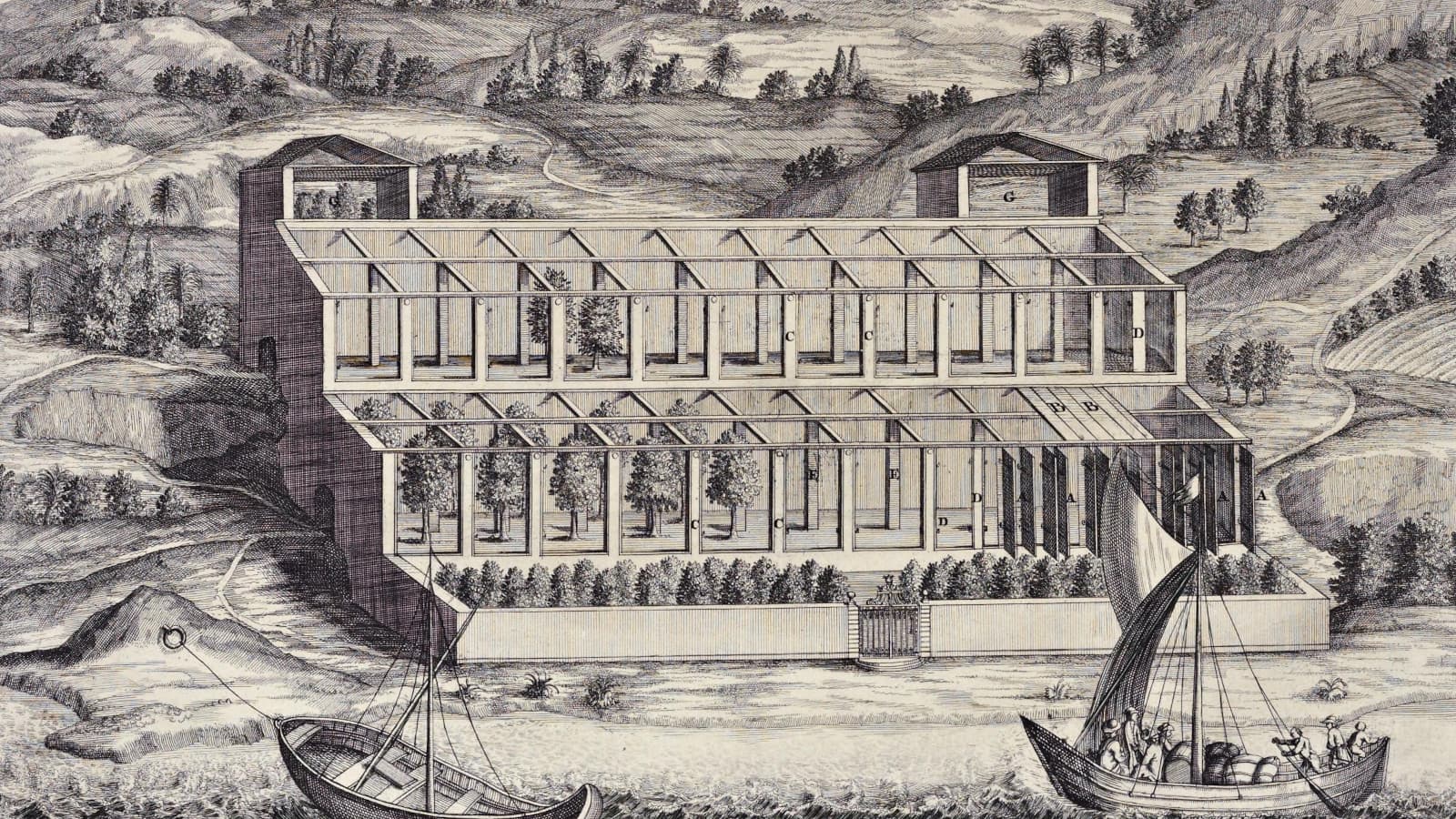

›Citron de Menton‹
My theory that the Ritz in Paris probably used fully ripe lemons from the south of France when preparing the Sidecar – and that these were perhaps sweeter and tasted quite differently from those available to us today – proved to be on the right track. I found references to lemons from Menton, a place I had not heard of until then.
I read that the Menton lemon was the foundation of the prosperity of the Monegasque princely house, to whose realm Menton belonged at the time and which levied exorbitant taxes on the lemon trade. The Menton lemon was said to be the finest in Europe and to differ from other varieties. They contain five times as much sugar, have only a moderate acidity, an excellent shelf life, and the peel is extremely aromatic, sweet and not bitter. The reason for this special aroma is said to be Menton’s unique geographical location; to withstand the cold, the lemons contain more sugar and essential oils than those grown elsewhere. [3] [4] [13]
Wouldn’t it stand to reason that this variety of lemon was also supplied to Paris from the French Mediterranean coast? Why would anyone resort to imported goods unnecessarily? The high sugar content could well be the reason why the original Sidecar recipe worked. This, then, was a lead worth following up on and verifying. So what is the story behind these lemons from Menton?
The application for protection
The ‘Citron de Menton’ is a protected designation, and so we can find out more about it in the relevant application for protection. [11]
Today, the ‘Citron de Menton’ may only be grown in the Alpes-Maritimes department, in the municipalities of Castellar, Gorbio, Roquebrune-Cap-Martin, Sainte-Agnès and Menton. [11]
In the past, a local variety was mainly grown in Menton. However, it was particularly susceptible to infection by a fungus and was severely decimated in the region from 1956 onwards. Consequently, efforts were focused on more resistant varieties and rootstocks. Today, the more resistant varieties Adamo, Cerza, Eureka and Santa Teresa are cultivated, as these – according to the application – most closely resemble the characteristics of the old Menton variety. Apart from the historic Menton variety, only these four are authorised as ‘Citron de Menton’; however, further varieties may be added. [11]
Allow me to make a brief comment here, in anticipation of my research findings: the situation is not quite as set out in the application for protection. The ‘Eureka’ variety, to give one example, bears no resemblance whatsoever to the old varieties.
The diameter of the ‘Citron de Menton’ ranges from 53 mm to 90 mm. It is harvested by hand and is not subsequently treated with chemicals or coated with wax. The proportion of filtered juice is at least 25 per cent of the fruit’s total weight. The juice is intensely fragrant, highly aromatic and has a slightly sour, non-bitter flavour. [11]
Historical context in the application for protection
The application for protection also provides a brief historical overview of the significance of the lemon. According to this, the first lemon trees in Menton are mentioned in a notarial deed dating from 1471. However, citrus fruits were not cultivated on a large scale until the 17th and 18th centuries, and the heyday of cultivation and trade was between the mid-18th and mid-19th centuries. At that time, citrus cultivation was the most important economic sector in Menton. Around 1860, some 35 million lemons were exported annually, mainly to England, Germany, Russia and even North America. From the second half of the 19th century onwards, lemon cultivation declined. The reasons for this were the small size of the individual farms, tree diseases and severe weather, including two exceptional frosts which severely damaged lemon production. Furthermore, only relatively small quantities could be exported via the small harbour in Menton. At the same time, Italian and Spanish lemons benefited from low customs duties, which were introduced in 1861 and 1866. Lemon production in Menton continued to decline in the 20th century. In 1956 in particular, a fungal disease caused extensive damage to the orchards, and rural depopulation also contributed to the decline. [11]
Lemons in 1785 – An Overview
Let’s stay in the Old World for a little while longer. Are there any historical sources that provide us with further interesting details, helping us to understand what sort of lemons were used in the past and where they came from?
1785 The European lemon trade
Johann Georg Krünitzen’s ‘Oekonomische Encyklopädie’ (Economic Encyclopaedia) from 1785 provides information on the lemon trade in Goethe’s time: “Every year, there is a vast trade in lemons throughout Europe, both by sea and by land, and whole wooden crates full of them are sent from Spain and Italy to all manner of places. Most lemons come from St Remo, Nice, Menton or Monton, a small town in Savoy, where they are sold only at certain times – about two or three times a year, in May and September – once they have grown well, with the permission of the local council, and are then dispatched by sea and land via Marseille and Lyon to other countries. However, only those that do not fit through an iron ring—the thickness of which is determined by official decree—are sold here. The rest, being too small, are set aside and serve merely to have their juice squeezed out, which is then transported in small barrels to Avignon and Lyon for use by dyers. See ‘Lemon juice’. A great deal of this juice also comes from Sicily, which is sent to France for the same purpose. However, little benefit is derived from these lemons, as they do not keep well. The aforementioned lemon crates are oblong and are often packed in batches of 600 to 800 pieces, wrapped in paper. If they arrive frequently, one can buy a crate for a few thalers. In Germany, they are sold by Italians and general merchants, whilst in coastal towns they are sold by so-called lemon sellers. If lemons are to be of good quality, they must have plenty of juice and little white pith. However, there are also those in which the opposite is true, and these are then called ‘thick-skinned’. Since lemons are used primarily for their juice, such thick-skinned fruits – which generally look the most attractive on the outside and are larger, and thus more tempting – are held in lower regard. There are lemons which also have a slightly bitter taste and are therefore disliked.” [6-153] [6-154]
– “Es wird mit den Citronen jährlich zu Wasser und zu Lande durch ganz Europa ein allgemeiner großer Handel getrieben, und man schickt ganze hölzerne Kisten voll aus Spanien und Italien aller Orten hin. Die meisten Citronen kommen von St. Remo, Nizza, Menton oder Monton, einer kleinen Stadt in Savoyen, wo sie nur in gewissen Zeiten, etwa des Jahres zwey oder drey Mahl, im May und September, nachdem sie wohl gerathen, mit Bewilligung des dortigen Rathes, verkauft, und alsdann zu Wasser und Lande über Marseille und Lyon in andere Länder versendet werden. Man verkaufet aber hier nur diejenigen, die nicht durch einen eisernen Ring gehen, dessen Dicke durch obrigkeitlichen Befehl bestimmet ist. Die übrigen werden, als zu kleine, beyseit geleget, und dienen bloß den Saft daraus zu drücken, welchen man in Fäßchen nach Avignon und Lyon, zum Gebrauch der Schönfärber, verführet. Siehe Citronen-Saft. Es kommt auch dieses Saftes viel aus Sicilien, den man zu gleichem Gebrauche nach Frankreich schickt. Man zieht dessen aber wenig aus den Citronen, weil sie sich nicht gut aufheben lassen. Obgedachte Citronen-Kisten sind länglich, und öfters in einer 6 bis 800 Stücke mit Papier eingepackt. Man kann, wenn sie häufig ankommen, die Kiste für wenige Thaler kaufen. In Deutschland werden sie von den Italienern und Materialisten, in Seestädten aber von so genannten Limonienverkäufern geführet. Die Citronen müssen, wenn sie gut seyn sollen, vielen Saft und wenig weißes Fleisch haben. Man hat aber auch solche, bey denen es sich umgekehrt verhält, und die man sodann dickschalig nennt. Da die Citronen vornehmlich des Saftes wegen genutzt werden, so sind dergleichen dickschaligen Früchte, welche gemeiniglich von aussen das schönste Ansehen haben, und größer, also verführerischer sind, weniger geachtet. Es gibt Citronen, welche auch etwas Bitteres an sich haben, und daher verhaßt sind.” [6-153] [6-154]
This text raises questions and provides clues as to which topics are of interest for our research:
The main growing region for lemons is the Mediterranean coast, stretching from Nice in France via Menton to Sanremo. It is therefore worthwhile to look not only at Menton, but at the Riviera as a whole.
We learn that there were strict quality controls in Menton. Were there similar controls in other growing regions? And what was the minimum diameter required for fruit from Menton?
Lemons from Menton that did not meet the requirements were processed into juice and then used in the dye works. What was the juice needed for there? And does the reference to Sicily exporting only juice to France imply that inferior lemons were produced there, which were unsuitable for export as whole fruits? After all, only juice was sent from there to France, not whole fruits.
Only Spain and Italy are mentioned as exporters of lemons – did Sicily, as part of Italy, count among them, even though it is mentioned further down solely as a supplier of juice?
We also learn that consumers preferred fruit that contained plenty of juice and was not bitter. Were these preferences specific to Germany? And what quantity was meant by ‘plenty of juice’ back then?
So let us embark on a journey into the past of lemon cultivation and trade. There is much to discover.
The Riviera and Lake Garda
Goethe in Italy in 1782
Let us take a journey back in time to the year 1782. Johann Wolfgang von Goethe published one of the most famous German poems, in which he extols the longing for Italy that was widespread amongst Germans. [33] The first stanza reads:
“Do you know the land where the lemon trees blossom,
Where golden oranges glow amongst the dark foliage,
Where a gentle breeze blows from the blue sky,
Where the myrtle stands still and the laurel towers high,
Do you know it well?
Thither! Thither
I long to go with you, O my beloved!“
– »Kennst du das Land, wo die Zitronen blühn,
Im dunkeln Laub die Goldorangen glühn,
Ein sanfter Wind vom blauen Himmel weht,
Die Myrte still und hoch der Lorbeer steht,
Kennst du es wohl?
Dahin! Dahin
Möcht’ ich mit dir, o mein Geliebter, ziehn!« [17-7] [33]
The fascination with Italy stems from the fact that, during the Renaissance, Italy became the centre of cultural renewal and therefore remained the preferred destination for visual artists right up until the 19th century, as they wished to see the classical antiquities. Many poets, painters, sculptors and architects therefore travelled to Italy and settled in Rome as ‘German Romans’. [34]
I am firmly convinced that Goethe’s poem does not refer to the blossoming lemon trees of the Amalfi Coast. Nor does it refer to the lemons of Sicily, as is suggested in otherwise reliable books. [42-61] The centre of lemon cultivation and export was not only Menton, but also northern Italy. We should therefore situate these blossoming landscapes there. Goethe saw it this way too, for in his *Wanderjahre* (Years of Pilgrimage), Wilhelm Meister makes his first pilgrimage to Mignon’s homeland, where he had heard this poem – namely Lake Maggiore. [33] Northern Italy was home to the northernmost lemon-growing region. [16-147]
However, lemons were grown not only on Lake Garda but along the entire coastline of the Italian Riviera, as Johann Georg Krünitz wrote in his encyclopaedia in 1785: “Most lemons come from San Remo, Nice, Menton or Monton“. So let us set out in search of clues.
1889 Lemons in California – Section: Northern Italy
In 1889, a report on lemons was published in California, which also described their distribution in the Old World, initially, it would appear, along the northern coast of the Mediterranean: “In Italy the best results in lemon culture are secured near the seashore, so near that in many instances the trees are planted in the sands which have been washed up by the waves. They are, however, in such cases protected from cold sea breezes by hedges. From the seashore to an altitude of one thousand five hundred or two thousand feet is this industry successfully prosecuted, and in some instances to higher elevations. In the island of Sicily the conditions are somewhat changed, and although the trees are planted close to the shore, as in Italy, yet the results are unsatisfactory, the trees being more liable to the attacks of pernicious insects, as well as of disease, the best orchards being at a considerable distance from the sea, planted in rich soil, with plenty of water for irrigation: and yet, where the best possible conditions are secured, a tree in full bearing is expected to yield only about six hundred fruits in a year. In Venitia the lemon is cultivated with perfect success, in soil heavily charged with potash and lime, which makes it of a loose and friable character, and not inclined to bake or shrink, and into which the heat of the sun can easily penetrate. In Turkey the lemon is planted in rich clay soils, the product being large, and the quality excellent. The difficulties surrounding the cultivation of the lemon in the vicinity of Venice are greatly aggravated by liability to frost; and so great is this danger that in all orchards provision is made to ward it off by fires, built in and around them, when the temperature approaches the freezing point.” [28-222]
Lake Garda
The western shore of Lake Garda offers favourable environmental conditions for growing Mediterranean plants. From the 15th century onwards, the cultivation of citrus fruits was promoted through extensive construction projects, as the citrus trade was lucrative. Huge brick greenhouses were built for the citrus plants, which were covered and sealed with wooden panels in winter. [55]
In his ‘Nürnbergische Hesperides’, published in 1708, Johann Christoph Volkamer writes about Lake Garda:
“… and the whole region around Lake Gard is a veritable earthly paradise, where citron, lemon and bitter orange trees, along with other delicate fruits, grow in great abundance and are very frequently distributed far and wide throughout Germany.” [46-84]
– “… und die gantze Gegend dieses Gard-Sees ein recht irdisches Paradeiß ist / woselbst die Citronat- Citronen- und Pomerantzen-Bäume / samt andern delicaten Früchten / in grosser Menge wachsen / und in Teutschland sehr häuffig weit und breit verführet werden.” [46-84]
“The main town of Salò lies along the shore of this lake, and throughout this entire region – as far as Riva – one finds a great many orange groves, which are therefore commonly referred to as the Solodian or Rivian groves.” [46-84]
– “Seitwärts am Ufer dieses Sees liegt die Haupt-Stadt Salò, und in selbiger gantzen Gegend / biß gegen Riva hin / findet man die Pomerantzen-Gärten in grosser Anzahl / welche man daher Solodianische oder Rivianische Gärten zu nennen pfleget.” [46-84]
“In this Salodian region lie Maderno, Toscolano and several other towns, where, thanks to the good soil and water, as well as the temperate and very healthy air, the most magnificent and delicious fruit is grown, and where there are many orange groves cultivated with great diligence and skill; there, alongside which grow citron and lemon trees of many varieties in extraordinary abundance; they are exceedingly famous and blessed. Moreover, these orchards are exceedingly beautiful, for they remain green throughout the year and are never without fruit, which is exported to Germany with great profit.” [46-85]
– “Auf diese Salodianische Gegend kommen Maderno, Toscolano, und mehr andere Oerter / welche wegen des guten Erdreichs und Wassers / auch gemässigter sehr gesunder Lufft / die herrlichst- und köstlichste Früchte / und der vielen durch grossen Fleiß und Kunst angebauten Pomerantzen-Gärten / allwo / nebenst dennenselben / der Citronat- und Citronen-Bäume vielerley Sorten in ungemeiner Menge wachsen / überaus berühmt und gesegnet sind / auch stehen diese Gärten überaus schön / weil sie das gantze Jahr durch grünen / und niemal ohne Früchte sind / welche man mit grossem Nutzen in Teutschland versendet.” [46-85]
He also describes the buildings he refers to as ‘Pomeranzenhäuser’ (bitter orange houses) and includes an illustration: [46-20]
“For the benefit of the reader, I have therefore included here a brief description of the Salodan orange groves, as the inhabitants there usually cultivate them along the riverbank: these are partly single, and partly arranged in rows of two or three; however, the rear ones are always higher than the front ones, as they stand at the foot of the same mountain so close to the lake’s shore; and this not only presents a beautiful sight, but also affords the trees a greater benefit, as they can be better bathed in the warmth of the sun. They build these orange houses of varying lengths – some a hundred feet long, others even longer – depending on the space and circumstances. As for the width, they generally ensure that two large trees can stand comfortably apart. Those who have two or three orange houses in this way, one behind the other, keep the first or foremost one completely open, without covering it with boards or closing it off during the winter; in it they keep the smaller and commoner varieties, as well as the common bitter orange trees, which can tolerate the cool air somewhat better than the more delicate species of such fruit trees: In the following ones, however, they keep the more delicate and rarer trees of the same kind, both planted in the ground and in pots; and generally the front row is planted with citron trees — or rather, a trellis of such — whilst the other row is planted with lemon and rare bitter orange trees; and these have, at the very front, a stone base at chest height, upon which stone pillars are erected, as marked in the sketch with the letter C, , which thus remain standing throughout summer and winter: when it begins to turn cold, and the Italians wish to close up such houses, they fasten thick planks or floorboards securely to both sides of the pillars — as wide as the pillars themselves — on which there are iron hooks, as can be seen at letter D, so that the wooden doors or shutters can be hung upon them, such that so that two of them fit between each pillar; and when the weather turns rough or mild, mixed with sunshine, they are in the habit of opening them; on the other hand, they make no use of windows, as we do in colder climes; yet they take the greatest care to seal all the gaps between the boards and the doors. When it freezes right up to the top – though this rarely happens – they dig long trenches and various passages, fill them with coal, and set them alight. In the middle of their orange houses, they dig in various poles or wooden pillars, the length of which varies according to the size of the house, as shown in fig. E, upon which the beams they need to cover the roof rest; and then they cover these with the boards, as shown in fig. BB, which they open and close with the utmost care, depending on the weather, whenever the sun shines and it is not freezing, they immediately open the shutters on the sides and uncover some of the boards on the roofs so that the sun may warm the trees; at the very top, however, on both sides, there are special chambers in which they store the timber during the summer, as indicated in fig. G.” [46-18] [46-19]
– “Dem günstigen Leser zu lieb hab ich hie nechst einen Abriß der Salodanischen Pomerantzen-Gärten beyfügen wollen / wie sie die Einwohner akkda am gard-Gee zu haben pflegen: nun sind selbige zum theil einfach / theils zwey- biß dreyfach hinter einander angeleget; jedoch die hintere allezeit höher als die vordere / weil sie am Fuß des daselbigsten Berges so nahe am Ufer des Sees stehen / und gibt solches nicht nur ein schönes Ansehen / sondern auch denen Bäumen einen mehrern Nutzen / weil sie von der alles erwärmenden Sonne desto besser bescheinet werden können. Der Länge nach machen sie diese ihre Pomerantzen-Häuser unterschiedlich / theils auf hundert Schuh / theils auch länger / nach dem der Platz und die Gelegenheit es leiden. Mit der Breite halten sie es gemeiniglich so / dass zwo Ueilen Bäume raumig stehen können. Diejenige / welche zwey oder drey Pomerantzen-Häuser also hinter einander haben / halten das erste oder vorderste gantz offen / ohne dass sie es Winters-Zeit mit Bretten bedecken und zuschliessen / darinn halten sie die geringe und gemeine Gewächse / auch was gemeine Pomerantzen-Bäume sind / welche den kühlen Lufft etwas besser ertragen können / als die zartere Arten solcher Frucht-Bäu,e: In denen folgenden aber / halten sie die zartere und rarere Bäume derselben / so wol im Erdboden als in Gefässen stehend / und gemeiniglich die vordere Zeil mit Citronat- oder vielmehr ein Spalier von solchen / die andere Zeil mit Citronen- und raren Pomerantzen-Bäumen besetzet / und haben selbige zuvorderst eine steinene Brusthöhe / worauf steinene Pfeiler aufgerichtet / wie im Abriß mit lit. C. bemercket / welche also Sommer und Winter stehend bleiben: wann es dann beginnet kalt zu werden / und die Welsche solche Häuser zumachen wollen / so machen sie auf beeden Seiten der Pfeiler dicke Bretter oder Dielen vest daran / so breit die Pfeiler seyn / an welchen eiserne Hacken befindlich / wie bey lit. D. zu sehen ( dass man die höltzerne Thüren oder Laden daran hangen kan / also / dass zwey derselben zwischen jeden Pfeiler kömmen / und nach dem ein rauhes oder liebliches mit Sonnenschein vermischtes Wetter einfället / solche so dann zu eröffnen pflegen / hingegen gebrauchen sie sich keiner Fenster / wie bei uns in den kältern Landen / doch gleichwol vermachen sie alle Klüffte zwischen denen Brettern und denen Thüren auf das allerfleissigste: Wann es oben gleichwol hinen gefrieret / wie wol es selten geschiehet / machen sie lange Gräben und mancherley Gänge / füllen sie mit Kohlen / und feuren diese an. Mitten in ihren Pomerantzen-Häusern graben sie nach der Länge derselben unterschiedliche Stöcke oder hölzerne Pfeiler ein / wie bey lit. E. worauf die Balcken / die sie zum Dach zu belegen brauchen / ruhen / und dann bedecken sie diese mit denen Brettern / wie bey lit. BB angezeiget / welche sie / nach dem die Witterung ist / auf das sorgfältigste auf- und zumachen / dann wann die Sonne scheinet / und es dabey nicht gefrieret / eröffnen sie gleich so bald die Laden an denen Seiten / und decken etliche Bretter an den Dächern auf / dass die Sonne die Bäume erwärme / zu oberst aber / an beeden Seiten seyn besondere Gemächer / worinnen sie Sommers-Zeit das Holtzwerck aufheben / wie bey lit. G angedeutet worden.” [46-18] [46-19]
By the end of the 19th century, many people found work in citrus cultivation, and the trade in citrus fruits ensured a thriving economy, underpinned by the uniqueness and outstanding quality of the fruit. Citrus cultivation reached its peak in the mid-19th century, with an average annual harvest of 15–20 million lemons for export. [55]
To promote the lemon trade, the Società Lago di Garda was founded in Gargnano in 1840. This led to citrus fruits from Lake Garda being exported not only to the Austrian and German states, but as far afield as Hungary, Bulgaria and Russia. After 1860, lemon cultivation declined. Reasons for this included, for example, a disease affecting the citrus trees, competition from southern produce following the unification of the Kingdom of Italy, the chemical production of citric acid, and the high costs of materials and labour. All of this led to citrus cultivation being abandoned. [55]
The Italian Riviera
Citrus cultivation was certainly even more important in Liguria than it was on Lake Garda. It seems to have been forgotten by many, and as early as 1972, when Massimo Quaini was researching the agricultural history of Liguria, he noted: “The cultivation of citrus fruits in Liguria has so far been completely neglected by modern research, even though it has at times been the dominant feature of the agricultural landscape in certain coastal areas.” [51-300]
– “La cultura degli agrumi in Liguria, pur avendo caratterizzato talvolta in modo predominante il paesaggio agrario di alcuni tratti del litorale ligure, è stata finora del tutto trascurata dagli studiosi moderni.” [51-300]
Liguria, however, was the Italian region where citrus cultivation was most advanced in the Middle Ages. [51-302] There, citrus cultivation was particularly important and shaped the landscape in the areas of Sanremo in the west and Rapallo in the east. [51-303]
Whilst Giacomo Bracelli describes Sanremo in 1418 simply as “citri ferax”, “abundant in lemons”, [51-303] schreibt er über den Golf von Rapollo: “From here, wine, oil, chestnuts and lemons – as they are commonly known – are exported in large quantities.” [51-303]
– »hinc vinum, oleum, castane ac citroni, sic vulgariter nominati, in magna copia transferuntur« [51-303]
Giacomo Giustiniani, on the other hand, provided more detailed information about Sanremo in 1537: “The Sanremo region is rich in lemons, citron and oranges, which are not only a delight to the eye and a treat to the palate, but are also of great utility, as these fruits are transported to many places by sea and overland; … The Jews from Germany and other places also come to Sanremo to buy citron to use for the Feast of Tabernacles.” [47] [51-303] [51-304]
– “Il territorio di San Remo è tutto pieno di Citroni Limoni, Cedri e Aranzi non solamente dilettevoli al vedere e buoni al gusto ma di grande utilità, come che questi frutti si portin o per mare e per terra in più luoghi; … . Gli Hebrei etiandio di Alamagna e di altri luoghi mandano a comprar dei cedri, per la solennità dei Tabernaculi, a S. Remo.” [47] [51-303] [51-304]
Although Sanremo and Rapallo held undisputed supremacy in lemon cultivation on the Italian Riviera during the 17th and 18th centuries, there were other production centres alongside them. The 17th-century land registry records from the Riviera di Levante, [59] situated east of Genoa, [53] show that citrus orchards were quite widespread there as part of the traditional system of mixed cultivation. However, there was no trade organised on the same scale as in Sanremo, for example. [59]
In the 18th century, the border region between Sanremo and Nice was a vast citrus orchard. Citrus fruits were cultivated there over a stretch of 50 kilometres from the Middle Ages until the mid-19th century. [52]
But lemons also thrived magnificently around Genoa. For example, a travel guide from 1887 confirms: “Behind Voltri, lemons thrive splendidly.” [15-59] Voltri borders Genoa.
– “Hinter Voltri gedeiht die Zitrone vortrefflich.” [15-59]
Statuten
From the 11th to the 19th century, Sanremo was undoubtedly the most important market for citrus fruits. The statutes of 1582 show that the municipality monopolised the harvest and sale of these fruits in order to raise the funds required for the expansion of the harbour. The statutes also state: “It is well known and evident that the whole town of San Remo lives off the fruit that grows there, and that this is the largest and most important trade carried out there, particularly in citron and lemons, and that without these the town would be destroyed and ruined.” [51-306] [52]
– “È noto, e manifesto, che tutto il luogo di S Remo si mantiene delli frutti, quali ivi nascono, e che è il maggiore, e principal negotio, che ivi si faccia massime di cetroni, e limoni, e senza quello luogo se n’anderia distrutto e rovinato.” [51-306] [52]
Under the terms of the statutes, harvesting, sorting and sales in Sanremo were organised and controlled by the state. Landowners were not even allowed to harvest the crops themselves – they were only required to water and fertilise the land, and then simply collect the profits. [59]
As the municipality was the sole seller of the fruit, there were no competitors. This guaranteed higher selling prices, higher incomes for the farmers and higher tax revenues. For centuries, this approach ensured Sanremo’s prosperity. [59]
As such regulations were beneficial to all concerned, statutes of this kind were not confined to Sanremo. Virtually every municipality had its own set of regulations, under which magistrates appointed by the mayor oversaw the harvesting and trade of citrus fruits. [52]
Bordighera, for example, also enacted regulations in 1776 modelled on those of Sanremo. [59]
These have been preserved in the Departmental Archives of Nice. According to them, four lemon magistrates were elected every April to oversee the industry. [52]
A municipal statute of Borghetto dating from 1772 has been preserved in the Departmental Archives of Nice. [49] [58] It regulates the cultivation, harvesting and sale of lemons under the supervision of a lemon magistrate, similar to the regulations in Bordighera and Sanremo. [58] Unfortunately, the authors do not specify which Borghetto is meant – I suspect it might be Borghetto d’Arroscia.
Menton, too, had such statutes, [59] as Johann Georg Krünitz had already suggested. There, however, according to R. Sartore, unlike in Liguria, significant lemon cultivation did not begin until the 16th century, and commercialisation did not take place until the 17th century. [59]
Thus, from the 15th to the 19th century, citrus fruits were an important source of income for Sanremo, the main market, and for other towns in the region such as Ospedaletti, Bordighera, Borghetto S. Nicolò, Ventimiglia, Porto Maurizio, Dolceacqua, Nice, Roccabruna, Menton and Monaco. [58]
The Sanremo citrus monopoly
Where there are profits to be made, monopolies are never far away. That is why we should take a moment here to recount a story from Sanremo. In 1662, the Venetian merchant Bernardo Portelli sought to obtain a monopoly in Sanremo on the marketing of citrus fruits in certain Italian and foreign markets. [59]
His request was approved by the town council and notarised on 14 June. It was contractually agreed that he would purchase 25 million lemons annually at a price of 6 lire per thousand, 500,000 sweet oranges and 30,000 sour oranges at a price of 3 lire per thousand, and any substandard lemons at 1.4 lire per thousand. He also bears all costs for harvesting, loading, transport and the associated taxes. Furthermore, there are additional arrangements. [59]
This was a very advantageous contract for Bernardo Portelli, as he was granted a monopoly on the export of citrus fruits to major markets: England, France and the Netherlands for German-style lemons (‘limoni alla tedesca’), the Grand Duchy of Tuscany from Livorno, and the whole of northern Italy from Sestri Levante for caravan lemons (‘limoni alla caravana’) and oranges. [59]
His attempt to establish a monopoly did not go unnoticed and posed a threat to many local traders. The authorities in Genoa also took notice and imposed additional, particularly onerous contractual clauses on Bernardo Portelli. [59]
It would appear that the monopoly was no longer considered lucrative enough, for on 4 September Bernardo Portelli transferred the contract to the Genoese nobleman Giuseppe Monteverde, who on the same day formed a partnership with the notary and Sanremo town councillor, Giovanni Battista Bottino. This led to significant conflicts of interest within the town council. An opposition quickly formed amongst the most influential councillors, who saw the monopoly as a serious hindrance to their own activities. Under the pretext of procedural and substantive flaws, they ultimately succeeded in persuading the council and the mayor to reject the monopoly. [59]
Harvest volumes
We can see from this contract that a considerable number of lemons were harvested in Sanremo in 1662: 25 million were to be purchased annually.
If we bear in mind that citrus cultivation reached its peak in the mid-19th century, [59] we can imagine the quantities of lemons that were harvested. There are estimates that, at the height of citrus cultivation, the annual harvest may have been between 70 and 80 million, or perhaps even 100 million. [52] I consider this estimate to be far too low, as in Menton alone, 30–40 million were harvested annually around 1892. [8]
Ring2
In 1785, Johann Georg Krünitz told us the following about lemons from Menton: “However, only those that do not fit through an iron ring—the thickness of which is determined by official decree—are sold here.” [6-153]
– »Man verkaufet aber hier nur diejenigen, die nicht durch einen eisernen Ring gehen, dessen Dicke durch obrigkeitlichen Befehl bestimmet ist.« [6-153]
This measurement was not invented in Menton. It, too, was something that had been adopted from Sanremo. The ring was introduced in Sanremo in 1584, initially just a single one. Its purpose was to distinguish the lemons into two categories. Lemons intended for trade were of outstanding quality and had to be large enough not to fit through the ring. Later, it seems, the number of rings increased to four or more, with different diameters to meet varying requirements. [57]
The statutes of Bordighera, drawn up in 1776, specified which iron rings were to be used there for measuring lemons. These are: the ‘anelu minuto’ with a diameter of 35 mm; the ‘anelu spezin’ with a diameter of 47 mm; the ‘anelu de Mentun’ with a diameter of 51 mm; and the ‘anelu grossu’ with a diameter of 54 mm. [52]
In Borghetto, too, iron rings were used to determine which lemons were of marketable quality. [58]
In his book on the history of Sanremo, E. Bernardini lists the various ring sizes and has considered the approximate average lemon weight corresponding to each. He concludes: [57]
›Limoni alla tedesca‹ and ›agru‹
The citrus fruits were classified according to their quality: those intended for trade were called ‘limoni alla tedesca’ or ‘todesca’, meaning ‘German-style lemons’. These were picked unripe and without their stalks, wrapped in special paper and then carefully packed into crates. They ‘ripened further’ before reaching the market. [52] [58]
There were also the ‘caravan lemons’, known as ‘limoni alla caravana’, ‘alla baca’ or ‘bianchi’, which were intended for the local market or for consumption solely within Liguria; these were picked when ripe and with their stalks still attached, and were unsuitable for export. [52] [58]
As early as 1714, Christoph Volkamer reported on ‘limoni alla tedesca’ and ‘limoni alla caravana’, although he did not refer to them by those names. He tells us that the Italians made a very profitable trade in lemons. Fruit for the local market was harvested when ripe, whilst fruit for export was harvested when half-ripe. [45-33]
“Most of the world delights in the delicious fruits that come from the ever-praised bitter orange and lemon trees, and the Italians—among whom such trees are found in great abundance and bear fruit with remarkable fertility—know how to derive a considerable profit from them by sending the fruits to foreign countries for sale. The inhabitants of Lake Garda undertake the harvesting of these fruits in the months of September and October, and take great care to sort the fully ripe and the half-ripe fruits from one another; they keep the former for themselves and sell them either at the borders or in the nearby towns within Italy; the semi-ripe ones, however, are sent overland to foreign destinations for sale.” [45-33]
– “Die mehrste Welt delectirt sich / mit schmackhafften Früchten / so von den niemals genug belobten Pomeranzen- und Citronen-Stämmen zu haben sind / und die Italiener / bei welchen dergleichen Bäume in grosser Menge / und in vortrefflicher Fruchtbarkeit anzutreffen / wissen einen ansehnlichen Profit darauszuziehen / wann sie die Früchte in Fremde Länder zum Kauff versenden. Die Einwohner am Gard-See / nehmen die Abbrechung derselbigen im Monat Septembr. und Octob. vor die Hand / und suchen gar fleissig die ganz-zeitige und die halb-zeitige aus / sondern sie von einander ab / behalten jene bei sich / und verkauffen sie entweder an den Gränzen / oder in den nahegelegenen Orten / innerhalb Italiens; die halbzeitige aber werden / über Land / nach den fremden Orten / zum verkauff abgeschicket.” [45-33]
In 1785, Johann Georg Krünitz made the following observation regarding these crates: “The aforementioned lemon crates are oblong in shape and are often packed in batches of 6[00] to 800 pieces, wrapped in paper.”
– “Obgedachte Citronen-Kisten sind länglich, und öfters in einer 6 bis 800 Stücke mit Papier eingepackt.”
However, as we learn from a publication dating from 1813, there were also crates containing fewer lemons. It was written at the time: “Lemons are picked almost every month of the year. When they are to be dispatched, they are placed on some straw in the shops, the best ones – which must have a circumference of at least 55 mm – are selected, wrapped and placed in crates just like oranges. These crates are known in the trade as ‘Flemish crates’ if they contain 400 fruits; as ‘Lyon crates’ if they contain 500 fruits; and as ‘small crates’ if three of them contain 1,000 fruits, each 5 cm thick.” [37-73]
– “On cueille les citrons presque à chaque mois de année. Lorsqu’on veut en faire des expéditions, on les dépose dans des magasins sur un peu de paille, on choisit les meilleurs, qui doivent avoir 55 millimètres au moins de circonférence, on les enveloppe et on les place dans des caisses comme les oranges. Ces caisses portent dans le commerce le nom de caisses flandrines, si elles renferment quatre cents fruits; de caisses lyonnaïses, si elles en contiennent cinq cents; enfin, on appelle petites caisses celles dont trois renferment mille fruits de cinq centimètres d’épaisseur.” [37-73]
›Agru‹
The smaller fruits that passed through the rings were pressed to produce ‘agro’ or ‘agru’. [52] [57] [58] A 1909 encyclopaedia of Italian dialects defines ‘agru’ as “lemon or bergamot juice extracted using a press“. [50-14] This ‘agru’ was used in dyeing to fix the dye to wool and fabrics. [52] [57] [59]
Johann Georg Krünitz also reported on this: “The rest, being too small, are set aside and serve merely to extract the juice, which is transported in small barrels to Avignon and Lyon for use by dyers.” [6-153] [6-154]
– “Die übrigen werden, als zu kleine, beyseit geleget, und dienen bloß den Saft daraus zu drücken, welchen man in Fäßchen nach Avignon und Lyon, zum Gebrauch der Schönfärber, verführet.” [6-153] [6-154]
However, the juice was also used in beverages and in medicine as a haemostatic and diuretic. [52]
Christoph Volkamer also reports on ‘agru’ in 1714. He writes that surplus or unsaleable lemons are squeezed to sell the juice for silk dyeing. However, fraud is often committed and this juice is adulterated with bitter orange juice to increase profits. Nevertheless, this adulterated juice is less suitable for dyeing than pure lemon juice. [45-33]
“Where lemons grow in abundance, or where they are unable to trade in them for some other reason, they are pressed by them, the juice extracted, and this juice is used for dyeing silk and sold. It often happens, however, that in order to obtain more juice, they mix in sour bitter oranges – which do not grow in such abundance as lemons – amongst them; though this ought not to be the case by right, since pure lemon juice is far more effective and suitable for dyeing silk and other goods. Nevertheless, this mixture is very common and, in Italy—where the juice is indispensable for dyeing—it finds a market in certain places and brings the sellers no small profit.” [45-33]
– “Wo die Citronen allzuhäufig gewachsen / oder wo sie dieselbigen um einer andern Ursach willen / nicht verhandeln können / so werden sie von ihnen gepresset / der Safft daraus gezwungen / und solcher zur Seiden-Färberei angewendet und verkaufft. Wobei es zum öfftern geschieht / dass sie / um desto mehr Safft zu überkommen / die saure Pomeranzen / welche nicht in so häuffiger Quantität / als die Citronen / wachsen / darunter mengen; so aber von Rechts wegen nicht seyn solte / indem der pure Citronen-Safft zum Färben der Seiden / und andrer Waaren / viel tüchtiger und dienlicher ist. Allein diese Vermischung ist gar gebräuchlich / und findet in Italien / wo man den Safft zur Färberei unumgänglich haben muß / an gewissen Orten seinen Abgang / und bringt den Verkäuffern nicht geringen Nutzen.” [45-33]
In the first volume of his ‘Hesperides’ from 1708, Christoph Volkamer put it this way: sour fruits are pressed and the juice sold by the barrel. Juice from Sicily or Messina is regarded as better than that from Lake Garda, as it is used in silk dyeing. It does happen that lemon juice is adulterated with bitter orange juice – though one can taste the difference: if it tastes bitter, it contains bitter orange juice. In the dyeing process, one must use considerably more of such adulterated juice than of proper, sour lemon juice. [46-130]
“They know how to make use of the sour pulp in a different way – by pressing it out of those sour fruits – and filling whole large barrels with it, just as they are in the habit of sending us oil and selling it to us; indeed, in Italy itself they have it brought to Venice from Sicily or Messina under the name ‘Candiote’, which is considered superior to that from Lake Garda: They use it, however, to dye silk, particularly when they wish to dye it the colour of Spanish crimson. Yet it also happens that the juice of these lemons is occasionally adulterated with the sour juice of bitter oranges, by pressing them together at the same time; but this is very quickly detected, for if one takes a little of this ‘Candiotto’ into the mouth to test it and examines the taste to see whether it is bitter, then when one checks this, it would be a sign that the juice is not genuine but adulterated; and, if the result is to be satisfactory, the quantity of this juice used for dyeing the silk would have to be increased considerably, because such a mixture is not as sharp and sour as genuine lemon juice tends to be.” [46-130]
– “Das saure Mark wissen sie auf andere Art zu nutzen / indem sie selbiges von denen sauren Früchten auspressen / und ganze grosse Fässer voll / wie das Oel uns zuzusenden und zu verkaufen pflegen / ja in Italien selbst unter dem Namen der Candiote aus Sicilien oder Messina nach Venedig bringen lassen / welcher vor besser gehalten wird / als der von dem Gard-See: Sie bedienen sich aber dessen zur Färbung der Seiden / zumal wann sie selbige Spannisch-Leib-farb tingieren wollen. Doch geschiehet es auch / dass der Safft dieser Citronen mit dem sauren Safft der Pomerantzen jezuweiln verfälschet wird / indeme sie diesen mit jenen zugleich durchpressen / welches man aber gar bald mercket / indeme / so man zur Probe von dieser Candiotto ein wenig in den Mund nimmt / und durch den Geschmack erforschet / ob sie nicht bitter seye / dann wann man dieses prüfet / wäre es ein Kennzeichen / dass der Saft nicht aufrichtig / sondern verfälscht seye / und müste mit dergleichen die Quantität dieses Safftes zur Färbung der Seiden / wann sie anders wol geraten soll / um ein merckliches vermehret werden / weil solcher darneben nicht so scharff und sauer / als der gerechte Citronen-Safft zu seyn pfleget.” [46-130]
This is an important point: in the dyeing process, it is essential that the lemon juice is as sour as possible. The observation that juice from Sicily or Messina was considered better than that from Lake Garda can only mean one thing: the lemons from southern Italy were more sour than those from northern Italy.
And so Johann Georg Krünitzen’s statement takes on a different meaning when he writes: “A great deal of this juice also comes from Sicily, which is sent to France for the same purpose.” [6-154]
– “Es kommt auch dieses Saftes viel aus Sicilien, den man zu gleichem Gebrauche nach Frankreich schickt.” [6-154]
Shelf life and terroir
Lemons from Sanremo were highly sought after, as those of the ‘bignetta’ quality grade had one distinctive feature: although they shrivelled, they did not rot and had a longer shelf life than other lemons. [52] [59] According to R. Sartore, the reason for this lies in the local climate. [59] Lemons from Menton also exhibited this characteristic. [1-212] [2] It therefore appears to be a characteristic of the terroir. I would like to add that the variety grown may also have an influence.
The fundamental importance of the terroir and the grape varieties suited to it is also confirmed by a Californian text dating from 1907: “The St. Michael orange, the Jaffa orange, or the Sicilian lemon, even when grown from trees raised in other places and taken to other parts of. the world, generally, for the time at least, possess the outward form and general characteristics, but lack the fine quality of the luscious fruit which has secured a world-wide reputation. There is a close relationship, not at all understood, between local conditions and the product of the plants.” [48-205]
To ensure that lemons kept for a long time, they had to be dispatched properly. In 1714, Christoph Volkamer described the various options available. One could either place the lemons in sand, bran or ‘Hiersch’ (whatever that might be). The second method would have been more important for shipping: each lemon was to be wrapped individually in paper, then separated from one another with flax tow so that they did not touch, placed in a small box, sealed airtight with a lid, and stored in a cool place. The semi-ripe fruits packed in this way continued to ripen. [45-33]
“Tanara has discovered the best method for picking and packing the fruit, and reports that one should take only those fruits which are free from blemishes and not overripe, and then place them in clean sand, or in bran, or even in ‘Hiersch’; in this way, they can be kept in good condition for a long time. Palladius offers a further tip, advising that one should pick the fruit together with the tender twigs on which they hang; this way, they will remain in good condition for even longer during transport. It is also advisable to wrap each fruit separately in paper and place them in a box or small chest lined with flax, but in such a way that none of them bump against or touch one another; the lid must be sealed tightly so that air cannot reach the fruit; and the boxes or small chests must then be stored in a vault or in a cellar that is not too damp; in this way, the fruit will remain in good condition for a reasonable length of time, as required, and those that are not yet ripe will, by this method, reach their desired ripeness.” [45-33]
– “Tanara entdecket die beste Manier / wie die Abbrechung und Einpackung anzustellen seye / und meldet: man solle lediglich die jenigen Früchte nehmen / die ohne Flecken und nicht überzeitig sich befinden / und solle sie so dann in klarem Sand / oder in Kleien / oder auch in Hiersch legen / so würden sie lange Zeit gut erhalten werden können. Palladius gibt noch einen Vortheil an die Hand / und will / man solle die Früchte / zusamt denen zarten Aestlein / woran sie hangen / abbrechen / so würden sie noch länger in ihrer Versendung gut bleiben und dauren. Es ist auch ferner rathsam / dass man eine jedwede Frucht absonderlich in Papier einwickle / und sie in eine Schachtel oder Kistlein in Werk vom Flachs lege / jedoch so / dass keine an die andere stosse / noch sie berühre; den Deckel muß man weiter genau zumachen / damit die Lufft nicht zu den Früchten zu kommen vermag / und so dann muß man die Schachteln oder Kistlein / in einem Gewölb / oder auch in einem nicht allzufeuchten Keller / verwahret aufbehalten / so werden die Früchte nach Verlangen / auf eine zimliche Zeit / in ihrer Hüte unanstössig bleiben / und die halbzeitige werden / durch solches Mittel / ihre gewünschte Zeitigung überkommen.” [45-33]
Decline
Frosts and diseases were the great enemies of citrus cultivation. The first recorded mention of a frost dates from 1470. The next followed in 1609. In 1709, the frost was so severe that, at least in Sanremo, many lemon groves were converted into olive groves. [52]
However, the high production figures of the mid-19th century could not be sustained. In the last three decades of the 19th century, a drought caused problems. As lemons require a great deal of water, the number of citrus trees had to be drastically reduced. Farmers switched to floriculture. [59]
There were repeated outbreaks of disease, and reports from 1904 refer to lemon diseases, noting that a fungal disease had spread first to Sicily and then to Liguria. [14-112]
Changes in transport options also had an impact on citrus cultivation in Liguria. According to a text from 1904, the “improved means of transport of the modern age” greatly expanded the market for citrus fruits. It also points out that other growing regions with different climatic conditions have since become important: “Oranges, lemons and mandarins are the main fruits. By far the largest quantities come from Sicily (exported from Palermo) …, followed by southern Italy, particularly on the west coast, … . The further north one goes …, the lower the production becomes, although considerable quantities are still harvested in Liguria, Umbria, the Marche, Lazio and Sardinia.” [18-161]
– “Orangen, Zitronen, Mandarinen sind die Hauptfrüchte. Bei weitem am meisten bringt Sizilien (Ausfuhr von Palermo) hervor … , nächstdem Süditalien, besonders an der Westküste, … . Je mehr gegen Norden … , desto geringer wird die Produktion, obwohl in Ligurien, Umbrien, den Marken, in Latium und Sardinien noch ziemlich viel geerntet wird.” [18-161]
Another text from 1904 confirms this, even though it refers to nearby Menton: “The Menton lemon has a characteristic that is less valued today than it used to be, but is still appreciated by some consumers: if picked at the right time, it can be stored for up to a year.” [1-212]
– »Le citron de Menton a une qualité, moins précieuse aujourd’hui qu’autrefois mais encore recherchée par certains consommateurs: quand il est cueilli à point il peut se conserver un an.« [1-212]
Italian Lemon Varieties – or: The Hesperides by Christoph Volkamer and Giovanni Baptista Ferrarii
To conclude, I would like to return once more to the nature of the lemon varieties found in northern and southern Italy – I thought long and hard about whether I should address this first, after having examined the lemons from Menton and Sicily in more detail, but it seems more appropriate to do so here, as on the Riviera we came across the ‘German-style lemons’, the ‘limoni alla tedesca’, and we have also already heard of ‘agru’.
Germany seems to have been the main buyer of Ligurian lemons – why else would the lemons intended for export have been called ‘limoni alla tedesca’, ‘German-style lemons’?
This raises the question of whether we can deduce anything about the flavour of these lemons from this. What sort of lemons were available in Germany?
To answer this and other questions, it is helpful to consult the ‘Nürnbergische Hesperides’, written by Johann Christoph Volkamer. He was a man of means, travelled regularly to Italy and Constantinople, and planted his garden with numerous valuable citrus trees. In 1708, he published his knowledge on citrus cultivation, including extensive descriptions of the varieties. This book was so successful that a follow-up volume was published in 1714. [44] In his book, he refers to Giovanni Baptista Ferrari’s ‘Hesperides’, which had already been published in Rome in 1646. Ferrari was one of the first to engage scientifically with the taxonomy of citrus fruits; he was a Jesuit and professor of Hebrew at the Collegio Romano, the Jesuit seminary in Rome. He collected data by designing a questionnaire on citrus fruits, which was distributed throughout the Italian peninsula. [38] [42-36] I would therefore also like to quote from this work.
Whilst it is certainly of interest to the keen reader to examine in detail all the lemon varieties he describes – even though he describes only a small fraction of the varieties grown in Italy and elsewhere – such detail is out of place here, as it may obscure the essential points.
Without having verified this statistically, I had the impression that lemon varieties from Lake Garda and northern Italy – and there, apparently, particularly from the Riviera di Ponente, situated west of Genoa, [54] – were predominantly described by Christoph Volkamer as sweet, whilst those originating from southern regions were predominantly sour and bitter. Of course, there were also sweet lemons in southern Italy and sour ones in northern Italy, but nevertheless there appear to have been regional differences. Does that not lead us to the question of whether there might be a reason for this?
We also wish to try to understand what sort of ‘German-style lemons’ the aforementioned were. Which lemons were sent to Germany? Fortunately, Christoph Volkamer writes about the lemons available in Germany. For those who are not interested in the exact wording of his statements, I shall first summarise them so that the quotation itself can be skipped. When describing their characteristics, I shall confine myself to their flavour.
We are faced with one problem here: the taxonomy is complex, and often insufficient distinction is made between citron, lemons, limes, lumies and other citrus groups. The term ‘Zitrone’ in particular is often ambiguous in German.
Limon da Portugal dolce
Christoph Volkamer writes: The ‘Limon da Portugal dolce’ is a sweet lemon which can be obtained from all Italians in Germany who trade in lemons and bitter oranges, particularly in the spring. It grows mainly in Spain and Portugal. From there it made its way to Italy, where, however, it does not grow to the same standard. The peel has a pleasant flavour and is somewhat ‘spicy’. It contains plenty of lovely, sweet and juicy pulp, which is why the fruit is used in Germany to provide special nourishment and refreshment for the sick. [46-131]
“Concerning the Limon da Portugal dolce. This is a variety of sweet lemon, which can be obtained from all Italians in Germany—who sell lemons, oranges and other such fruits, particularly in spring—and is therefore very well known there; they grow chiefly in Spain and Portugal, from where they were subsequently brought to Italy and cultivated there, though they do not grow there to the same degree of perfection as in the two aforementioned kingdoms. As for their shape, these fruits are still fairly large and taper slightly at the top; the peel is somewhat thick and brightly coloured; the flavour is pleasant and somewhat spicy: They contain a great deal of pulp, which is somewhat reddish, like that of a bitter orange, and is at the same time sweet, succulent and juicy; hence they also serve, amongst us, as a special source of nourishment, hydration and refreshment for the sick.” [46-131]
– “Von den Limon da Portugal dolce. Ist eine Art süsser Citronen / welche bey allen Italiänern in Teutschland / welche Citronen / Pomerantzen und andere dergleichen Früchte sonderlich im Frühling verkauffen / zu bekommen und dahero sehr wohl bekannt; sie wachsen hauptsächlich in Spanien und Portugal / davon sie hernach in Italien kommen und nachgezogen worden / allwo sie doch nicht in solcher Vollkommenheit / wie in beeden vorbesagten Königreichen wachsen. Was die Gestalt belanget / so sind diese Früchte annoch zimlich groß / und gehen oben etwas spitzig zu / die Schelffe ist etwas dick und hochfärbig / am Geschmack angenehm und etwas würzhafftig : Sie haben viel Marck an sich / welches etwas röthlicht / nach der Art des Pomerantzen-Marckes / anbey lieblich / süß und safftig / dahero sie auch bey uns denen Krancken / zu einer besondern Labung / Anfeuchtung und Erfrischung dienen.” [46-131]
It is interesting to note that he states this variety of lemon originally came to Italy from Portugal and Spain, and it is even more interesting that he emphasises the importance of terroir: in their region of origin on the Iberian Peninsula, they are, in fact, even more perfect.
Limon da Genua
The ‘Limon da Genua’, as Christoph Volkamer writes, originated in Genoa, [45-66] though he leaves it open as to whether he means the city or the republic. He explains: Genoa is famous for its fruit and is therefore the envy of both its neighbours and those abroad. For this reason, lemons from Genoa fetch a particularly high price when offered for sale by Italian merchants in Nuremberg. The peel of the lemon has a sweet scent and tastes slightly bitter. Its flesh exhibits the same bitterness. Its pulp is juicy and tastes ‘properly sour’. [45-70]
“On the lemons of Genoa. It is open to question whether the world-famous city of Genoa has made itself renowned in all quarters—and the envy of both domestic and foreign nations—through its wise governance, or through its enterprising endeavours, or through the fertility and excellence of its soil, together with the most beautiful fruits that grow there. Undeniably, it possesses something special in each of the aforementioned aspects; and when the Italian merchants who trade in our Nuremberg have a quantity of lemons delivered, the Genoese command a higher price than others, if only for the sake of the scent. … The peel is tender, a pale lemon colour, sweet-smelling, but slightly bitter to the taste. The flesh is similarly bitter, whilst at the same time being quite thick. The pith is whitish, contains plenty of juice, but tastes decidedly sour.” [45-70]
– »Von der Limon da Genua. Es ist zu zweiffeln / ob das Weltbekannte Genua / sich durch ihr kluges Regiment / oder durch ihre austrägliche Handlungen / oder durch die Gütig- und Fürtrefflichkeit ihres Bodens / zu samt denen daher wachsenden allerschönsten Früchten / aller Orten berühmt / und bei Ein- und Aus-Ländern beneidlich mache. Unläugbar hat es / an einem jedweden der bemeldten Stücke / etwas besonders / und wann die Italianischen Kauff-Leute / die in unserm Nürnberg negotiiren / eine Quantität von Citronen überbringen lassen / so behalten die Genueser / auch nur um des Geruchs willen / den Preis vor andern. … Die Schelfe ist zart / licht Citronenfarb / am Geruch lieblich / am Geschmack aber in etwas bitter. Eben so ist es / was die Bitterkeit anbetrifft / mit dem Fleisch beschaffen / welches zugleich wol dick ist. Das Marck fällt weißlich / hat viel Saffts / schmecket aber rechtschaffen sauer.« [45-70]
Limon di St. Remo
Christoph Volkamer writes: In Sanremo, a town in the Republic of Genoa, there is a whole forest of citron, lemon, bitter orange and almond trees. There, citrus fruits are more abundant than anywhere else; they are exported to Italy and Germany at a great profit. The ‘Limon di St. Remo’ was named after this town because it was first cultivated there and then spread from there to other places [– though he does not state whether these were, in fact, the fruits that were exported –]. P. Ferrari has also described this fruit; however, my specimen and his resemble one another only in terms of the leaves; otherwise, there is little similarity. The peel tastes bitter and somewhat aromatic. The flesh also tastes bitter. The very juicy pulp is sour. [45-78]
“The Limon di St. Remo. Sanct Remo – a modest town in Italy, where the country begins to border France, situated not far from Oneglia and belonging to the Republic of Genoa – has given its name to this fruit; for it was first cultivated there and from there sent to other places for propagation and cultivation. In his travelogue, Mr Furtenbach remarks that the region there rightly deserves to be called another ‘Promised Land’, given that a veritable forest of citron, lemon, bitter orange and almond trees is to be found there, amongst which many palm trees are intermingled, some of which grow to a height or length of more than 100 shoes, though these bear no fruit, but are kept solely for amusement and ornament. It is certainly the case that citrus fruits are exported from St. Remo more frequently than from any other place in Italy and Germany, and that great profit is derived from this. Among these, the fruit depicted in the sketch has been found particularly pleasing; consequently, young saplings were taken from there and sent throughout Italy, where they were occasionally planted and bore the desired fruit. The often-celebrated and curious P. Ferrarius has included an illustration of those trees which were to be found in Rome in his time in his ‘Hesperides’ fol. 197, and has added a sufficient description of them. I have been sent this fruit from Padua—which has been engraved on copper—and labelled ‘Limon di St. Remo’; though I must reluctantly admit that, apart from the leaves, there is little resemblance between this lemon and the one depicted by Ferrarius. The blossom is reddish on the outside, and even when the fruit itself has reached a considerable size, it is a deep lemon colour or verging on gold. The peel, which has a bitter taste, also possesses a certain aromatic quality; the flesh tastes bitter as well and is no thicker than two strong knife-backs; the pith is whitish in colour, contains a great deal of juice, and is sour.” [45-78]
– “Von den Limon di St. Remo. Sanct Remo / eine mässige Stadt in Italien / wo es an Franckreich zu stossen anfängt / unfern Oneglia gelegen / und unter der Republic Genua gehörig / hat gegenwärtiger Frucht von sich den Namen zugeleget; weil sie daselbsten am ersten cultivirt / und von dar aus an andere Oerter / zur Vermehrung und Fortpflanzung / ist überlassen worden. Der Herr Furtenbach gedenket in seiner Reis-Beschreibung / dass dasige Gegend ein ander gelobtes Land zu werden mit Recht verdiene / angesehen ein ganzer Wald / von Citronat- Citronen- Pomeranzen- und Mandel-Bäumen / allda anzutreffen seye / unter denen sich viele Palmen einmischen / so wol mehr als 100. Schuh in die Länge oder Höhe aufschiessen / welche aber keine Früchte tragen / sondern nur zur Belustigung und Zierde gehalten werden. Gewiß ist es / dass man von St. Remo / die Früchte der Agrumi so häuffig / als von einem andern Ort immermehr / in Italien und Teutschland führet / und grossen Profit daraus ziehet. Unter denselbigen hat man die im Abriß vorkommende Frucht / besonders annehmlich gefunden / und dannenhero von selbiger junge Stämme abgezogen / und weiter in Italien herumgesandt / da sie dann hin und wieder angeschlagen / und ihre verlangte Früchte abgeworffen haben. / Der öffters berühmte curieuse P. Ferrarius, hat eine Abzeichnung von denen / so in Rom / zu seiner Zeit / sich befunden / in seine Hesperides fol. 197 gebracht / und eine zulängliche Beschreibung von ihnen hinzugefüget. Mir hat man aus Padua diese Frucht / so sich in Kupfer bringen lassen / zugesendet / und mit dem Titul Limon di St. Remo bezeichnet; wiewol ich gar nicht gerne gestehe / dass / ausser den Blättern / eine schlechte Gleichheit / zwischen diesem Limon, und dem / welchen Ferrarius vorstellig macht / herauskomme. Die Blüthe ist an ihr von aussenher röthlicht / und erreichet die Frucht selbsten noch eine zimliche Grösse / ist hoch Citronen- oder nahe gold-färbigt. Die Schelfe / so von einem bittern Geschmack ist / führet zugleich etwas aromatisches mit sich / das Fleisch schmecket ebenfalls bitter / und ist nicht über zwei starke Messer-Rucken dick / das Mark ist an der Farb weißlicht / von vielem Safft / und dabei sauer.” [45-78]
Giovanni Baptista Ferrari writes: In Liguria, there grows a lemon commonly known by the name of its place of origin, Sanremo. The peel has a slightly aromatic flavour. The flesh is almost fibrous and becomes hard as it matures. It contains a great deal of juicy pulp, which has an unpleasantly sour taste. It differs in no way from the common lemon in terms of its seeds and leaves; “it is distinguished by the fame of its homeland, which is exceedingly fertile in the finest fruits, but lacks any commendable qualities of its own.” [43-195]
“Ligurian lemon. Chapter 3. Liguria produces a variety of lemon which is commonly known by the name of its place of origin, Sanremo, and is thus distinguished from other varieties. It grows larger than the common lemon, whilst remaining similar in shape. The peel covering it is uneven, with wrinkles and bumps, of an intense, warm yellow colour and a slightly aromatic flavour. The flesh becomes almost fibrous and hardens as it ages, particularly when overripe. The pulp is juicy and voluminous; however, rather than delighting the palate with a pleasant tang of acidity, it tastes unpleasantly sour from the very first taste. Finally, it differs in neither seeds nor leaves from the common lemon; it is distinguished by the fame of its homeland, which is exceedingly fertile in the finest fruits, but lacks any commendable qualities of its own.” [43-195]
– “Limon ligusticus. Cap. III. LIMONEM parit Liguria, quem patrio ab oppido deducta Sancti Remi vernacula appellatione discriminat. Hic supra vulgarem figura non absimili grandescit. Corio tegitur rugis ac tubercualis inaequali: coloris lutei, alté peruadentis: & saporis leuiter aromatici. Carne propemodum stupea durescit, vbi nimia praesertim maturitate consenuit. Medulla humet laxiore: quae tamen non saporis acumine, palatum blandè compungad, sed quae primo gustatu ingratè aceat. Denique seminibus folijsque à vulgari limone non distat, vna patriae, pomorum caeteroqui optimorum feraciffimae, commendatione insignis: nulla priuatim dote commendabilis.” [43-195]
These remarks by Giovanni Baptista Ferrari, I believe, suggest that whilst the ‘Limon di San Remo’ was indeed produced in Sanremo, it was probably not exported. ‘It tastes unpleasantly sour’ says it all. It may well have been the ‘Ceriescos’, described below, which were also grown in the Sanremo area.
Lima agra and Lima di Spagna acida
Christoph Volkamer provides us with further important information regarding the use of these sour fruits: the ‘Lima agra’ is nothing other than a sour ‘limon’. In Italy, they are pickled in salt water and exported to Germany and other countries to make dishes ‘more palatable’. There are several larger varieties in Italy which are preserved and shipped in the same way. The peel tastes partly sweet and partly ‘sharp’. The flesh is tough and bitter. The juicy pulp resembles that of a sour lemon and has a ‘sharp acidity’. [45-163]
“Of the ‘Lima agra’ and the ‘Lima di Spagna acida’. The variety commonly known as ‘Lima agra’ is nothing other than the sour lemon, which is preserved in brine in Italy and from there sent to Germany and other countries, where it is used to enhance the flavour of dishes. As for the sweet lemons, reference may be made to the Nürnberische Hesperides, fol. 165 ff., where I have mentioned them and described them at length.” [45-163] He then describes the ‘Lima agra ordinaria’: “This variety, which I am now presenting, was sent to me from Hamburg by a good friend and my very diligent correspondent, Johann David Schwerin, a highly experienced gardener and connoisseur of citrus fruits; it is very similar in shape to the sweet lemons. In Italy, they have several similar and larger varieties, which they preserve in the same manner and dispatch further afield. Although it may be a different fruit—and, in particular, one distinguished from the sweet lemon in taste—both this present sour variety and that sweet one are nevertheless quite similar and identical in shape and external appearance. … On the outside, the peel is of a true lemon colour; inside, the flavour is partly sweetish and partly sharp. There is little flesh to be found, and what there is is, moreover, tough and bitter. The pulp, which fills six small segments, is like that of an ordinary sour lemon: juicy and of a sharp acidity.” [45-163]
– “Von der Lima agra, und von der Lima di Spagna acida. Es ist die jenige Art / welche man Lima agra zu nennen pfleget / nichts anders als der saure Limon, so in Italien in Salz-Wasser eingemacht / und von daraus in Teutschland / und andere Länder mehr / hingesendet / und zu den Speisen / sie annehmlich zu machen / gebraucht wird. Von denen süssen Limonien / können die Nürnberische Hesperides fol. 165 seq. nachgeschlagen werden / allda ich ihrer Erwehnung gethan / und sie zulänglich beschrieben habe.” [45-163] “Diese Sorte / die ich gegenwärtig vorstelle hat mir ein guter Freund / und mein sehr fleissiger Corespondent, Johann David Schwerin / ein wolerfahrner Gärtner und Kennde der Agrumi, aus Hamburg zugesendet / welche an der Form / den süssen Limonien ganz ähnlich ist. In Italien habe sie dergleichen mehrere und grössere Arten / welche sie auf gleiche Weis einzumachen / und weiter zu verschicken pflegen. Ob es nun schon eine andere / und insbesonderheit / nach dem Geschmack / von dem süssen Limon unterschiedene Frucht ist; so sind sie doch beede / diese gegenwärtige saure / und jene süsse / an der Form und äusserlichen Beschaffenheit / einander ganz ähnlich und gleich. … Von aussen ist die Schelfe eigentlicher und rechter Citronen-Farb / dinn / und am Geschmack zum theil süßlicht / zum theil scharf. Wenig Fleisch ist daran zu finden / und dieses ist noch darzu zähe und bitter. Das Mark / welches sechs gleiche Bälglein angefüllet / ist dem ordentlichen sauren Citronen-Mark gleich / safftig und von strenger Säure” [45-163]
Christoph Volkamer continues: The ‘Lima di Spagna acida’ is also known as ‘Limon Polpino’, but in some respects corresponds to the ‘Lima agra’. It would not be wrong to call it the ‘Spanish sour lime’, especially as it, too, is preserved and used in cooking. Its peel has little but a ‘very delicate sharpness’. The flesh tastes aromatic and slightly bitter. The juicy pulp has a pleasant acidity and is almost ‘tart like wine’. [45-163] [45-164]
“As for the ‘Lima di Spagna acida’, I remain, once again, indebted to the world-famous Padua for sending it to me. Here it is known by the name ‘Limon Polpino’, yet in many respects it corresponds to the fruit mentioned above; and it would not be amiss to call it the Spanish sour lemon, especially as it, like the former, is preserved and used in cooking. … The smooth and thin peel has a slight but very pleasant tartness. The sparse and thin flesh imparts an aromatic flavour, mingled with a slight bitterness. The pulp consists of nine parts; it is pale yellow in colour, quite juicy in itself, and has a pleasant acidity that is almost reminiscent of tart wine.” [45-163] [45-164]
– “Was die Lima di Spagna acida belangt / so bleibe ich / von wegen ihrer Ubersendung / abermal dem Weltberühmten Padua verbunden. Hieselbst ist sie unter dem Namen / Limon Polpino bekandt / kommet jedoch / in manchem Stück / mit der obigen Frucht überein; und würde nicht unrecht gethan seyn / so man sie die Spanische saure Limon nennete / zu mal sie auch / gleich der obigen / eingemacht und zum Kochen verbraucht wird. … Die glatte und dinne Schelfe / hat eine wenige aber sehr anmuthige Schärfe. Das wenige und dinne Fleisch / gibt einen aromatischen Geschmack / mit einer kleinen Bitterkeit vermischt. Das Mark besteht in 9. Theilen / ist an der Farb gelblicht / an sich selbst wol safftig / und hat eine angenehme Säure / so fast Weinsäuerlicht heraus kommt.” [45-163] [45-164]
In the second volume, when discussing the ‘Lima agra’, he points out that there are also sweet limons, and that he had described them in his first volume. There it is written: The Lima dolce is a sweet ‘limonia’. The peel has a pleasant, aromatic flavour. The juicy pulp is ‘very sweet’. The sour variety of these ‘limonies’ is preserved in salted water in Italy and shipped in large quantities. Here [in Germany], they are used in cooking. [46-165]
“Of the ‘Lima dolce’. This is actually the sweet limonia …; the peel of these fruits is very thin – scarcely as thick as the back of a knife – yet pleasant and aromatic in flavour; the flesh is very juicy and quite sweet; in colour, however, it is a pale sulphur-yellow. … There is, however, another common variety of these lemons, the fruits of which are sour; in Italy they are preserved in salted water and shipped in large quantities, and here they are commonly used in various dishes.” [46-165]
– “Von der Lima dolce. Dieses ist eigentlich die süsse Limonie … ; die Schelffen dieser Früchte sind gar dünn / und kaum eines Messer-rucken dick / jedoch angenehm / und aromatisch am Geschmack; das Marck ist sehr safftig / und wol süß; an der Farb aber liecht Schwefel-gelb. … Es gibt aber auch eine andere gemeine Art dieser Limonien / davon die Früchte sauer sind / in Italien in Salz-Wasser eingemacht und in grosser Menge versendet werden / welche man hie zu verschiedenen Speisen zu gebrauchen pfleget.” [46-165]
Limon ordinario di scorza geintile
Christoph Volkamer writes about a fruit he grew himself in Nuremberg: The fruit of the ‘Limon ordinario di scorza geintile’ resembles ordinary lemons. It is just as good as those brought to us from Italy. The flesh tastes bitter and has a ‘pleasant’ smell. The ‘rich, juicy’ pulp is sour.[45-67] [45-68]
“On the ‘Limon ordinario di scorza geintile’. I have grown this fruit in my garden; and although it is merely of the common variety of lemons, it has nevertheless been included here because it has an exceptionally thin peel and is very juicy. In our region, lemons are rarely brought to their full perfection; rather, when the season is well advanced and they reach maturity, they develop thick skins and plenty of flesh. The present fruit, however, is—as mentioned—thin-skinned and rich in juice, not to mention having perfectly formed seeds, and is thus just as good as those increasingly brought to us from Italy. This therefore clearly demonstrates what a glasshouse is capable of achieving. For the tree that bore this fruit for me was kept in a greenhouse, where it blossomed for me, along with others, as early as the month of April; and the fruits ripened too early towards winter; one of which is depicted here. … Incidentally, the fruit in question is quite similar in shape to ordinary lemons; the peel is a true lemon colour, is tender and thin, and, together with the flesh, is barely a knife’s width thick. Its taste is slightly bitter, but its scent is very pleasant; the fairly abundant, juicy pulp is neatly divided into eight segments, is whitish in colour and sour in taste, but contains fine, large seeds.” [45-67] [45-68]
– “Von dem Limon ordinario di scorza geintile. In meinem Garten / habe ich diese Frucht gezogen/ und ist zwar nur von der gemeinen Art der Citronen / sie hat aber deßwegen allhier sollen beigefügt werden / weil sie von überaus dinnen Schelfen / und von vielem Safft ist. Selten bringt man / in unserer Gegend / die Citronen zu ihrer vollkommenen Perfection, sondern / wann es weit kommt / und sie ihre Zeitigung erlangen / so werden sie dicke Schelfen und vieles Fleisch haben. Gegenwärtige Frucht aber ist / wie gedacht / von dinnen Schelfen und reich von Safft / nicht weniger von vollkommenen Kernen / und also so vollständig gut / als man sie immermehr / aus Italien / zu uns bringt. Zeiget sich demnach hierdurch augenscheinlich / was ein Glas-Haus zu wegen bringen vermöge. Dann den Baum / der mir diese Frucht gelieffert / habe ich in einem Trieb-Haus gehalten / worinnen er mir / nebst andern / schon im Monat April geblühet hat / und die Früchte sind gegen den Winter zu zeitig geworden; von welchen eine diese abgezeichnet ist. … Die mehrbesagte Frucht / ist im übrigen den ordentlichen Citronen an der Form durchaus gleich / die Schelfen haben eine eigentliche Citronen Farb / sind zart und dinn / und machen mit samt dem Fleisch kaum einen Messerrucken in der Dicken aus. Der Geschmack desselben ist bitterlich / der Geruch aber sehr annehmlich; das zimlich reiche safftige Mark liegt in 8. Fächern richtig eingetheilet / ist in der Farb weißlich / und im Geschmack sauer / hölt aber schöne grosse Kerne in sich.” [45-67] [45-68]
Ferrari: Hesperides 1646 – Ceriescos
Christoph Volkamer does not describe the ‘ceriescos’, but Giovanni Baptista Ferrari does: in addition to the lime named after Sanremo, the Sanremo coast produces limes that are significantly ‘milder’ and more digestible. These are commonly known as ‘ceriescos’. Their leaves resemble those of the lumia. They flower and bear fruit four times a year: in May, July, August and September. The spring fruits and the early fruits do not produce seeds due to the severity of the winter. The fruit looks like that of a lumia. The thick skin has a faint scent and tastes ‘sharp’ yet pleasant. The flesh, as thick as a finger, is juicy and very sweet. The pith tastes ‘sharp’. These lemons are exported in large quantities to various regions, but above all to Germany and Cisalpine Gaul, where they are eaten like apples and pears. The patricians of Genoa, on the other hand, rarely serve them at their tables, as they are not very juicy (in the pith), are difficult to squeeze and are hard on the stomach. [43-195]
“Furthermore, the same coastline at Sanremo produces significantly milder, more wholesome lemons: they are commonly known as ‘ceriescos’ due to their external and internal resemblance to lemons [– Giovanni Baptista Ferrari appears to use the term ‘citrus’ to refer to lemons –]. The tree grows to a height of up to twenty hand-spans and a girth of up to four hand-spans. Its leaves do not differ greatly from those of the lumia. It flowers four times a year and bears fruit four times: namely in the months of May, July, August and September. The fruits of spring and those that ripen early do not produce seeds, as the harsh cold of winter deprives them of sufficient warmth. The shape of all the fruits lies between oblong and round, tapering slightly: & they often resemble the lumia in appearance. The weight varies up to seven pounds. The peel is thick & fairly even, moderately yellowish, has a faint odour, and tastes tangy and pleasant. The flesh is as thick as a finger and juicy, with a rich sweetness: it usually has twelve segments, and the pale yellow pith has a sharp, tart flavour. This variety of lemon is exported in large quantities to various regions, but chiefly to Germany and Cisalpine Gaul, where they are eaten whole, just like apples and pears. The patricians of Genoa, however, rarely serve them at their tables, as they are not very juicy, are difficult to squeeze, and can upset those with a weak stomach.” [43-195]
– “Alios praeterea multò teneriores, magisque vescos limones eadem Sancti Remi ora progenerat: appelatque vulgariter ab extrema intimaque citreorum similitudine ceriescos. Horum arbor proceritate ad palmos vicenos, crassitudine proficit ad quaternos. Folio à lumia, non admodum abhorret. Quater anno florem, quater fructum, inducit: mense videlicet Maio, Quintili, Sextili, atque Septembri. Vernae ac praecoquae maturitatis poma, quippe ob hiemis frigidam inclementiam iusto calore defecta, semen haud ferunt. Omnium forma inter oblongam rotundamque media modicè fastigiatur: & lumiae frequenter aspectu fallit. Pondus variat ad septenas vsque libras. Cutis crassa & satis aequabilis temperatè flauet, obtusè olet, acutè iucundéque sapit. Caro digitalis amplitudinis & humecta pinguem dulcitudinem: duodecim ferè spicarum, & sufflaui coloris medulla mordacem acrimoniam resipit. Id genus limones varias in oras magno numero exportantur, praesertim veró in Germaniam Galliamque Cisalpinam: vbi malorum instar ac pyrorum toti manduntur. Eos tamen suis Genua patritijs mensis rarò adhibet, vtpote parum succosos & contumaces exprimenti, mandentis autem imbecillo stomacho graues.” [43-195]
This text requires further clarification.
First of all: Cisalpine Gaul is bounded to the north by the Alps and to the east by the Rhône. [39]
Another source confirms that the whole fruits were eaten. Jean-Baptiste La Bruyère-Champier, personal physician to Francis I, reported that in Provence, alongside fresh and dried figs, grapes and raisins, whilst in central and northern France they were regarded merely as a spice, used to season meat or flavour wine. [21-82] [22-272]
At this point, I would also like to quote Melchior Sebisch. In his herb book, which was probably published in 1630, he writes: “Pregnant women who are troubled by unnatural desires should eat lemons.” [20-814]
– “Schwanger Weiber / so mit unnatürlichem gelust bekümmert seind / die sollen Citronen essen.” [20-814]
His work is based on The Herbal by Hieronymus Boch. This note is missing in the edition published in 1546. [19]
But let us return to Giovanni Baptista Ferrari’s text. There, the question remains as to what the term ‘ceriescos’ actually means. A French work from 1850 sheds light on this: “The name given to this variety is probably derived from the colour of the fruit, which is very waxy and closely resembles the colour of cedar trees.” [40-120]
– “Le nom que l’on a donné à cette variété est dû, sans doute, à la couleur de son fruit, très-ressemblante à de la cire et très-voisine de celle des Cédratiers.” [40-120]
Accordingly, if the Latin description were referring to cedars, it would have to read ‘cedrorum’, not ‘citreorum’. Perhaps this is a spelling mistake or a misunderstanding on the part of the author or one of his informants – after all, ‘cedrus’ and ‘citrus’ sound similar.
In his book ‘The Natural History of Orange, Bitter Orange, Lime, Citron and Lemon Trees Cultivated in the Maritime Alps Department’, published in 1813, J.-A. Risso writes: “Citrus limonum ceriescum. … Of all the varieties of the lemon tree, this one is most commonly cultivated after the ‘Bignette’, owing to the abundance of fruit it produces each year. … The rind is thicker than that of the ‘Bignette’. The juice is sour and plentiful. In all our gardens.” [37-39] [37-40]
– “Citrus limonum ceriescum. … De toutes les variétés de limonier, celui-ci est le plus généralement culivé après la bignette, à cause de l’abondance de fruits qu’il produit chaque année. … L’écorce est plus épaisse que celle de la bignette. Son suc est acide et abondant. Dans ious nos jardins.” [37-39] [37-40]
At that time, Nice was the capital of the ‘Département des Alpes-Maritimes’, which also included Monaco and Sanremo. [32]
From this, we can see just how successful and important this variety was.
Citrus Limonum Bignetta
Neither Christoph Volkamer nor Giovanni Baptista Ferrari are familiar with the ‘common bignette’. I suspect that it did not yet exist in their time. J.-A. Risso described it in 1813 in the following words: “Of all the lemon trees cultivated on the Mediterranean coasts of the Maritime Alps, the common bignette is one of the most productive, and its fruits contain the most juice. The peel is thin. The flesh is full of a pleasantly tart juice. In our gardens.” [37-38]
– “Limonier Bignette. Limone bignetta. Bignetta comuna. De tous les limoniers cultivés sur les bords méditerranéens des Alpes maritimes , cette variété est une des plus productives, et dont les fruits contiennent le plus de suc. … l’écorce est peu épaisse. La pulpe est pleine du suc acide agréable, Les semences sont presque rondes.” [37-38]
A sales page today states: “A cultivar from Monsieur Bignette’s garden. It is the sweetest and juiciest of the three genuine Menton lemons. Excellent flavour. Subtle sweet notes in its juice and its highly aromatic peel. Its albedo is the sweetest of our ‘Four Seasons’ lemon trees. The Menton or Bignette lemon is highly prized in the catering trade. A vigorous and productive tree. Hardy down to -8°C.” [36]
– »Cultivar issu du jardin de Monsieur Bignette, c’est le plus sucré et le plus juteux parmi les 3 citrons vrais de Menton. Excellentes qualités gustatives. Légères notes sucrées dans son jus et son zeste très parfumé. Son albedo est le plus doux de nos citronniers 4 saisons. Le citron de Menton ou Bignette est très apprécié en gastronomie. Arbre vigoureux et productif. Résistance jusqu’à -8°C(*).« [36]
Unfortunately, we don’t find out any more about Monsieur Bignette.
Another website states: “The Bignette is one of the ‘IGP de Menton’ (Protected Geographical Indication) lemon trees specific to the Côte d’Azur. Sweeter than a classic lemon, with subtle aromas also in the zest, Bignette is the sweetest and juiciest of Menton’s lemons. It is ripe as early as October, but the fruit can remain on the tree for a long time for a gradual harvest.” [35]
Given these positive characteristics, it is easy to understand why the Bignette was already the most widely grown lemon variety by the early 19th century.
I have been unable to find any document proving that the list of lemon varieties authorised for cultivation as ‘Citron de Menton’ has been expanded. The application mentions: Adamo, Cerza, Eureka, Santa Teresa and the “historic Menton variety”. [11] Could the ‘historic variety’ therefore be the Bignette?
The emergence of new varieties
It is not only the Hesperides that demonstrate the vast array of historical varieties. If one understands how new varieties come into being, one also understands why it is so difficult to bring order to the chaos.
In the 17th century, citrus collections and gardens were an important means of prestige. In summer, the plants were kept in tubs outdoors; in winter, they were moved into specially built greenhouses for protection. Standing so close together, they were able to exchange pollen with one another, and new varieties were thus easily created. [42-8]
However, new varieties also arise in other ways: at that time, it was not yet realised that sudden changes in temperature, periods of drought, unusually heavy rain or even wind can cause buds on citrus plants to undergo genetic changes. These bud mutations occur frequently in citrus fruits and are a significant source of breeding innovation. They often occur on just one or two branches of a tree and result in visible changes to flowering, ripening time or fruit characteristics. Improvements in citrus fruits are largely the result of the selection of naturally occurring bud mutants: breeders usually discover such mutants directly on tree branches exhibiting conspicuous traits. Most varieties of clementines, satsumas and sweet oranges have originated from bud mutations. Despite their central role in breeding, the molecular causes of these mutations have so far been little studied. [41-801] [41-802] [42-9]
Pests can also cause changes, much like in tulips, where aphids transmit the tulip mosaic virus, resulting in patterned petals that can be passed on via infected daughter bulbs. These were highly sought-after during the Tulip Mania of the 17th century. In citrus fruits, such ‘bizarre’ varieties arise from infestation by the citrus bud mite, Aceria sheldoni. This causes deformities in the leaves, flowers and fruit. These so-called ‘bizarre’ varieties were popular. [25] [26] [42-9]
However, bizzarrias could also arise in other ways. For example, the ‘bizzarria’ in the Medici collection was the most famous, most valuable and utterly extraordinary specimen. It originated around 1644 and was first described in detail by Pietro Nati in 1674. According to him, the specimen arose from the grafting of a citron onto a bitter orange. This grafting attempt failed and was initially neglected, until a shoot with the characteristics of the ‘bizzarria’ later developed from the grafting site. It produces leaves, flowers and fruit that resemble partly bitter oranges and partly bizarre hybrid forms of both species. A ‘bizzarria’ is a chimera that arises when the morphological and genetic characteristics of different citrus species manifest themselves in a single individual. [24] [42-26]
Summary
Sour lemons, such as ‘Limon agra’, are preserved in salt water and exported to Germany and other countries to make dishes ‘palatable’. The peel of the ‘Limon agra’ is described as partly sweet and partly sharp, the flesh as tough and bitter, and the juicy pulp as having a ‘sharp’ acidity. Incidentally, I wonder whether the toughness of the flesh was removed during the preserving process. Furthermore, there are other, even larger varieties in Italy that are preserved, used and shipped in the same way, including, for example, the ‘Lima di Spagna acida’. Its peel possesses a ‘very delicate sharpness’, the flesh is aromatic and slightly bitter, and the juicy pith has a pleasant acidity and is almost ‘tart like wine’.
However, fresh produce is also exported. Sweet Italian lemons, such as the ‘Limon da Portugal dolce’, are available from Italian citrus fruit traders in Germany, particularly in the spring. Their peel has a pleasant, slightly spicy flavour.
Lemons originating from (the Republic of?) Genoa, such as the ‘Limon da Genua’, fetch top prices in Germany. The peel tastes slightly bitter and the juicy pulp is ‘properly sour’.
Christoph Volkamer reports that the ‘Limon ordinario di scorza gientile’, which he has grown in his own garden, is ‘just as good’ as the lemons imported from Italy to Germany. He describes the flavour of the flesh as ‘slightly bitter’ and that of the pulp as sour.
The fruit from Sanremo is also exported to Germany at a considerable profit. Whether, however, the ‘Lima di San Remo’ is included amongst these is open to doubt, for, as Giovanni Baptista Ferrari points out, it has no commendable qualities, tastes unpleasantly sour, and its flesh becomes fibrous and hardens as it ages. That does not sound like a sought-after fruit. However, there are other fruits on the Sanremo coast with great potential, such as the ‘ceriescos’. Their name is probably derived from the colour of the fruit, which is very waxy and closely resembles the colour of cedar trees. Christoph Volkamer is unfamiliar with them, but Giovanni Baptista Ferrari is not. The thick peel has a faint scent, tastes ‘sharp’ and is pleasant. The flesh is juicy and ‘abundantly sweet’. The pith tastes ‘sharp’. These lemons are exported in large quantities to various regions, but above all to Germany and Cisalpine Gaul – that is, to areas east of the Rhône – where they are eaten like apples and pears. The patricians of Genoa, on the other hand, rarely serve them at their tables. The reason given for this is that they are (in the pulp) not very juicy, difficult to squeeze and hard on the stomach. This raises questions, as J.-A. Risso wrote about the ‘ceriescos’ in 1813, referring to them as ‘Citrus limonum ceriescum’, that of all the varieties of lemon tree in the ‘Département des Alpes-Maritimes’ – whose capital was Nice and which also included Monaco and Sanremo – this variety was the most commonly cultivated after the ‘Bignette’; that its peel was thicker than that of the Bignette and its juice was sour and plentiful; and that this variety was to be found everywhere in gardens. Perhaps Giovanni Baptista Ferrari was given incorrect information? Are the two varieties similar in name but actually different? Have cultivation methods changed? In any case, I am inclined to place more trust in the statement that the ‘ceriescos’ contain abundant juice. The ‘Citrus limonum bignetta’, described by J.-A. Risso, does not appear in the works of either Christoph Volkamer or Giovanni Baptista Ferrari. However, in 1813, it was the most widely cultivated lemon in the ‘Département des Alpes-Maritimes’ and also one of the highest-yielding varieties. Its fruits contain the most juice, the peel is thin, the flesh is ‘full of a pleasant sour juice’ and it grows everywhere in gardens.
Websites today that offer the tree for sale state that the variety originates from Monsieur Bignette’s garden and is now one of the recognised Menton lemons. I would like to add that it is not listed in the original application for protection, and I have not found any sources that indicate when it was added. Perhaps, therefore, this claim should be treated with some scepticism. This variety is praised with the words: “Excellent flavour. Subtle sweet notes in its juice and its highly aromatic peel. Its albedo is the sweetest of our ‘Four Seasons’ lemon trees. The Menton or Bignette lemon is highly prized in the catering trade.” Another website notes: “Sweeter than a classic lemon, with subtle aromas also in the zest, Bignette is the sweetest and juiciest of Menton’s lemons. It is ripe as early as October, but the fruit can remain on the tree for a long time for a gradual harvest.” Given these positive characteristics, it is easy to understand why the Bignette was already the most widely cultivated lemon by the early 19th century.
Southern France and Menton (again)
Having discussed the importance of citrus cultivation in Liguria, and having recognised that Sanremo was probably the most significant and oldest centre – whose regulations also served as a model for Menton – I would like to return once more to Menton and the stretch of coastline as far as Nice, as it merges almost seamlessly with the Ligurian coast. After all, the vast citrus grove stretching along the coast did not end at the border, but continued all the way to Nice. [52]
It is therefore not surprising that travel guides describe this. For example, in 1816 it was noted that, apart from the entire coast of Nice, “there is no region better suited to the growth … of the bitter orange tree. The terrain in Menton is more suitable for lemon trees, which is why one sees twenty times as many lemon trees as bitter orange trees there; they also yield a far greater harvest.” [5-237]
– “… keinen Erdstrich giebt, der zu dem Fortkommen … hauptsächlich des Pomeranzenbaumes sich besser eigne. Das Terrain von Menton ist für den Citronenbaum tauglicher, deßwegen sieht man auch daselbst zwanzigmal mehr Citronen- als Pomeranzenbäume; sie sind auch noch von weit größerem Ertrage.” [5-237]
The following is also written about Menton: “The lemon tree … grows nowhere along the coast of Provence in such great numbers as here; … The lemon tree has undoubtedly spread from Italy to all those parts of the Provençal coast that are sheltered from the north winds and whose soil is suitable for it. After Nice, Cannes and Fréjus are the places where it thrives best. … The lemons are shipped to France, England, Holland, and as far as Hamburg. … They are harvested in winter and spring.” [5-339] [5-340]
– “Der Citronenbaum … wächst nirgends an der Küste der Provence in so großer Menge, als hier; … Aus Italien hat sich ohne Zweifel der Citronenbaum auf allen Plätzen der Küste der Provence verbreitet, welche gegen die Nordwinde geschützt sind, und deren Boden ihm angemessen ist. Cannes und Frejus sind nach Nizza die Orte, wo er am besten gedeiht. … Man bringt die Citronen nach Frankreich, England, Holland, und bis nach Hamburg. … Sie werden im Winter und Frühlinge eingesammelt.” [5-339] [5-340]
We thus learn that lemons came to France from Italy, were particularly abundant in the Menton area, and that their cultivation began already in Fréjus, not just in Nice.
Johann Georg Krünitz had already informed us of Menton’s importance: “Most lemons come from St. Remo, Nice, Menton, or Monton.” – “Die meisten Citronen kommen von St. Remo, Nizza, Menton oder Monton.” [6-153]
Although Menton, like Sanremo, had statutes regulating cultivation, harvesting, and trade, significant lemon cultivation did not begin in Menton until the 16th century, and its commercialization did not take place until the 17th century, [59] for it was not until the second half of the 17th century and throughout the 18th century that Menton had a “lemon magistrate,” or “Magistrat des Citrons,” composed of 27 members and entrusted with the task of overseeing the harvest and sale of the substantial lemon crop from the surrounding district. [10-199]
A considerable amount of citrus fruit was also grown between Nice and Menton. Thanks to the terroir, these fruits were of high quality and enjoyed an excellent reputation. As evidence of this, I would like to cite an article published in ‘La Liberté’ in 1865: “LEMONS AND ORANGES FROM FRANCE. … In the privileged region known as the Alpes-Maritimes since its annexation, there are, fortunately, three cities on the shores of the Mediterranean — three winter sports resorts — which, in order of geographical location, are Cannes, Nice, and Menton. The latter two, Nice and Menton, are of particular importance — especially with regard to the cultivation we are discussing here — and we would like to emphasize this point. They produce more than California and, despite the relative smallness of their territories, yield a quantity of lemons and oranges that surpasses fruits of the same variety from all latitudes. … The highly prized Menton lemon owes its reputation not only to the quality of the fruit itself, but also to the unique gift that nature has bestowed upon it: it can withstand a long sea voyage and remains fresh and unblemished for weeks after being picked. Lemons from Menton and Nice are shipped to America, Russia, and the far north of Europe, and everywhere they arrive as fresh and juicy as they were on the day they were loaded onto the ship. Millions of lemons and thousands of crates are traded in this export business, which is the most important and reliable source of income for this delightful region. It is remarkable that the lemon tree of Nice and Menton — this delicate tree, which reacts sensitively to even the slightest atmospheric fluctuations — is not cultivated in specific locations, in certain sheltered zones, or in a few favorably situated valleys, but rather in the open countryside, especially in Menton — on the hills, in the gorges, by the sea, on the slopes of the beautiful Alps — it grows everywhere, and this marvelous tree, with its abundant, productive, and lush sap, yields several harvests a year.” [2]
– “— LES CITRONS ET LES ORANGES DE FRANCE. —
… Sur ce territoire privilégié, connu depuis l’annexion sous la dénomination des Alpes-Maritimes, sont heureusement placées, sur les rives de la Méditerranée, trois villes, trois stations hivernales, qui sont, par rang géographique, Cannes, Nice et Menton. Les deux dernières, Nice et Menton, sont, surtout au point de vue de la culture dont il est question, d’une importance que nous tenons à bien établir et qui, plus que la Californie, produisent et produiront, malgré l’exiguïté relative de leurs territoires, une quantité de citrons et d’oranges supérieurs aux fruits de la même espéce provenait de toutes les latitudes. Le citron de Menton, particulièrement estimé, doit sa réputation autant à la valeur intrinsèque du fruit qu’au privilège exclusif dont la nature l’a doté, celui de supporter une longue traversée et de se conserver sain et intact plusieurs semaines après qu’il a été cueilli. On expédie les citrons de Menton et de Nice en Amérique, en Russie, dans le Nord extrême de l’Europe, et partout il arrive aussi frais et succulent qu’il était le jour de son embarquement. C’est par millions de citrons et par milliers de caisses que s’effectue ce commerce d’exportation, qui est la plus sérieuse et la plus sure ressource de ce délicieux pays. Et il faut remarquer que le citronnier de Nice et de Menton, cet arbre délicat, sensible aux plus fégères variations atmosphériques, est cultivé non pas dans certains endroits, dans certaines zones abritées, dans quelques vallées heureusement situées; c’est en pleins champs, à Menton surtout, sur les coteaux, dane les ravins, au bord de la mer, sur le versant de ces belles Alpes, partout enfin que croît, se développe et produit cet arbre miraculeux dont la sève riche, abondante, exubérante, fournit plusieurs récoltes par an.” [2]
The Danziger Zeitung also confirmed the importance of terroir in 1892. Although the article refers only to Menton, as I have explained, the Ligurian lemons grown just a few kilometers away had comparable characteristics; therefore, we may apply the text to them as well when the author writes about the lemons of Menton: “The cultivation of lemons is highly developed. Nowhere — not in Corsica, Naples, or Palermo — does this fruit, which requires not only a warm but also a consistent climate, match the aroma and shelf life of the Menton lemon. On the slopes that encircle the eastern bay, the dark foliage of the graceful trees shines out everywhere; the mountain slopes of the side valleys are teeming with groves of this fruit. In total, the region yields 30–40 million fruits annually. While Palermo harvests from September through March, here the trees bear fruit year-round. … Women carry the filled baskets on their heads to the harbor warehouses; there, after the fruit has been stored for days, a careful selection is made, and the fruit suitable for transport is wrapped in paper and packed for shipment to France, Northern Europe, and America.” [8]
– “Hoch entwickelt ist die Cultur der Citrone. Nirgends, nicht in Corsica, Neapel noch Palermo erreicht diese Frucht, die ein nicht nur warmes, sondern auch gleichmäßiges Klima zum Beding hat, das Aroma und die Haltbarkeit der Mentoneser Frucht. An den Abhängen, welche die Ostbucht kränzt, glänzt das dunkle Laub der schmucken Bäume überall hervor, die Berghänge der Seitenthäler strotzen von Hainen dieser Fruchtart. Im ganzen erträgt sie 30–40 Mill. Stück jährlich. Während Palermo die Ernte von September bis März ausführt, trägt hier der Baum das Jahr hindurch. … Auf den Kopf tragen die Frauen die gefüllten Körbe in die Hafenmagazine, dort, nachdem die Früchte Tage lang gelagert haben, wird sorgfältige Auswahl getroffen und die transportfähigen, in Papier gewickelt, für Frankreich, den Norden Europas und Amerika verpackt.” [8]
Diseases in Menton
As the Danziger Zeitung also noted: “Given the importance of this crop, the diseases that can affect the tree and the fruit are greatly feared.” [8]
– “Bei der Wichtigkeit dieser Cultur sind die Krankheiten, welche den Baum und die Frucht betreffen können, sehr gefürchtet.” [8]
In the application for protection of the ‘Citron de Menton,’ the shift toward modern varieties was justified on the grounds that they are less susceptible to disease.
In fact, the local variety was severely decimated in 1956 by a fungus to which it was particularly susceptible, and as a result, more resistant varieties and rootstocks were planted. [11]
However, such outbreaks had occurred before. For example, as early as 1819, it was reported: “The easy spread of these insects and their rapid reproduction cause enormous damage and often lead to the ruin of the infested trees. For several years now, several gardens in Menton have been so severely infested that the lemon trees—the region’s main source of income—now yield only mediocre harvests.” [7-138]
– “La propagation facile de ces insectes et leur grande multiplication causent d’énormes dégâts et occasionnent souvent la ruine des arbres qui en sont atteints. Depuis un certain nombre d’années , plusieurs jardins du terroir de Menton en sont tellement infectés, que les Limoniers, principale ressource du pays, ne produîsent plus que des récoltes fort médiocres.” [7-138]
Decline
We would certainly be mistaken to assume that the decline of lemon cultivation along the French coast—and in Menton as well—was due to the same reasons as in Liguria. As successful and profitable as cultivation in Menton may have been, by 1900 it was apparently nothing more than a memory, for in the following lines from 1904 we see the decline of lemon cultivation in Menton and the efforts to counter it: “As recently as 25 to 30 years ago, 15, 20, or 30 sailing ships—mostly American—would arrive at harvest time to transport the crop to long-distance vessels, whaling ships, and the like. Nowadays, lemons are grown everywhere, but Menton’s lemons would still find a special market if they were cultivated with care. The people of Menton have just founded a cooperative to reintroduce collective cultivation under very strict regulations. I don’t know what effect it will have, but the development of cooperative ideas in this country gives reason to hope for success.” [1-213]
– “Il y a 25 ou 30 ans à peine, au moment de la cueillette on voyait arriver 15, 20, 30 navires à voiles, la plupart américains; ils emportaient la récolle pour les longs-courriers, les chasseurs de baleines, etc. Aujourd’hui le citron se cultive partout, mais la qualité de Menton trouverait encore un marché spécial, si sa culture était soignée. Les Mentonnais viennent de créer une coopérative pour rétablir la culture en commun avec des règlements très sévères. Je ne sais pas ce qu’elle donnera; mais le développement des idées coopératives dans ce pays permet d’espérer une réussite.” [1-213]
Fête du Citron
Against the backdrop of these efforts, it is easy to understand why the ‘Lemon Festival’ — the ‘Fête du Citron’ — was created in Menton in the 1930s. [4] R. Sartore describes it as follows: “The Lemon Festival traces its origins to the legend that Adam and Eve took a golden fruit with them before leaving the Garden of Eden. Fearing God’s wrath, Adam persuaded Eve to bury this fruit to hide it. After a long journey, the two discovered Garavan Bay, a place so beautiful, peaceful, and fertile that it resembled the Garden of Eden. Eve fell in love with this special place and decided to bury the fruit there. From then on, lemons grew in this corner of ‘Paradise,’ and thus arose the myth of the famous Menton lemon, to which the city dedicates the annual Lemon Festival.” [59]
– “La Festa dei Limoni di Mentone trae origine dalla leggenda secondo la quale, prima di abbandonare l`Eden, Adamo ed Eva presero con se un frutto d`oro, temendo l`ira di Dio, Adamo convinse Eva a sotterrare questo frutto per nasconderlo. Dopo un lungo girovagare i due scorsero la Baia di Garavan, un luogo così splendido, quieto e fertile da somigliare all`Eden. Quello era il posto speciale che andavano cercando, Eva se ne innamorò e decise di seppellire là il frutto. Da allora i limoni cominciarono a crescere in questo angolo di `paradiso` e nacque così il mito del famoso limone di Menton, a cui la città dedica annualmente la Festa dei Limoni.” [59]
However, there probably wasn’t much left of the lemon groves, because Sanremo sent the lemons needed to celebrate the festival in Menton. [59]
Sicily
In previous texts, we’ve already come across lemons from southern Italy—specifically from Sicily and Messina, a city in Sicily. We had noted that lemons from northern Italy were particularly long-lasting and well-suited for transport, whereas those from Sicily were less so. While reviewing Christoph Volkamer’s Hesperides from 1708 and 1714, I got the impression that northern Italian lemons tended to be sweeter, while southern Italian lemons tended to be more sour. This impression is corroborated by Christoph Volkamer himself, as he writes that Sicilian lemon juice was preferred in dyeing to set the colors due to its higher acidity. Johann Georg Krünitz confirmed this in 1785. The juice was sent specifically from Sicily to France for this purpose, rather than using locally available lemon juice.
Given these limitations, it is not surprising that, at first, few fruits were exported from Sicily—only the juice. Nevertheless, Sicily also has a long tradition of citrus cultivation, and Christoph Volkamer notes that Salerno is home to the most beautiful “bitter orange and lemon groves,” where the most beautiful “Pomerantzen- und Citronen-Gärten stehen”. [46-155]
More recently, however, Sicily has also become a supplier of lemons. A book published in London in 1858 states that Messina was the main supplier of lemons to England. [27-141] A German book from 1885 appears to contradict this statement, as “the Spanish and Portuguese harvests are largely shipped to England” – “die spanische und portugiesische Ernte wird größtenteils nach England verschifft;” [9-10] A book published in London in 1811 also states that the lemons available in England came mainly from Spain and Portugal, with the Spanish ones being the most highly prized. [23-116]
A German book from 1885 shows that, in those years, most of Germany’s lemons came from Italy—not only from northern Italy, but also from Sicily. [9-10]
As we will see in the following chapter on lemons in the New World, Sicily was also a major supplier to the United States of America.
One reason Sicily increasingly flooded the world market with lemons was improved transportation: according to a text from 1904, the “improved means of transportation of modern times” greatly expanded the market for citrus fruits and shifted the main growing regions from northern Italy to southern Italy: “Oranges, lemons, and mandarins are the main fruits. By far the largest quantities come from Sicily (exported from Palermo), with its distinctly Mediterranean climate (winter rains, summer droughts), followed by southern Italy, especially along the west coast; indeed, island and coastal locations with minimal temperature fluctuations are generally favorable. The high lime content of the soil is no less conducive to cultivation. The further north one goes, where spring and early summer rains increase, the lower the production becomes, although fairly large harvests are still obtained in Liguria, Umbria, the Marche, Lazio, and Sardinia. The easy cultivation of citrus fruits has led to overproduction, but could become far more profitable through the production of preserves (jellies and marmalades).“ [18-161]
– “verbesserten Transportmittel der Neuzeit … Orangen, Zitronen, Mandarinen sind die Hauptfrüchte. Bei weitem am meisten bringt Sizilien (Ausfuhr von Palermo) hervor mit seinem scharf ausgeprägten Mittelmeerklima (Winterregen, Sommerdürre), nächstdem Süditalien, besonders an der Westküste, wie denn überhaupt Insel- und Küstenlage mit geringen Temperaturschwankungen günstig sind. Der Kalkreichtum des Bodens befördert nicht minder die Kultur. Je mehr gegen Norden die Frühjahrs- und Frühsommerregen zunehmen, desto geringer wird die Produktion, obwohl in Ligurien, Umbrien, den Marken, in Latium und Sardinien noch ziemlich viel geerntet wird. Die bequeme Agrumenkultur ist bis zur Überproduktion gesteigert, könnte aber durch Fabrikation von Konserven (Gelees und Marmeladen) weit nutzbringender werden.” [18-161]
A book published in 1938 elaborates on the significance of improved transportation routes and notes that the speed and availability of modern modes of transportation had a considerable impact on the development of lemon cultivation. Donkey carts and sailing ships had become obsolete, and modern steamship transportation was on the rise. Refrigeration technology advanced, and in 1880, the ‘Strathleven’ transported frozen meat from Australia to London for the first time. As early as 1869, the first transcontinental railroad in the United States had begun operations, and the number of railroad lines was also growing in Europe. [10-313] [10-314] The author then concludes: “One of the effects of these developments in the technique of transport was to provide a powerful stimulus to the culture of citrus fruits in Spain and Italy, in California and Florida, in Palestine and in South Africa. In the absence of statistics referring to those early times, it may be estimated that towards the middle of the nineteenth century, the total commercial production of oranges throughout the world cannot have exceeded a few million, and that of lemons a few hundred thousand, cases ; grapefruit was not cultivated at all for commercial ends.” [10-314]
That doesn’t sound like much, but let’s remember that the application for protected designation of origin for the Menton lemon shows that, in that area alone, around 35 million Menton lemons were exported annually around 1860. [11]
The Role of the Royal Navy
While the acceleration of transportation routes explains why Sicilian lemons became significant, it does not explain why Sicily was able to enter the global lemon trade in the first place. The reason for this lies with the British Royal Navy.
In 1794, Admiral Waldegrave had lemon juice loaded aboard several Royal Navy ships to prevent and treat scurvy. In August 1795, the Admiralty ordered lemon juice for the fleet in Portsmouth. [31-324]
In May 1796, the Commission for the Sick and Wounded decided to supply lemon juice not only to individual fleets but to all Royal Navy ships serving overseas. In 1799, this directive was extended to all ships along the British coast. The demand for lemon juice was so great that it could not be fully met, so apples were purchased as a substitute: between 1795 and 1814, the Admiralty distributed 1.6 million gallons — approximately 7.28 million liters — of lemon juice. [31-324] If we assume, as stated by Anselm Josti in 1885, that a lemon contained an average of 24 g of juice, [9-10] this would amount to approximately 303 million lemons, or over 15 million lemons annually.
To meet this demand, lemons were imported primarily from the Mediterranean region. [31-324]
Before 1796, the lemons needed came mainly from Spain. However, since Spain became an ally of France during the Wars of the Coalition, lemons were imported from Portugal instead. After Admiral Nelson captured Malta in 1798, the lemons needed by the British Navy were imported from there and from Sicily beginning in 1803. [31-325] Admiral Nelson, it is said, “turned Sicily into a vast lemon juice factory.” Thanks to the distribution of lemon juice, scurvy largely disappeared from the Royal Navy. [31-324]
In the merchant marine, however, scurvy was still widespread. For this reason, a law passed in 1844 required ships to distribute half an ounce of lemon or lime juice per person each day. [31-326]
In 1845, the governor of Bermuda proposed that the Navy switch to lime juice from the West Indies. As early as 1846, ships stationed there were being supplied locally, even though the costs were higher. Huge lime plantations sprang up, and in 1860, the Admiralty finally decreed that the entire Navy should no longer be supplied with European lemon juice, but rather with lime juice from the West Indies. [31-326]
People felt encouraged to do so partly because limes from the West Indies were more acidic than lemons from the Mediterranean, and at that time, acidity was the only available measure for quality control. Since scurvy was not yet fully understood, it was concluded that a more acidic juice would be more effective against scurvy. [31-326] This was a fallacy, and scurvy returned on board. [31-315]
The role of vitamin C, also known as ascorbic acid, in preventing scurvy was not recognized until the 1920s, [30] and it was then understood why lemon juice was more effective against scurvy than lime juice.
Sicily as an Exporting Region
In 1860, Sicily faced a problem: the Navy was no longer a customer. So new customers had to be found. Fortunately, demand from the United States continued to rise. Whether the establishment of the American Bar played an important role in this remains to be investigated. In any case, the statistics show that Sicily became the primary supplier to the United States. We’ll go into more detail on this when we discuss the New World.
To summarize briefly: the first exports to the U.S. took place in 1807. By 1830, monthly shipments had become established at the Port of New York. In 1832, the U.S. reduced the excise tax on Italian citrus fruits. Almost immediately, import volumes doubled, rising from 3,000 to 5,000 metric tons to over 10,500 metric tons. By 1857, they had reached over 19,000 metric tons. [42-68]
I had already explained that Sicilian lemons did not keep as well or travel as well as those from the northern Mediterranean coast. Improved transportation options were therefore also a key factor in the success of Sicilian lemons.
The introduction of steamships in 1862 marked a turning point. As a result, the fruit reached its destination much faster than before, when a clipper would take about 45 days to reach New York from Messina or Palermo in good weather; if weather conditions were poor, the entire cargo could spoil. [42-68] [42-69]
Sicily became the world’s leading exporter of lemons. Lemon production began to boom in the 1840s and 1850s, and by 1880, Sicily had become the world’s largest supplier of lemons and lemon byproducts. Seventy-eight percent of all lemon imports into the United States — then the world’s largest importer — came from Sicily. [56-8] The United States was the most important market for Sicilian lemons: in 1893, an estimated 68% of lemons were exported to the United States. [56-9]
Mafia
Not only did the Royal Navy cease to be a buyer of lemons, but political unrest also broke out.
The unification of Italy began with Garibaldi’s ‘March of the Thousand’ in Sicily. As a result, Sicily became part of the new Kingdom of Italy in 1861. Discontent soon spread, as the laws enacted by the central government were deeply unpopular, leading to frequent major uprisings in Sicily during the early years of the kingdom. Martial law was declared, and the military was deployed to crush the rebellion. Although attempts were made to curb the pervasive crime, the murder rate in Sicily was still ten times higher than in northern Italy. [29]
During these times of upheaval, it was easy for the Mafia to establish itself, and it was certainly helped by the fact that citrus cultivation in Sicily was unregulated, in stark contrast to Liguria, where every aspect was strictly controlled by law. [42-122]
The Mafia emerged because citrus fruits were a highly lucrative business: [56-1] in 1860, Sicilian citrus cultivation generated more revenue than any other agricultural product in Europe. [42-69]
The citrus market can be identified as a sector with very high international demand, combined with significant fixed costs, which in many places acted as a barrier to entry and ensured high profits. The Mafia emerged out of the need to protect citrus production from thieves, which is why the Mafia’s presence is strongly linked to the production of oranges and lemons. [56-1] [56-2]
From which social class did the Mafia emerge? Many of the mafiosi were aristocrats and powerful landowners in the Conca d’oro, where citrus fruits were grown. [42-69] They were the wealthiest landowners in the area. They offered their neighbors protection by providing their own guards and workers, or willingly supplied them with water to irrigate their fields if they did not have their own water pumps. [42-70] The Mafiosi also acted as citrus merchants, buying the fruit while it was still on the trees. [42-71] “As soon as the sale was agreed, a single fruit was nailed to the outside of the door in the wall of the citrus garden and a shotgun cartridge was often attached alongside it as a warning to potential intruders.” [42-71]
The Mafia also controlled the freight forwarders who transported the fruit to the docks and the dockworkers who loaded it onto the ships. By simultaneously creating risks and offering protection against them, they achieved full control over every aspect of citrus cultivation and trade from the mid-19th to the mid-20th century. Anyone who failed to pay protection money would find themselves at the mercy of Mafia gangs, who would cut down trees at night, destroy irrigation systems, intimidate employees, and murder anyone who stood in their way.[42-71]
Anselm Josti
I have presented many sources and we have learnt a great deal. I began with Johann Georg Krünitzen’s account of the lemon, as I consider this to be an important overview. I would like to conclude the chapter on the Old World with another key description. These are the words of Anselm Josti, who, in his book ‘Die Bereitung warmer und kalter Bowlen’ (The Preparation of Hot and Cold Bowls), provides us with a good description of the characteristics of the lemon. The 1885 edition states: “Lemons (“Zitronen”), also known as limons (“Limonien”), are the well-known, pleasant and healthy fruits of the lemon or limon tree (Citrus medica, L.), which is native to Asia – specifically to Media – but is now also cultivated in Barbary, Italy, Sicily, Portugal, Spain, the south of France, America, etc. To be considered good, they must have a clean, thin skin, be juicy, not too fleshy, feel doughy to the touch and have a sweet, non-bitter tartness. They are to be regarded as poor if they have thick skins, are fleshy, excessively mottled, mouldy, rotten right down to the pith, frozen, or else unripe, hard, pale yellow and speckled with green. The majority of the produce reaching us comes from Italy; in particular, those exported via Genoa and Messina are in high demand; the Spanish and Portuguese harvest is largely shipped to England; the fruit grown on the Greek islands is less commonly found on the market, but is instead processed into lemon juice and essential oil. On average, a lemon yields 24 g of juice. As lemon trees, like all their relatives, always bear both flowers and fruit, harvests are carried out several times a year. The first harvest, which extends from October to the end of December and beyond, yields the best fruit; this is followed by the second harvest in March, April and May, and the third from June to the end of September, which produces the least prized autumn lemons. All fruit intended for dispatch is picked before it is ripe to ensure a longer shelf life, and the further it is to be sent, the less ripe it should be. For dispatch, they are usually wrapped individually in paper and arranged in neat layers in crates; these crates hold between 400 and 700 pieces, depending on the destination countries, with the crates containing the smallest numbers being sent to the furthest destinations.” [9-9] [9-10]
– “Citronen, auch Limonien genannt, sind die bekannten angenehmen und gesunden Früchte des ursprünglich aus Asien, und zwar aus Medien stammenden, gegenwärtig aber auch in der Berberei, in Italien, Sizilien, Portugal, Spanien, dem südlichen Frankreich, in Amerika u. s. w. gezogen werdenden Citronen- oder Limonienbaumes (Citrus medica, L.). Wenn sie für gut gelten sollen, so müssen sie rein- und dünnschalig, saftig, wenig fleischig sein, sich teigig anfühlen und eine liebliche, nicht bittere Säure enthalten. Für schlecht hat man sie zu halten, wenn sie dickschalig, fleischig, zu sehr gefleckt, moderig, bis aufs Mark durchgefault, gefroren, oder auch unreif, hart, blaßgelb und grünfleckig sind. Der größte Teil der zu uns kommenden Ware stammt aus Italien, namentlich sind die über Genua und Messina ausgeführten gesucht; die spanische und portugiesische Ernte wird größtenteils nach England verschifft; die auf den griechischen Inseln gebauten Früchte kommen seltener in den Handel, sondern werden auf Citronensaft und ätherisches Oel verarbeitet. Eine Citrone liefert im Durchschnitt 24 g Saft. Da die Citronenbäume wie alle ihre Verwandten immer Blüten und Früchte haben, so werden auch mehrmals im Jahre Ernten gemacht. Die erste Ernte, welche über die Monate Oktober bis Ende Dezember und noch weiter sich ausdehnt, gibt die besten Früchte; dann folgt die zweite Ernte, März, April, Mai, und die dritte vom Juni bis Ende September, welche die am wenigsten geschätzten Herbstcitronen liefert. Alle zum versenden bestimmten Früchte werden der bessern Haltbarkeit halber vor der Reife abgenommen und um so unreifer, je weiter sie verschickt werden sollen. Zur Versendung werden sie, meistens einzeln in Papier gewickelt, in Kisten regelmäßig eingeschichtet, und zwar halten die Kisten 400 bis 700 Stück, je nach den Bestimmungsländern und so, dass an die weitesten Bestimmungsorte die Kisten mit den geringsten Anzahlen gehen.« [9-9] [9-10]
In my view, this is a valuable source. We learn that the lemons available in Germany at the time came from Italy, and that those shipped via Genoa (in northern Italy) and Messina (in Sicily) were particularly sought after.
Of particular importance is his statement that a lemon yielded an average of 24 g of juice.
We must be cautious when interpreting historical texts and not allow ourselves to be guided by our own views, which we regard as ‘self-evident’ and which are shaped by our present-day experiences: on the one hand, Anselm Josti writes that lemons are good if they are juicy – that is, if they contain a lot of juice – whilst on the other hand, he states that a lemon contains an average of 24 g of juice. It must therefore be the case that, back then, ‘plenty of juice’ was understood to mean a considerably smaller quantity than we do today. We must also be careful when interpreting ‘thin-skinned’, for I am certain that, back then, this was understood to mean something different from what we mean by it today. I shall return to this later.
In 1890, Meyers Konversationslexikon confirmed Anselm Jost’s statement regarding the origin of the lemons traded in Germany: “Most of the lemons we receive come from Italy – from Nice, Genoa, Menton, Messina and Lake Garda – usually, like oranges, wrapped in paper and packed in crates holding 400–700 pieces.” [16-147]
– “Zu uns kommen die meisten Zitronen aus Italien, von Nizza, Genua, Mentone, Messina und vom Gardasee, gewöhnlich, wie die Apfelsinen, in Papier gewickelt und in Kisten verpackt, die 400–700 Stück fassen.” [16-147]
In relation to Californian lemons, we will be able to estimate the weight of a single fruit.
In the next post of this series, I will look at the lemons that were available in the USA. They differed from those used in Germany and France.
Sources
explicit capitulum
*